
Robotic palletizers usually provide the better fit for multi-SKU or mixed-pattern operations, while conventional layer palletizers lead for sustained high-volume output with one stable SKU [S1][S5].
The decision depends on required cases per minute, SKU count, pallet geometry, changeover frequency, floor space, and installed cost; one technology does not dominate every criterion [S1][S5][S6].
Throughput and Pallet-Formation Method
Conventional palletizers form complete rows and layers, then transfer each completed layer onto the pallet, making them the stronger option for continuous, repetitive production of consistent products and repeatable configurations [S1].
Robotic palletizers pick individual products or multiple products per movement with programmable end-of-arm tooling. Their output depends on product geometry, pick arrangement, tooling, and cell design, so robot movement rate alone does not establish cases per minute [S1].
Use the proposed equipment rating rather than a universal cases-per-minute threshold for acceptance, because conventional palletizers generally excel at sustained, high-volume layer building while robotic palletizers offer programmable handling for different products and pallet positions.
Decision Matrix: Cost, Speed, Flexibility, and Footprint
Robotic palletizers support software-based SKU and pattern changes, mixed-case operation with vision, and unattended operation, but they require medium-to-high capital for the cell [S5].
Conventional palletizers require high capital, occupy a large footprint because they need space for infeed, layer forming, and pallet handling, and change products slowly through mechanical adjustment. Robotic cells are more compact and can fit the tightest available areas, especially when a cobot architecture is suitable [S5][S6].
Manual palletizing remains the low-capital option for very low volume and constant product change, but it has low throughput, continuing labor exposure, and limited speed [S5]. A useful robotic palletizer comparison must therefore rank peak rate, SKU flexibility, footprint, and integration effort together rather than treating automation as a single category.
Product Mix and Changeover Requirements
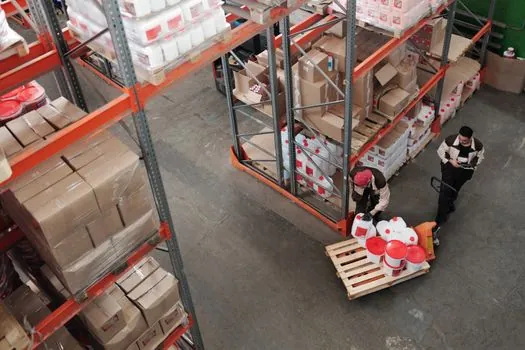
Robotic palletizers are the practical choice for medium-to-high-volume lines with multiple SKUs, mixed patterns, or mixed-case orders. Stored software patterns allow product and pallet-pattern changes without replacing layer-forming hardware, and vision-guided handling can build stable stacks from mixed cases on the fly [S3][S5].
Robotic tooling must still be engineered around case dimensions, weight, package construction, required orientation, pallet size, and pallet style. A column-stack, interlock, or pinwheel pattern should not be accepted on name alone; the supplier must demonstrate the required pattern at the required production rate [S1].
Conventional equipment remains rational where the product and pattern are stable. Its weakness is not every changeover, because some models provide programmable patterns or tool-less changes, but the combination of product range, pallet formats, and speed normally determines whether that flexibility is worth using [S1].
Footprint, Integration, and Operating Dependence
A robotic palletizer needs less installed area than a conventional machine because it can be arranged in a smaller configurable cell. The cell still needs a suitable product infeed, robot reach, end-of-arm tooling, pallet presentation, guarding, controls, and space for maintenance access [S3][S6].
That advantage does not eliminate integration work: the robotic option needs product-specific tooling, pattern software, safety controls, and a tested interface with the packaging line.
Conventional palletizers demand the largest footprint but integrate naturally into established high-throughput plants. Their dedicated sequence of gathering, forming, compressing, and depositing layers can provide a straightforward path for one repeatable product family [S4][S6].
Application Fit and Failure Modes
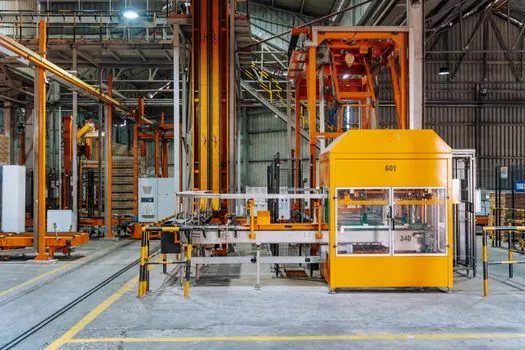
Robotic palletizers suit cases, pails, and bagged products that require variable shapes, sizes, weights, orientations, or stacking arrangements.
The main robotic failure modes are inadequate payload or reach selection, unsuitable vacuum or gripper tooling, an infeed that cannot present products consistently, and pattern software that has not been tested with the actual SKU set. Vision also requires controlled lighting, presentation, calibration, and sufficient contrast; software flexibility cannot compensate for poor product detection.
Conventional failure modes center on mechanical wear, adjustment, and changeover time within a machine built around defined layers. They are less attractive when products are irregular, patterns vary frequently, or mixed-case orders must be assembled dynamically [S4][S5]. Manual palletizing is appropriate for very low volume and constant change, but it transfers repetitive lifting exposure to operators [S5].
ROI, Acceptance Tests, and Sourcing
Traditional palletizing generally has the lower upfront cost, while robotic palletizing is commonly targeted to reach ROI within 12–30 months. This is a planning range rather than a guaranteed payback, so the business case should include changeover labor, supervision, maintenance, tooling, controls, safety, and the production value of avoided manual handling [S7].
Require each supplier to run representative cases at the specified rate, build every production pallet pattern, verify stack height and load placement, and demonstrate changeover under production conditions. Record peak and sustained throughput, recovery after a fault, operator interventions, product damage, and floor-space demand rather than accepting a generalized cases-per-hour claim [S1].
Check robotic controller architecture and line integration against the plant’s electrical automation requirements, including controls architecture, interlocks, traceability, and monitoring. Neither the available research nor a supplier category designation establishes compliance with a particular safety, machine-design, or packaging standard, so certification claims must be checked against the delivered model and its exact application [S1][S2][S3][S4][S5][S6][S7][S8][S9].
Use the stable-SKU rate and 12–30 month ROI range as the initial screening case, then select the architecture only after demonstration with the actual products, pallet patterns, and available floor area.