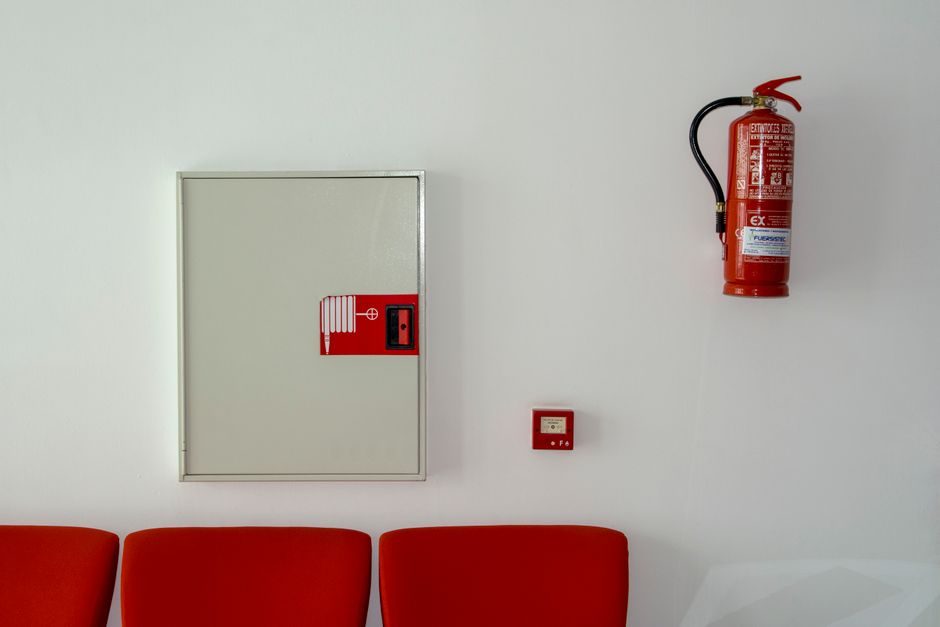
A rock wool sandwich panel is a factory-laminated cladding/partition element with a non-combustible stone-wool core (Euroclass A1) and metal facings, used as a passive fire-containment layer; a fire alarm control panel (FACP) is a microprocessor-based active electronic device that monitors initiating devices and actuates notification + suppression circuits. They sit on opposite sides of a fire strategy — passive compartmentation vs. active detection/control — and are specified by different code families (EN 14509 / EN 13501-1 vs EN 54-2 / NFPA 72), so they are not substitutes.
This selection map lines up the two families on five decision criteria — function, governing standard, key performance metric, typical building placement, and integration output — drawn from manufacturer datasheets published on DirectIndustry and Made-in-China between 2020 and 2026-07 [S1][S2][S3][S4]. Engineers, estimators, and procurement leads should read it as a "do not confuse" gate before tendering.
Functional role: passive compartmentation vs. active detection
A rock wool panel is a building-envelope product: a stone-wool core (density commonly 80–200 kg/m³ for construction grades) is sandwiched between two metal skins (typically galvanized steel or aluminium), giving Euroclass A1 (non-combustible) reaction-to-fire performance and a fire-resistance rating generally EI 30 to EI 240 depending on thickness and core density, per EN 14509 product standard for self-supporting sandwich panels [S4]. Its job is to delay heat and flame spread so that occupants can evacuate and the structure stays intact long enough for fire service intervention.
A FACP, in contrast, is a low-voltage electronic control unit housed in an IP30 cabinet (typical, e.g. Siemens FT724 at 430 × 398 × 103 mm, RAL 7035) that continuously polls initiating-device circuits, runs drift-compensation algorithms on detectors, and energises notification appliances (sounders, strobes) and releasing circuits when alarm thresholds are exceeded [S3]. The Eaton/Cutler-Hammer DFDAP-M variant is a specialised sub-family — a remote alarm panel for diesel fire-pump controllers built to NFPA 20 with UL/ULC/CSA listings and 110–240 Vac, 50–60 Hz supply [S1]. One is insulation + steel; the other is a 24 Vdc logic + signalling device.
Governing standards and what each one actually measures
Rock wool panels are specified against EN 14509 (factory-made self-supporting double-skin metal-faced insulating panels) for mechanical/thermal performance and EN 13501-1 for reaction-to-fire classification, with declared fire-resistance durations validated on full-scale assemblies (commonly EI 60–EI 240) [S4]. Smoke and toxic-gas emissions are addressed through the same Euroclass system; A1 means the core makes zero contribution to fire load. Note that Euroclass A1 is a reaction-to-fire property, not a fire-resistance duration — these are two separate test outcomes and buyers often conflate them.
FACPs are specified against EN 54-2 (control and indicating equipment) in Europe and NFPA 72 (National Fire Alarm and Signaling Code) in North America, with FM/UL 864 third-party listing for the US market. The Siemens FT724 series datasheet explicitly states it is "EN 54-conform" and supports up to 64 networked panels via C-WEB/SAFEDLINK + C-WEB/LAN fibre-optic backbone [S3]. The Cutler-Hammer DFDAP-M is built to NFPA 20 for the pump-room niche, with 110–240 Vac, 50–60 Hz normal and supervisory supplies, microprocessor-based logic, and automatic transfer between normal and backup sources [S1].
Decision matrix: when each product is the correct answer
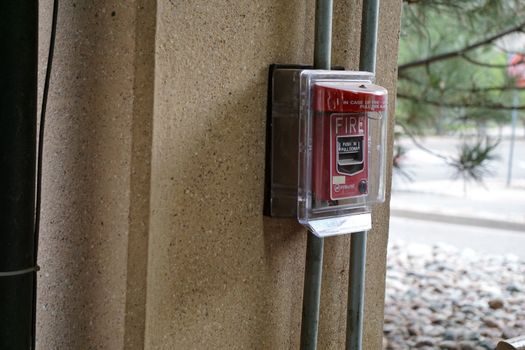
The decision is binary: passive vs. active. If the question is "how do I contain fire and heat in the wall/roof/partition assembly for 60+ minutes," the answer is the rock wool panel with a declared EI rating. If the question is "how do I detect a fire, notify occupants, and trigger suppression," the answer is an FACP. The two are specified together in any code-compliant building, never as alternatives. Note: this is a passive-vs-active contrast, not a performance shoot-out between two competing products for the same job. [S2]
Engineers should run through these five gates before either product is added to a BOQ. First, code path: EN 14509 / EN 13501-1 for the panel vs EN 54-2 / NFPA 72 for the FACP — they do not overlap. Second, evidence trail: panel performance is a test-report number (EI minutes at declared density/thickness) and Euroclass letter; FACP performance is third-party listing (EN 54 certificate, UL 864/FM approval) and a network topology spec (e.g. 32 panels/cluster, 64 panels/site on the FT724 [S3]). Third, power: the panel needs nothing electrical, the FACP needs a 21–28.6 Vdc rail (FT724) and standby batteries (2 × 12 V, 7 Ah typical) [S3]. Fourth, supply chain: rock wool panels are commodity-fabricated by envelope-system makers (e.g. Shandong-based OEM/ODM factories offering Building Envelope Systems, Cleanroom Systems, Steel Structure, Sandwich Panel under one roof [S4]); FACPs are low-volume electronics with brand-specific firmware (e.g. Siemens, Eaton, Gamewell-FCI, Fire-Lite, detectomat) [S2]. Fifth, installation crew: panels are erected by steel/curtain-wall subcontractors, FACPs are commissioned by fire-system integrators — the tenders and inspection regimes are separate. A related comparison of sandwich panel vs fire alarm control panel treats PIR/PUR cores against FACPs on the same axis and confirms the same passive-vs-active split.
Typical configurations and manufacturer examples (2020–2026)
On the panel side, the supply base is wide and largely Chinese-fabricated: Made-in-China lists OEM/ODM rock wool panel factories clustered in Shandong province, with typical 1200 × 600 mm module sizes and 50 mm core thickness as a standard stock SKU (per product spec: length 1200 +15/−3 mm, width 600 mm, thickness 50 +5/−3 mm, surface flat and free of damage/staining [S4][S9]). The Sogou Baike entry for rock wool (施可达 series) confirms the same dimensional envelope and lists density, thickness, and appearance as the three inspection parameters a buyer should verify on incoming lots [S9].
On the FACP side, DirectIndustry's index lists 7 manufacturers and 13 products for the "fire alarm control panel" category as of 2026-05-19 [S2], spanning conventional 2-zone units (Fire-Lite MS-2 with I3 detector compatibility and drift compensation), modular addressable systems (Gamewell-FCI E3 Series distributed architecture), and networked EN 54 panels (Siemens FT724 with IP30, 21–28.6 Vdc, 125 mA quiescent, 70 W optional PSU [S3]). Chinese suppliers such as Shenzhen Puzhesi Technology (trading company, est. 2012-07, 7 employees, supplying alarm panels, smoke detectors, heat detectors [S5]) and Okorder-listed addressable panel vendors offering 1-set MOQ and 10,000 sets/year capacity [S7] fill the conventional/addressable mid-market. Specialty variants such as Maple Armor FW106S addressable panels [S8] and 16-zone NFPA-compliant conventional panels [S6] cover the small-installation tail. The Eaton DFDAP-M remains a niche but durable spec for diesel fire-pump remote alarm, where the panel's sole job is to mirror pump-room alarms at a constantly attended location [S1].
Selection criteria and failure modes

For the rock wool panel, the four must-check items are: declared Euroclass (A1 expected for fire-rated lines), fire-resistance duration (EI 30 / 60 / 90 / 120 / 240 matched to the wall/ceiling assembly), thermal conductivity (λ ≈ 0.035–0.040 W/m·K for typical construction-grade stone wool, used to compute U-value), and facer material/coating (galvanized steel thickness, PVDF/PE paint system for outdoor exposure) [S4][S9]. Common failure modes are core compression at slab edges (lower density → lower EI), delamination at fasteners (wrong clip or insufficient pull-out), and moisture ingress cutting λ performance — all installation- rather than product-defect issues, but the spec sheet should still bind the contractor.
For the FACP, the four must-check items are: governing listing (EN 54-2 + EN 54-4 for European sites, UL 864 + NFPA 72 for US, FM as an additional mark for insurer-driven sites), network topology and panel count per cluster (e.g. 32 nodes/cluster, 64 nodes/site on FT724 with C-WEB/SAFEDLINK [S3]), loop capacity and detector compatibility (I3 plug-in detectors, addressable loop current budget), and standby battery sizing (2 × 12 V, 7 Ah at the FT724 scale; larger FACPs need 17–65 Ah banks) [S3]. Common failure modes are: undersized standby battery (drops out at hour 2 of a power outage), incompatible addressable devices on a proprietary loop, and missed EN 54-13 network-integrity testing on multi-node sites. For hazard-class nuances between detector types on the same loop, see heat detector vs gas detector hazard class sensing principle and EN 54 ATEX.
Sourcing notes and a trackable signal
Procurement should treat these as two completely separate tenders: rock wool panels come from building-envelope system suppliers (Shandong, Hebei, Jiangsu clusters) and are bought by sqm with density, thickness, and EI rating as the contract variables; FACPs come from fire-system OEMs (Siemens, Eaton/Cutler-Hammer, Gamewell-FCI, Fire-Lite, detectomat) and authorised integrators, bought per panel + per loop with EN 54 or UL 864 evidence [S2][S3][S4]. Mixing the two is not a cost-saver — it is a scope error, since the panel is in the architecture package and the FACP is in the electrical/fire package. A trackable next signal: the DirectIndustry manufacturer index for "fire alarm control panel" re-snapshotted to 7 companies / 13 products on 2026-05-19 [S2], while new factory listings on Made-in-China's rock wool panel category continue to appear in 2026 [S4] — watch both indices for 2026-Q3 refreshes, which are the cleanest read on whether tier-1 FACP brands and tier-1 envelope-system makers are expanding the categories or consolidating SKU counts.
For component-level specifications, see rock wool, and perimeter alarm.