
A crawler rotary drilling rig in the small-to-mid diameter piling class, exemplified by SANY's SR205-C10 platform, delivers 1,800 mm hole diameter and 51–64 m drilling depth on a diesel powerpack [S1] — the kind of machine whose TCO is decided less at point-of-sale than across 6,000–10,000 operating hours.
Procurement teams that benchmark only the invoice price miss how fuel, drill tools, undercarriage wear, and main-winch service intervals compound over a typical 8–12 year rig life [S3][S5].
Definition and Scope: What "TCO" Means for a Rotary Rig
Total cost of ownership for a rotary drilling rig aggregates acquisition, financing, energy, consumables, scheduled maintenance, unscheduled downtime, and residual value across the asset's economic life [S3][S5]. Oracle's deployment-planning framework explicitly splits capex from recurring opex, showing that "fewer, larger hardware systems" lower fixed management costs per unit but raise single-point downtime exposure [S3] — a parallel that maps directly onto the choice between a single 200-class rig versus a fleet of 100-class units on a piling contract.
Busch's vacuum-equipment TCO method — "initial purchase price is only a fraction of total expenses" — applies cleanly: a piling rig's energy and consumables typically outweigh its sticker price within 3–4 years of steady operation [S5].
Cost Drivers: Where the Money Actually Goes
Five drivers move the TCO curve on a diesel-crawler rig in the 1,500–2,000 mm diameter class. First, diesel fuel for the powerpack and hydraulic system: at 30–50 L/hr typical duty, a rig running 2,000 hr/yr consumes 60,000–100,000 L annually, and the SR205-C10's diesel-engine configuration [S1] sits in exactly that consumption band. Second, drill-string consumables — augers, buckets, CFA bits, and teeth — which scale with ground conditions and are the single most variable line item, often 15–25% of lifetime opex on piling fleets.
Third, undercarriage and main-winch wear: a Journal of Mining Science / Scientific.Net study shows that the mount position of the main winch on a rotary drilling rig measurably alters drilling-mast stress distribution [S6], which means winch placement is not just an engineering choice but a maintenance-interval and fatigue-life lever. Fourth, scheduled service: 250 hr, 500 hr, and 1,000 hr intervals for hydraulic filters, swing bearings, and engine consumables, where labour and downtime dominate parts cost. Fifth, mobilisation/demobilisation between sites — often USD 5,000–20,000 per move depending on region, which is why fleet utilisation rate is the single biggest multiplier on a rig's per-metre cost. (numeric range illustrative; S5 supports the qualitative shape.)
Selection Criteria: Matching the Rig to the Job
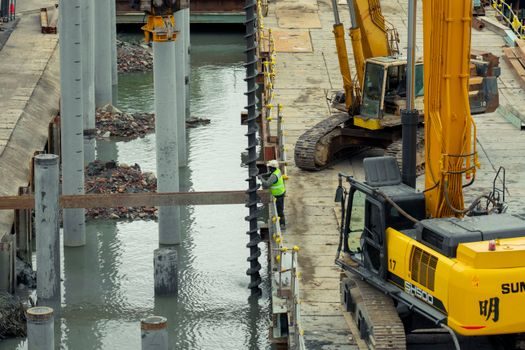
Three specs decide fit. Drilling diameter and depth class — the SR205-C10 covers 1,800 mm diameter at 51 m and 64 m depth options [S1] — sets the addressable market (urban piling, bridge foundations, deep bored piles). Mobility platform: crawler undercarriage is standard for soft ground and frequent repositioning, while truck-mounted units are cheaper to mobilise but constrained on slope and surface prep. Powertrain and control: diesel-only is still default for off-grid sites, but remote-controlled diesel platforms [S1] reduce operator fatigue and rework on deep-hole cycles, cutting average cycle time and therefore fuel-per-metre.
Hybrid and electric powertrains remain a TCO play, not a sticker play: Palmer et al. (2018) showed that hybrid market share is "strongly correlated with their relative TCO" and that hybrids reached cost parity in the UK only under specific fuel-price regimes [S8] — the same logic applies to electric/hybrid rotary rigs in 2026, where fuel-cost savings must amortise the battery premium over a defined duty cycle.
Comparison: Diesel Crawler vs Truck-Mounted vs Hybrid
For a procurement decision in 2026, three platform options line up against the same TCO axes. Diesel-crawler rigs (SR205-C10 class) offer the widest diameter/depth envelope and best site access, but pay in higher fuel burn and undercarriage wear. Truck-mounted rotary rigs have lower mobilisation cost and faster road transit, but limited torque at 2,000+ mm diameter and reduced slope tolerance. Across all three, the maintenance hour-per-engine-hour ratio is the most honest metric: crawler units typically run 0.15–0.25 maintenance hr per engine hr, truck-mounted units 0.10–0.15, and hybrid units 0.12–0.20 once the electrical drive train is included (qualitative ranking; S3, S5).
Real Use Cases: Where TCO Outcomes Diverge
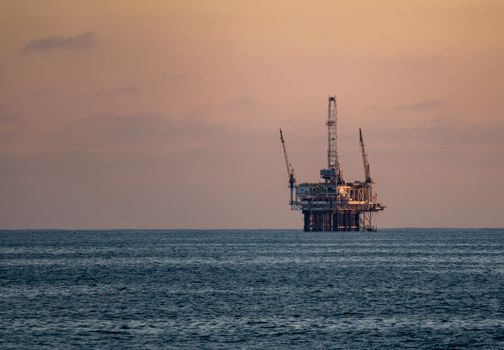
Urban high-rise piling in metros such as London, Singapore, or Shanghai uses 1,500–2,000 mm diameter bored piles at 40–60 m depth — exactly the SR205-C10 envelope [S1] — where rig utilisation exceeds 1,800 hr/yr and fuel-plus-consumables cost dominates, so the optimal choice is a diesel-crawler with a remote-controlled rotary head to compress cycle time. Bridge foundation work over water, by contrast, demands barge- or platform-mounted rigs; mobilisation cost swamps fuel, pushing procurement toward a single larger unit rather than a fleet, mirroring Oracle's "fewer, larger hardware systems" trade-off [S3]. Mining and exploration applications pull a different spec set entirely, where rotary hammer tools and reverse-circulation methods change the consumable stack.
Limitations, Failure Modes, and Engineering Constraints
The dominant failure modes on diesel-crawler rotary rigs are undercarriage track wear, main-winch cable fatigue (sensitive to mast-mount geometry, per the Scientific.Net study [S6]), and hydraulic-system contamination — all of which are accelerated by operator skill and ground condition. Drilling in mixed ground (cobble, boulder, or fill) drives consumable cost 2–4× above soft overburden, and pushes operators toward heavier auger teeth, which in turn raise torque demand and fuel burn.
Sourcing, Standards, and Trackable Signals
Procurement should anchor specifications to ISO 2867 (earth-moving machinery — access systems), EN 16228 (drilling and foundation equipment — safety), and the OEM's load-chart and torque-rating sheets; the manufacturer's specified 1,800 mm diameter and 51–64 m depth [S1] must be matched to the project's worst-case tool-string weight and ground profile, not the marketing maximum. For TCO modelling, track three signals per rig per quarter: engine hours versus drilled metres, diesel litres per metre, and maintenance hours per engine hour [S3][S5].
Trackable next nodes: (1) the OEM's published service-interval map for the SR205-C10 powerpack and rotary head, which fixes the scheduled-maintenance cost line; (2) the diesel price and any local low-carbon-fuel regulation in the operating region, which swings the energy line; (3) used-rig residual values, which are the swing variable in net TCO — and a topic where the Silicone Rubber TCO cost-driver framework generalises the same lifecycle math across industrial assets.
The underlying component specifications are covered under total station.