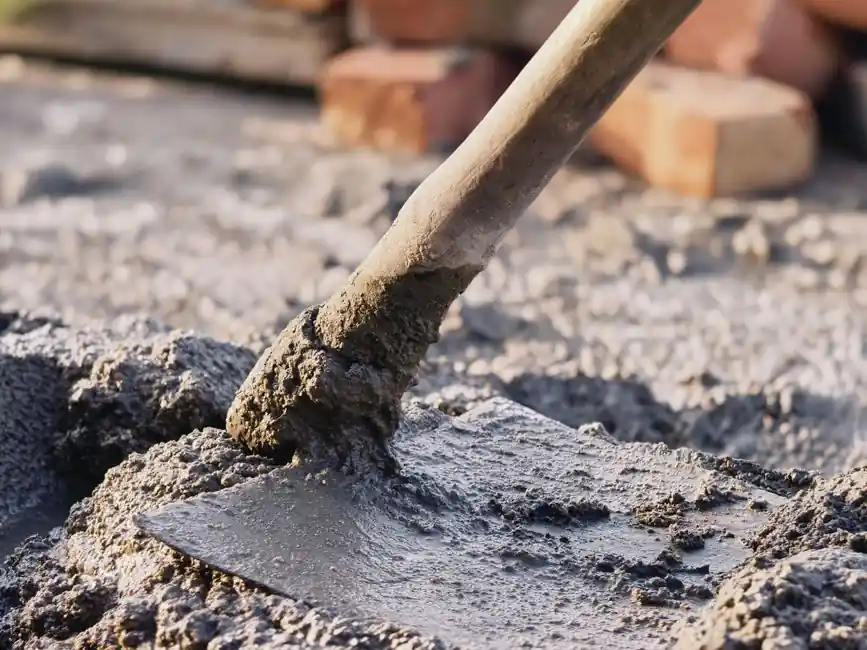
Oztec's patented RubberHead® urethane-dimpled vibrator head eliminates the chipping damage a steel head inflicts on fusion-bonded epoxy-coated rebar (ASTM A775), with each contact strike under load capped near 10,000+ blows per minute and forces measured in the hundreds to over 2,000 lb per blow [S1][S9].
The head vibrates at 12,000 vpm and never drops below 10,500 vpm when fully submerged in low-slump concrete, a working envelope that satisfies ACI 309 consolidation criteria on the same head body [S3][S5]. Standard diameters on the RubberHead® line cover 1-7/8", 2", and 2-1/2" with 14" head length, fitting Oztec flexible-shaft power units and gas/electric backpacks already common on U.S. tilt-up and DOT sites [S2][S3][S5].
Why Steel Heads Damage ASTM A775 Epoxy Coating
Fusion-bonded epoxy coating (ASTM A775) is specified to thicknesses of 7–16 mils (175–400 µm) precisely because chloride-driven corrosion of the underlying bar is the controlling durability limit on bridge decks, parking decks, and coastal substructures, and the coating is the only thing keeping the steel passive [S1]. A standard steel vibrator head acts like an electric hammer, striking any rebar or forms it contacts over 10,000 times per minute with a force from hundreds to over 2,000 pounds per blow, and as little as one second of contact can chip enough coating to expose the steel to deep rust [S1][S3][S8]. That single-second event is a worst-case: DOT and bridge inspectors routinely reject epoxy-coated rebar where visible gouges exceed spot-repair limits, and a vibrating steel head moving through a dense mat is statistically certain to make that contact multiple times per placement [S1].
The fix is mechanical, not procedural: replace the striking surface with a urethane-dimpled cover so that the head never makes a hard metallic contact with the bar, even at the same 10,000+ blows per minute operating point [S1][S9]. A rubber-tipped vibrator head, paired with a concrete vibrator flexible-shaft drive, preserves the consolidation energy while isolating the bar from the impact face.
What "Rubber Tipped" Actually Changes in the Head
Oztec's patented High Efficiency RubberHead® is a urethane-dimpled cover over a standard vibrating inner shell, not a solid rubber slug: the dimples act like suction cups that keep wet concrete in contact with the entire length of the head and let wet concrete flow through openings to cool the inner shell [S1][S3][S5]. That geometry is the reason a rubber-tipped head can still hit 12,000 vpm in low-slump (down to "0" slump) concrete, where a smooth round or square steel head would drill a hole and stall, pushing concrete away faster than it can return [S1].
Two real consequences follow. First, the radius of action is larger than a smooth head of the same diameter, so a 2" rubber-tipped head consolidates a wider zone per insertion and the crew can space insertions farther apart, which directly lowers the probability of an accidental rebar strike [S1][S4]. Second, because the urethane cover absorbs the impact energy, the head is described by the manufacturer as a must for architectural concrete where cosmetic surfaces are essential, meaning it is being chosen for finished-face quality as well as rebar protection [S3][S5].
Spec Compliance: DOT Non-Metal Head and ACI 309

U.S. state DOTs and many transportation authorities explicitly require non-metal vibrator heads on epoxy-coated rebar pours; the RubberHead® line is marketed as meeting DOT non-metal head specifications for protecting coated rebar and expensive forms, which is the procurement language inspectors actually write into special provisions [S5][S6]. On the consolidation side, all Oztec vibrators (steel and rubber-tipped alike) are stated to meet or exceed ACI 309, "Standard Specification for Consolidating Concrete," which is the consolidation reference cited in most U.S. structural concrete specifications [S1][S3].
For spec-writers, the procurement language that closes the loop is: "vibrator head shall be high-frequency, minimum 10,500 vpm under load, with non-metal impact face conforming to State DOT non-metal head specification, used to consolidate concrete containing fusion-bonded epoxy-coated reinforcing steel per ASTM A775." That single line, dropped into a placement spec, removes the ambiguity that lets a GC substitute a steel head and silently void the epoxy coating warranty [S1][S5]. Working with epoxy-coated rebar on any DOT job is the gating use case; the vibrator is the tool that decides whether that rebar arrives at the inspector still fully coated.
Size Range, Shaft Fit, and Power Unit Pairings
The rubber-tipped offering from Oztec is concentrated in three diameters, all on a 14" head length, covering the practical range of #4 through #11 bar mats in slab-on-grade, pier caps, and deck pours [S2][S3][S5].
A practical comparison for spec writing:
1-7/8" RubberHead® (HR188OZ, 1-7/8" x 14"): best for thin slabs, sidewalks, and architectural walls with congested #4 and #5 bars; consolidates a tight radius without snagging form liners, listed at $588.99/ea at one U.S. distributor in 2026 [S3]. 2" RubberHead® (2" x 14"): the general-purpose size for slabs, walls, and columns with #5 to #8 bars, the diameter most often stocked for parking-structure decks [S4][S7]. 2-1/2" RubberHead® (HR250OZ, 2-1/2" x 14"): the high-volume choice for mass concrete, large pier pours, and heavily reinforced mat foundations with #9 to #11 bars, where the larger radius of action reduces insertion count and pour time [S2][S5].
All three share the same 12,000 vpm operating speed, 10,500 vpm floor under load, ACI 309 compliance, and DOT non-metal head compliance, so the only real selection variable is head diameter versus bar spacing and pour volume, not the consolidation performance envelope [S1][S3][S5].
Who This Head Is For (and Who It Is Not For)
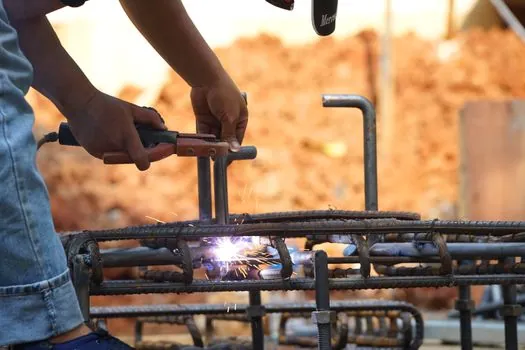
Use a rubber-tipped head on any pour that contains fusion-bonded epoxy-coated rebar per ASTM A775, galvanized rebar where the spec also prohibits steel-on-steel striking, or expensive architectural form liners and rustication strips where a steel strike leaves a black mark on the finished face [S1][S5][S9]. It is the correct choice on State DOT bridge decks, parking structures, piers in marine exposure, water-treatment tanks, and architectural walls called out as "no bug holes, no surface staining" in the spec [S1][S3].
Do not specify it as a substitute for internal vibrator selection rules: it is a head change, not a power-unit change, so the flexible-shaft horsepower and rpm at the drive end still have to match the head diameter and the concrete slump, and an undersized electric backpack will starve a 2-1/2" rubber head in 0-slump concrete regardless of how good the urethane cover is [S1]. Crews that already have a steel head and no coated rebar on the job have no economic reason to swap, since steel heads are cheaper per unit and have higher wear life on plain-black-bar foundations. The cost premium of the rubber-tipped head is justified only when the rebar warranty, the DOT spec, or the architectural finish is on the line [S3][S5].
Failure Modes and Field Constraints
Rubber-tipped heads are not indestructible. The urethane cover can be cut by sharp form edges, by rebar chairs with exposed legs, or by the head being dragged along the form rather than inserted vertically, and once the inner steel shell is exposed through a tear, the head reverts to behaving like a steel striking surface, with all the ASTM A775 damage risk that implies [S1][S3]. Field practice is to inspect the urethane cover before each pour, replace any head with a visible tear, and to drive insertions vertically rather than horizontally, because horizontal churn pulls air back into the mix and reduces the consolidation radius [S1].
Heat is the other limit. A standard steel head that is not fully submerged overheats rapidly; rubber covers are more forgiving because the dimple openings let wet concrete reach the inner shell and carry heat away, but the head still has to stay submerged in low-slump concrete to hold the 10,500 vpm floor, and a head run partially submerged in a deep pier pour will still cook its urethane cover over a long pour [S1][S9]. For long-duration or deep-element pours, the same selection logic that drives rebar coupler mechanical-splice decisions (matched components, no field-substitution) applies: pick the head diameter the pour will actually accept and stock a spare, rather than sizing down and re-inserting more often.
Adjacent Tool Decisions on the Same Site
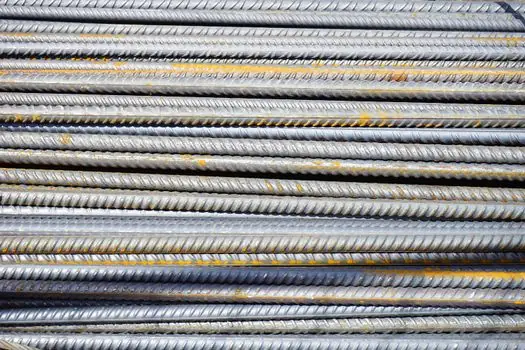
On a DOT deck or parking-structure pour, the vibrator decision sits next to two other tool decisions that affect the same coated rebar: how the bar is cut, and how it is bent. Abrasive cutting of epoxy-coated rebar generates heat and coating spatter at the cut, so mechanical cold-cutting is the standard practice on coated bar, and the bar-prep toolset typically includes a rebar cutter sized to the largest bar on the mat plus a matching rebar bender for stirrups and hooks, with a rebar straightener on the truck for correcting field-bent bars before placement. None of those tools touch the vibrator-head question directly, but they are part of the same coated-rebar tool chain, and crews that own them usually own a rubber-tipped head as well, because the procurement argument (protect the epoxy from any steel-on-steel impact) applies to all four tools [S1][S5].
For deeper mass-pour consolidation where the head envelope is pushed hard, it is worth noting that the consolidation logic on a refractory or heavy civil pour, the time/frequency/field-control rules described in the refractory castable vibration guide, carries over to low-slump structural concrete: the head must be inserted at planned grid spacing, held until the surface sheen appears, and withdrawn slowly to close the insertion hole, regardless of whether the impact face is steel or urethane.
Trackable signals over the next procurement cycle: (1) whether State DOT special provisions continue to add non-metal-head language by name, since that drives the spec basis contractors write into bids; (2) whether head diameters above 2-1/2" appear in the rubber-tipped line for #14 and #18 bar mat foundations, where consolidation radius currently limits pour productivity more than rebar strike risk does; (3) urethane compound upgrades that extend cover life in high-heat mass-pour service, which would close the remaining field constraint on long-duration placements [S1][S3][S5].