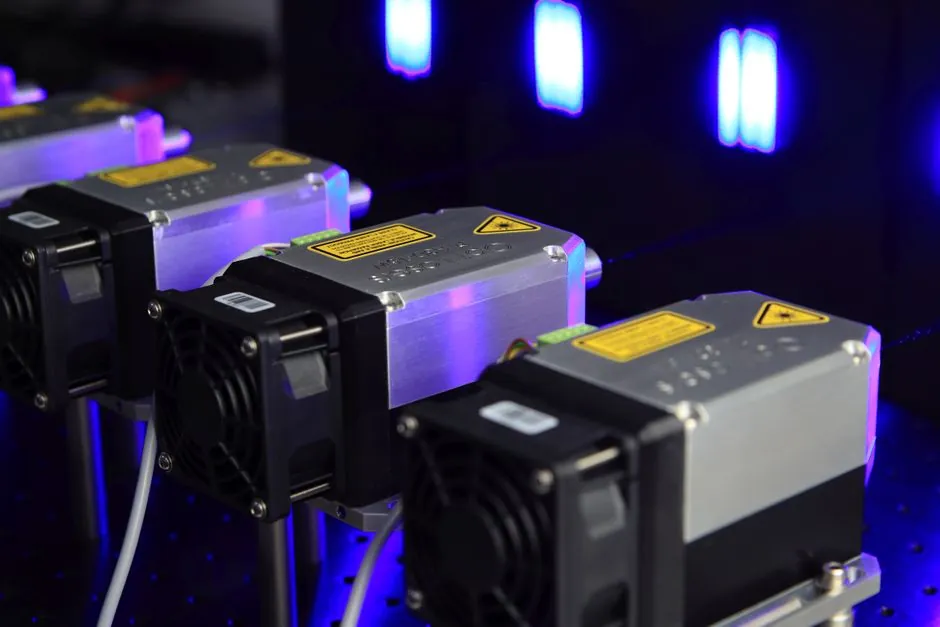
A professional rotary laser level costs $500 to $3,000+ while a self-levelling line laser costs $75 to $600, a 5–10x price delta that maps directly to working range, beam mechanism, and accuracy class [S1][S2].
The gap is not a markup, it is a hardware divide: a rotary spins a single laser diode at 600–1,200 RPM through a prism to project a 360° reference plane out to 800m diameter, while a line laser fires fixed diodes through a lens to draw static lines visible at 15–50m without a detector [S2]. Buyers pay for the spinning motor assembly, the IP54+ housing, the grade-slope electronics, and the matched detector/grade rod that ships in the kit.
Price Bands and What Each Bracket Buys
DIY line lasers sit at $75–$300 and deliver ±1/8″ accuracy at 30 feet (≈3mm at 10m) for cabinet hanging, tile alignment, and trim work [S1][S4]. Pro-grade cross-line and multi-line models climb to $300–$600, adding 3×360° or 4×360° plane coverage for full-room layout and drop-ceiling grid [S3].
Entry rotary lasers start around $500, with the bulk of professional single-slope models (e.g. Spectra LL300N-class, Topcon RL-H5A-class) clustering at $1,000–$2,000 [S2][S7]. Above $2,000 you reach survey-grade dual-slope units with 1.5mm/30m accuracy, machine-control compatibility, and 2,600-foot (≈790m) diameter range, the segment where the 38.4% line-laser market share does not reach [S5][S7]. Green-beam variants add a further premium: a green rotary is roughly 4x more visible to the eye than red, which is why exterior concrete and grading crews spec it despite higher battery draw [S4][S6].
Accuracy Comparison: Same Number, Different Operating Envelope
Both classes claim ±1/8″ at 30 ft as a baseline jobsite spec, but the envelope behind that number diverges sharply [S1][S4]. A line laser holds ±1.5–3mm at 5m and degrades visibly past 50 ft because the static beam loses intensity on the wall [S2].
A rotary laser holds ±1.5mm at 30m (≈100 ft) and stays at 1/16″–1/8″ across a 100 ft span because the spinning beam is read by a calibrated detector, not the naked eye [S1][S2]. High-end rotary units reach 1mm–6mm at 20m under dual-axis self-levelling, with auto-shutoff if the housing is disturbed beyond ±5° [S5]. For indoor trim, the line laser's tighter short-range figure is what matters; for outdoor formwork, only the rotary's detector-read figure is meaningful.
Range and Detector Dependency
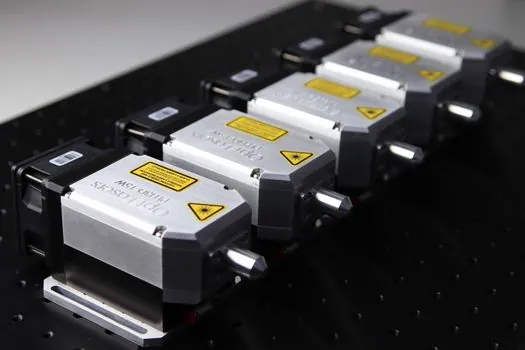
Line lasers project a visible beam at 50–100 ft indoors; outdoors in daylight the beam washes out and pulse-mode detection extends usable reach only to about 100 ft [S1][S5]. Rotary lasers with a grade-rod detector routinely hit 1,000–2,000 ft diameter, and premium models reach 2,600 ft (≈790m), so one instrument covers an entire pad or road corridor [S2][S5].
The detector is not optional for rotary outdoor work: beyond roughly 30m the spinning beam is invisible to the eye, and the receiver is what converts the rotation into a held reading on the rod [S2]. Buyers comparing sticker prices should add the detector/grade-rod/rechargeable battery kit cost, which is often bundled in the $1,500+ rotary kits but sold separately for sub-$800 units [S4][S7].
Decision Matrix: Which Tool Fits the Job
For interior layout, cabinetry, tile, and drop-ceiling grid at under 50 ft, the line laser wins on price ($75–$300), size, and zero-detector setup [S1][S2]. For site grading, concrete formwork, fence post alignment, foundation layout, and machine-control reference, the rotary is the only spec that meets the 300–800m working range and 1.5mm/30m accuracy the work demands [S2][S3].
Cross-line lasers bridge the gap for interior trades that occasionally step outside (pulse mode to 100 ft), but they do not replace a rotary on a 5-acre grading job [S1][S5]. Mixed-trade contractors often own both, a $200–$400 line laser for daily interior work and a $1,200–$2,000 rotary for the monthly exterior job, rather than over-spending on a rotary for trim work or fighting sunlight with a line laser on a slab [S2][S6]. The same cost-vs-range logic that drives the rotary laser level vs line laser choice also shows up in heavier equipment decisions, for example a rotary drilling rig spec versus a percussive tool, where the more capable rotating mechanism commands a similar 5–10x multiplier.
Limitations and Common Spec Traps
Manufacturer range claims are detector-dependent and almost always quoted at the maximum diameter, not at usable eye-visible distance; a 1,000 ft rotary rating typically means 1,000 ft with the bundled receiver, not with the naked eye [S2][S4]. Line-laser outdoor claims of 50m assume pulse mode and a detector most DIY kits do not include.
Green beam costs roughly 30–50% more than red at the same accuracy class, and battery runtime drops proportionally because the 532nm diode draws more current than the 635nm red diode [S4]. IP54 is the common jobsite rating, fine for rain and dust, but neither class is submersible, a frequent point of failure on concrete pours and muddy sites [S2][S4]. Finally, self-levelling windows are typically ±5°; on a severely sloped pad the unit will refuse to level, so single- or dual-slope rotary models exist specifically for drainage and road work where a true level reference is the wrong reference [S2][S5].
Standards, Sourcing, and Selection Signals
No single IEC or ISO standard governs laser level accuracy across all markets; manufacturer-stated accuracy at a defined distance (e.g. ±1.5mm at 30m) is the binding spec on the data sheet, supported by internal calibration to typical Class II / Class 3R laser safety classifications [S2][S4]. Buyers should verify the detector is included in the quoted price, confirm IP rating for the site environment, and check that the self-levelling range covers the worst slope expected on the pad [S2][S7].
Trackable signals for the next 6–12 months: green-beam rotary pricing trending toward the $1,000 mark as diode costs fall, more 4×360° multi-line lasers landing in the $400–$600 band to compete with low-end rotary kits, and continued consolidation around Bluetooth-linked detectors that feed machine-control receivers directly from the laser head. For contractors weighing rotary vs line laser budgets, the spec that justifies the 5–10x price premium is working range with a detector, not raw accuracy, since the accuracy numbers are nearly identical at 30 ft [S1][S2][S7].
The underlying component specifications are covered under rotary encoder.
For related coverage, see LC Fiber Patch Cable vs Shielded Cable: What Counts and What Doesn't.