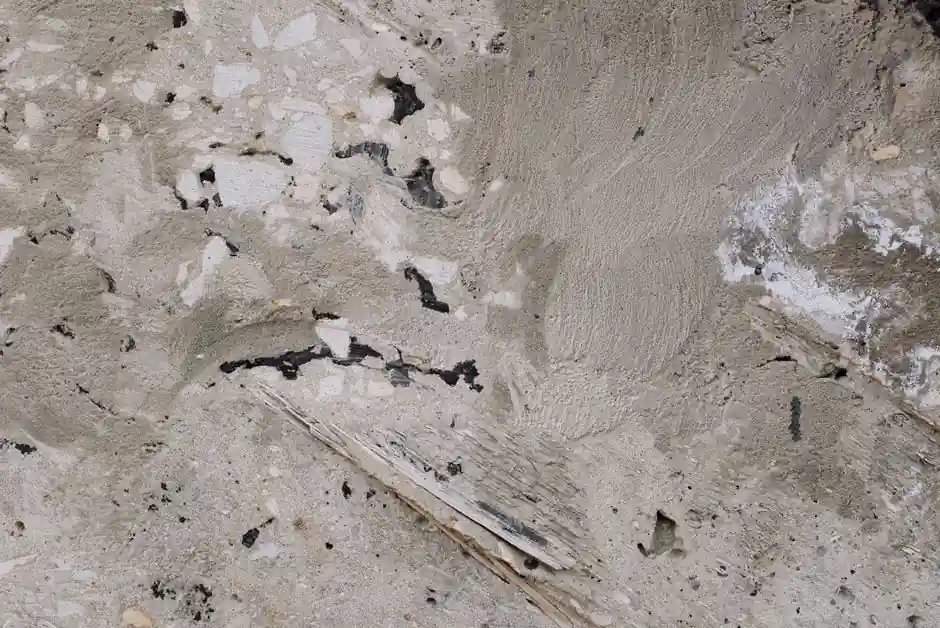
For monolithic refractory linings, consolidation quality is set by three controllable variables: vibrator frequency, immersion time per insertion point, and the spacing between insertions, with layer thickness acting as a hard ceiling above which no field technique can rescue the placement.
Across current OEM and installer guidance, dense castables are placed in layers up to 300 mm thick, vibrated with high-frequency immersion (poker) vibrators at spacings of about 200-300 mm, and held at each point only long enough for the surface to glaze and air bubbles to stop, typically 15-30 seconds; the rule "stop vibration once the surface reflects" is the same one inspectors use [S4][S5]. For low-cement formulations, the same field parameters apply, but water demand drops, working time shortens to roughly 20 minutes from mixing start, and the tolerance for over-vibration tightens sharply [S6].
Why frequency beats amplitude in castable placement
High-frequency vibration, typically 200 Hz and above for small-diameter pokers, is preferred over low-frequency, high-amplitude shaking because it fluidises the cement paste around the aggregate without telegraphing coarse particles downward [S2]. This lets installers hit the same compaction with a lower water-to-cement ratio, which directly raises cold crushing strength, density, and abrasion resistance of the finished lining [S2]. PCO's 2026 application manual for castable refractories specifies high-frequency immersion vibrators for this reason and ties their use to the lower water demand of its LC and sol-gel NxGel/Sol/Gel/ISO series, where every extra percentage point of mix water costs measurable hot strength [S2].
The practical knock-on is that a low-frequency vibrator on a low-cement castable is a near-certainty of rework: the aggregate cannot be re-distributed into the stiffer paste, the operator compensates by adding water, and the lining ends up with the worst of both regimes, namely segregation at the bottom and a porous cement-rich skin on top.
Layer thickness, insertion spacing, and the 300 mm ceiling
Maximum pour thickness per lift is 300 mm for vibration-placed dense castables, with vibrator insertion points spaced at roughly 250 mm centre-to-centre so that the radius of effective fluidisation overlaps between adjacent insertions [S4]. Each formwork pour in low-cement work is sized to 600-1000 mm of formwork height per pour, which lets crews load, vibrate, and consolidate before the mix exceeds its working life [S3].
Three numbers summarise the geometry: 300 mm layer cap, ~250 mm poker spacing, and 600-1000 mm formwork pour height, and they are interdependent. If the layer is taken to 350-400 mm, the bottom 100 mm sees roughly half the compaction energy of the top, and rebound against the formwork face lifts paste to the surface where it cracks on dry-out. Inspectors reading the standard checklist look at those three distances first, before they ever check a strength cube.
Vibration time per point: when to stop
Insertion time at each point is the variable operators get wrong most often, and the rule taught across manufacturer guidance is short: hold the poker in place only until the surface around it turns glassy and the stream of escaping air bubbles thins to nothing, then withdraw [S5]. Over-vibration is the failure mode the field sees more than under-vibration, and it shows up as water shearing to the surface, aggregate settling, and a cement-rich laitance that powders off after cure.
The working-time window makes this discipline non-negotiable. From the moment water is added, the castable typically remains placeable for about 20 minutes before initial set starts to bite, with full strength development requiring 3-7 days of curing after that [S1][S6]. Run the stopwatch in reverse: if a crew has been mixing and placing for 25 minutes and still has a 200 mm lift to vibrate, the mix is already past its consolidation window and the right answer is to scrap the batch, not to "vibrate it harder."
Mixing water and the 3-4 minute wet-mix gate
Water addition is sequenced, not free-form: dry-mix 1-3 minutes, add about 80% of the design water, wet-mix 2-3 minutes, add the remaining 20%, wet-mix another 2-3 minutes, and only judge consistency after 3-4 minutes of total wet mixing, when a properly dosed batch will suddenly fluidise in the 2nd or 3rd minute [S5]. This delayed fluidisation is the visual cue that water content is correct; if it never appears, the batch is too dry, and if the mix slumps immediately on water addition, it is too wet.
The hand-squeeze test that follows is crude but reliable: a fistful of mixed castable should clump into a ball that holds its shape with no free water squeezing between the fingers [S5]. Any visible sheen of water at this stage is a flag to stop the pour, since excess mix water is the single biggest driver of reduced density, increased drying shrinkage, and lower hot strength in monolithic linings.
Anchoring and formwork: what the vibrator is working against
Vibration only works if the castable cannot escape. Anchors are typically 6-12 mm round steel or 20 mm wide flat bar in 1Cr18Ni9Ti, set on a 200-300 mm staggered grid at a density of 10-15 anchors/m², with anchor height at about 85% of the lining thickness or 50 mm below it, whichever is shallower [S5]. At operating temperatures below 500°C, ordinary carbon-steel anchors are acceptable; above that, stainless is mandatory because oxidation at the anchor surface is a common spalling initiation point.
Formwork must be rigid, oiled or paper-lined, and limited to about 0.7 m of head per pour for hand-placed work, with curved-pipe sections using 2-3 mm steel forms rather than timber [S5]. Formwork height above 1 m without intermediate bracing lets the vibrator push the mix out of the formwork face instead of consolidating it, which is one of the most common defects seen on boiler and duct repairs.
What goes wrong: failure modes tied to vibration settings
Three failure modes map directly back to the time/frequency/amplitude controls. Over-vibration segregates the mix, drives water upward, and produces a soft laitance layer that powders under thermal cycling. Under-vibration leaves entrapped air and honeycomb, especially around anchor clusters and at the formwork face, and is the usual cause of early lining loss on the hot face. Wrong frequency, in particular a low-Hz poker on a low-cement castable, simply fails to fluidise the paste, so the operator compensates with water and inherits the first failure mode on top of the third. [S5]
The cure window matters as much as the pour. Initial set occurs within roughly 24 hours of placement, but full strength development takes 3-7 days under proper curing conditions, and any premature heat-up before that window closes will convert the trapped water into steam channels that spall the hot face within the first few thermal cycles [S1].
Field checklist: numbers to write on the method statement
Use this as the inspection-ready line set, with each value cited to current OEM or installer guidance: layer thickness ≤ 300 mm; poker spacing ~ 250 mm centre-to-centre; pour height per formwork 600-1000 mm; poker frequency high (≥ 200 Hz class for LC and sol-gel systems); insertion time per point 15-30 seconds, stop on surface glaze; working life from water addition ~ 20 minutes; wet-mix gate 3-4 minutes; anchor spacing 200-300 mm staggered; anchor density 10-15/m²; formwork oiled and height ≤ 0.7 m for hand placement; full cure 3-7 days before heat-up [S1][S2][S3][S4][S5][S6].
For engineering teams that need the broader lab-and-field context on vibration tooling, a working primer on vibration sensor selection and the related vibration meter instrument class is worth a look, and operators running VFD-driven poker drives should check the drive's low-speed torque curve against the inrush of an eccentric-weight poker motor before specifying. Trackable next signals to watch: any update to ASTM C401 on castable placement classification, and any tightening of the working-time window in the next revision of OEM LC product datasheets.
Background reading: FOV from screen diameter and lens magnification: a 2026 engineer's reference.