A maintenance-free spherical plain bearing can operate underwater, but the bearing, pin, seal, and mounting system must be selected for continuous immersion rather than occasional splashing.
The decisive variables are liner compatibility, corrosion resistance, contamination control, contact pressure, and movement; ordinary dry-operation ratings do not establish underwater service life.
What Determines Underwater Suitability
Maintenance-free spherical plain bearings have no relubrication facilities and must not be lubricated, so their sliding layer must retain its low-friction performance in the specified environment [S1]. This removes routine greasing as a recovery measure: once the liner swells, wears, delaminates, or contaminates, the corrective action is to correct the cause and replace the affected bearing.
The standard radial construction uses a curved inner ring, a concave outer ring, and a sliding layer between them [S1]. Available sliding systems include PTFE composite, PTFE film, and ELGOGLIDE; these are not interchangeable under the same load and water conditions. Radial spherical plain bearings are available in open and sealed designs [S1].
A useful engineering distinction is temporary immersion versus continuous immersion. A brief washdown does not justify a standard open bearing for permanent submersion. Continuous service requires a documented immersion rating covering the liner, metal substrate, seal, exposed pin, and adjacent housing.
Compare the Main Bearing Construction Options
The main choice is not simply steel versus polymer, but how each layer behaves under water, load, heat, and misalignment.
Dirty, wet, or corrosive service tends to favor solid polymer bearings or stainless spherical plain bearings, while sintered bronze requires careful evaluation because its open lubrication path is difficult to preserve underwater [S8]. For moving joints, angular-contact spherical plain bearings can handle combined loads, but they do not remove the need for an approved underwater sliding layer and corrosion-resistant mating pin.
Set the Load and Motion Limits Before Ordering

Contact stress must remain within the manufacturer’s limit because an underwater liner has less opportunity to redistribute wear through relubrication. Some Schaeffler maintenance-free radial series are suitable for alternating loads up to p = 150 N/mm², but that value is a product-specific limit, not a universal allowance for submerged operation [S1].
Misalignment also determines the failure mode. Edge loading can produce torque spikes, liner peeling, rapid wear, and debris even when nominal radial load is below the catalog maximum. Match shaft size, pin geometry, inner-ring extension, and housing spacing to the actual linkage movement; do not use an open general-purpose series merely because its bore diameter fits.
One manufacturer states that its spherical plain bearings can be used without restriction from -10°C to +80°C and also offers spherical plain bearings with RS sealing [S7]. Seawater temperature, pressure, oxygen level, and chemical exposure should be checked against the specific liner and seal data rather than extrapolated from the -10°C to +80°C range.
Protect the Liner, Pin, and Sealing System
Continuous immersion requires the complete interface to remain clean. Abrasive particles trapped between the convex inner ring and concave outer ring can scratch the PTFE layer, while dissolved oxygen and chlorides can attack an unprotected steel pin even when the bearing rings appear stainless. [S5]
Use sealed designs only when the seal is suitable for continuous immersion. Seals reduce ingress, but they do not authorize a bearing whose liner or substrate lacks an underwater rating. In addition, a seal can fail first, creating a misleading impression that the sealed bearing has a specified service life.
Corrosion symptoms include red or brown staining, increasing breakaway torque, and a rough spherical interface. Typical causes are water or chemical ingress, incompatible cleaners, damaged boots or wipers, neglected rinsing, and galvanic coupling between dissimilar metals [S5]. Corrective actions include repairing or replacing seals, changing the wash procedure, eliminating galvanic couples, and replacing a pitted pin or damaged liner. Do not repair delaminated PTFE, flaked liner edges, or heat-damaged sliding surfaces with grease.
Match the Bearing to Marine and Submerged Use
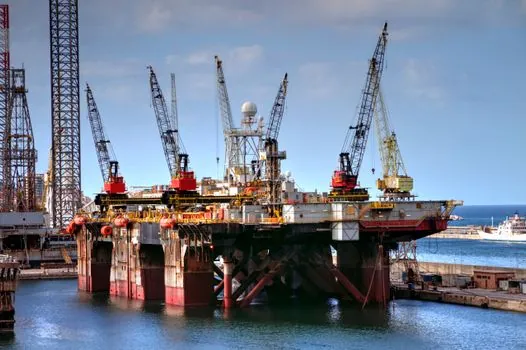
Underwater applications include boat and marine hardware, submerged linkages, hydraulic equipment exposed to spray, and articulated members with intermittent or continuous contact with water. Marine and offshore applications require stainless or corrosion-protected rings and pins, compatible seals, and fasteners isolated against galvanic corrosion [S5].
For continuously submerged mechanisms, ceramic bearings may offer an alternative where the manufacturer specifies corrosion-resistant rolling elements, cages, seals, and shaft materials. They do not solve exposure of the mounting hardware or pin, and they are not a substitute for checking dynamic capacity, preload, lubrication, and housing geometry.
Spherical plain bearings remain suitable when the joint needs angular accommodation and oscillation. A conventional ball bearing is preferable where only radial rotation is required and a fully sealed rolling-element bearing has a verified submerged rating. The spherical plain bearing wins when misalignment is unavoidable, but it loses if the application needs moment capacity without a second support. Spherical plain bearings alone are not moment bearings, so an overturning load requires spaced bearings or a rolling support [S5].
Verify the Procurement Specification
Write “waterproof” or “maintenance-free” as insufficient procurement language. Require the manufacturer to identify the series, shaft diameter, sliding-layer material, ring material, pin material, seal type, permitted temperature, static and dynamic load, allowable alignment, and stated immersion environment. [S5]
For radial spherical plain bearings, the dimensional framework is DIN ISO 12240-1; angular-contact designs correspond to DIN ISO 12240-2. Schaeffler radial series include shaft ranges of 6–30 mm for GE..-UK, 6–25 mm for GE..-FW, 6–30 mm for GE..-PW, 30–300 mm for GE..-UK-2RS and GE..-UK-2TS, 25–280 mm for GE..-FW-2RS and GE..-FW-2TS, and 320–1,000 mm for GE..-DW and GE..-DW-2RS2 [S1].
Minimum steel-on-PTFE composite designs are available from 6 mm shaft diameter, and angular-contact ELGOGLIDE designs cover 25–200 mm shaft diameter under DIN ISO 12240-2 [S1][S2]. These dimensional ranges identify the format, not the underwater approval. Require a separate statement covering continuous immersion, water chemistry, pressure, temperature, motion, and service life.
Before approval, document the acceptance test: no lubricant application, no liner delamination or flaking, no excessive torque increase, no unacceptable radial clearance growth, no red or brown corrosion staining, and no leakage at the seal. A factory dry-fit check cannot substitute for the specified submerged duty, so verify whether the supplier offers a representative immersion test or documented field validation.