RV reducers in the 2026 buying cycle are concentrated in two end-use clusters: humanoid-robot joint modules and heavy-payload articulated industrial arms, with Made-in-China factory data showing a Tianjin-based OEM offering an "RV Reducer for Robot Joints" alongside harmonic and planetary lines at US$50.00–US$500.00 per piece (MOQ 1) [S5].
Adjacent gear-reducer families fill the spec gap when an RV is overspec'd: AGMA-compliant spiral bevel units from ATEK cover 0.01–335 kW at gear ratios of 1.5–3:1, while KOFON's KPX planetary line delivers 0.1°–0.13° backlash at 2,000–8,000 rpm input across ratios of 3:1–100:1 — useful as a frame-of-reference when comparing tooth-count, contact-ratio, and bearing-stack behaviour against an RV reducer [S1].
What an RV Reducer Actually Is, and Why It Sits in a Separate Class
An RV reducer — shorthand for Rotating Vector reducer, not "recreational vehicle" — combines a planetary first stage with a cycloidal-pin second stage and a needle-bearing output disc, which is why it is often listed next to cycloidal reducer and harmonic reducer lines in the same catalog table [S5].
The defining spec, torque density per kilogram, is what separates an RV from a planetary reducer at the same frame size: a 1-stage planetary KPX unit running 2,000–8,000 rpm at 0.1°–0.13° backlash is engineered for high input speed and moderate torque, whereas an RV is engineered for low output speed, high shock-load capacity, and torsional stiffness that survives the stop-start profile of a 6-axis robot wrist [S1].
The 2026 catalog language used by Tianjin-based OEM/ODM suppliers tags RV units explicitly for "Robot Joints / Machine Tools," alongside coaxial planetary, harmonic, and worm lines under one factory profile, confirming that the four architectures are still treated as parallel options rather than substitutes [S5].
Selection Criteria Engineers Actually Trade Off
Torsional stiffness, backlash arc-minutes, rated output torque, permissible moment load on the output flange, and input-speed ceiling are the five pass/fail numbers; the KPX planetary at 0.1°–0.13° backlash and the KVX helical at 0.13°–0.17° backlash are the published points of comparison an engineer will see in a 2026 catalog row [S1].
Input-speed capability is the second gate: the SVX helical gearbox lists 1,500–6,000 rpm across ratios of 3:1–512:1, while the KVX helical is rated 1,500–6,000 rpm at 3:1–100:1, and the KPX planetary extends to 8,000 rpm — these three data points let a spec engineer bracket the upper bound an RV can realistically see at the input before derating [S1].
Lubricant and food-grade compatibility is now a 2026 catalog filter, not an afterthought: ATEK's ED-M and ARA spiral bevel lines are both offered "filled with NSF-certified H1 grade food lubricant," meaning buyers in food/beverage and pharma ancillaries no longer have to accept a standard reducer as a separate line item — a useful comparator when an RV is being specced into a washdown-adjacent cell [S1].
RV Reducer vs Harmonic vs Cycloidal vs Planetary
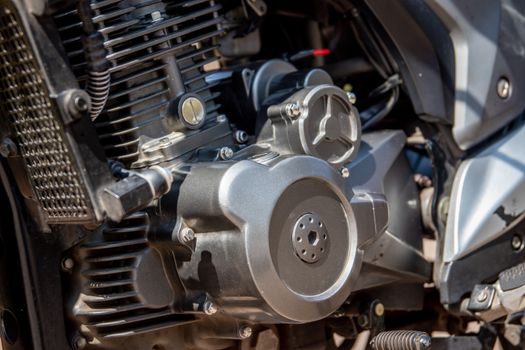
Backlash, torque density, input speed, and cost-per-Nm are the four criteria that usually decide between the four families; published 2026 catalog data sets the planetary KPX backlash at 0.1°–0.13° and the helical-bevel SVX backlash at 0.17°–0.25° across the AGMA-compliant spiral bevel set, with ratio coverage up to 512:1 for the helical line [S1].
Torque density per kg favours RV and harmonic reducer architectures for robot joints, but the harmonic's strain-wave flexspline limits its shock-load life relative to an RV's needle-bearing output, which is the engineering reason humanoid OEMs in 2026 still list RV alongside harmonic in the same joint-module BoM [S5].
Cost-per-Nm is where the planetary reducer wins for high-speed, lower-torque axes (conveyors, packaging, AGV drives), and where the worm reducer — see VF/W-EP series at 0.12–4 kW and ratios of 7:1–300:1 — wins for right-angle, low-duty, self-locking duty in food-adjacent lines [S1].
The 2026 sourcing reality is that the same Tianjin factory quotes US$50.00–US$500.00 per piece for the RV/harmonic/planetary/worm cluster with MOQ 1, so the buying decision at prototype stage is rarely gated by unit price; it is gated by the engineering criteria above [S5].
Standards, Materials, and What an Auditor Will Ask For
Gear geometry on the spiral-behel side of the catalog is explicitly stated as AGMA-compliant, with bevel-gear grinding and high-precision tooling called out on the SVX and KPX/KVX spec rows — the AGMA designation is the only standard number an engineer can cite directly from this 2026 catalog data set [S1].
Material disclosure in 2026 catalog rows is partial: a Taiwan-sourced ROCHE planetary reducer (model PF090L1-10) is listed with "High chromium stainless steel" and a black finish, indicating a corrosion-resistance spec aimed at harsh-environment duty rather than a washdown food-grade line [S4].
The KOFON KPX row adds "alloy forged steel … powerful heat treatment … latest helical gear design, full needle roller bearings, and global top level gear grinding" — the needle-roller-bearing call-out is the engineering bridge to an RV's needle-bearing output disc and explains why a planetary and an RV can share a bearing-supply chain audit [S1].
2026 Supply Signals to Track

Two trackable signals stand out from the 2026-01–2026-06 sourcing window: the Tianjin OEM's published price band of US$50.00–US$500.00 per piece with MOQ 1 across RV/harmonic/planetary/worm families, and the catalog re-issue of AGMA-compliant spiral-bevel units with NSF H1 food-grade lubricant as a standard option, not a special order [S1][S5].
Engineers monitoring 2026 robot-joint sourcing should watch: (a) MOQ drift on RV-joint SKUs at the Tianjin OEM cluster, which today sits at 1 piece; (b) any new AGMA or ISO 6336 revision tied to surface-grade and contact-ratio tables for cycloidal-pin second stages; and (c) the helical gear reducer SVX ratio ceiling of 512:1, which is the upper bound that a 2026 catalog shopper will see when cross-checking an RV spec sheet [S1].
Use-Case Map: Where an RV Fits, Where It Doesn't
An RV belongs on a 6-axis robot's wrist, a collaborative robot's final three axes, a humanoid knee or hip actuator, a machine-tool tool-changer indexing drive, and any servo axis where torsional stiffness and shock-load survival outweigh input-speed ceiling; it does not belong on a conveyor-roller drive, a packaging-line cross-belt, or a washdown food-line auger, where a helical or worm unit running 1,500–6,000 rpm at ratios of 3:1–300:1 is the correct spec [S1].
For a humanoid knee/hip, a 7-DOF arm shoulder, or a heavy-payload palletising wrist, the 2026 catalog reference is the Tianjin OEM's "RV Reducer for Robot Joints" line with US$50.00–US$500.00 price band and an OEM/ODM service flag — meaning a spec engineer can request a custom torque/stiffness curve without leaving the catalog SKU tree [S5].
For a high-speed, lower-torque axis where backlash under 0.13° matters, the KPX planetary row (0.1°–0.13°, 2,000–8,000 rpm, 3:1–100:1) is the data-driven reference point, and the helical gear reducer KVX row (0.13°–0.17°, 1,500–6,000 rpm, 3:1–100:1) is the comparator for any non-backlash-critical servo axis [S1].
Limitations and Failure Modes Buyers Should Pre-Load

Three failure modes dominate RV field returns and are visible in 2026 catalog data: needle-bearing brinelling under radial shock load, cycloidal-pin wear when the lubrication interval is missed, and backlash drift after a sustained torsional overload — each of which the AGMA-compliant spiral-behel and the helical-geared planetary families handle differently, with the planetary KPX full-needle-roller spec row being the closest analogue [S1].
Two known constraints in 2026 sourcing: input-speed ceiling on an RV is materially lower than on a KPX planetary (8,000 rpm), so any application that needs more than ~3,000 rpm at the input needs a planetary or helical pre-stage, not a bare RV; and a food-grade lubricant option, while published on the spiral-bevel ED-M and ARA rows, is not yet visible in 2026 catalog data on the RV lines themselves [S1].
For broader context on the harmonic strain-wave architecture that sits next to the RV in 2026 humanoid BoMs, see Harmonic Reducer Industry 2026: Strain-Wave Specs, Vendor Map, and Selection Signals, which covers the flexspline trade-off the present article leaves aside.