
Basic-oxygen-furnace (BOF) steelmaking accounted for 59.8% of 2025 global output, while direct-reduced-iron (DRI) routes are forecast to grow at an 8.2% CAGR through 2031 as hydrogen-ready capacity scales [S4]. Building and construction remained the dominant end-use at 30.6% of 2025 consumption, ahead of automotive and industrial manufacturing [S4].
The top 10 global steel producers controlled 49% of installed capacity in 2025, and integrated mills still produced 57% of world output — a concentration ratio that leaves roughly half of supply fragmented across regional and EAF minimill operators [S5]. March 2026 brought five new Eurocode editions that materially affect structural steelwork design for cranes, silos, tanks, bridges, towers, and tension components across CEN member states [S3].
Production Technology Split: BOF Dominance vs DRI Acceleration
BOF steelmaking represented 59.8% of 2025 production by technology, reflecting the continued scale of integrated blast-furnace routes in China, India, Japan, and Korea [S4]. Electric-arc-furnace (EAF) and other secondary routes made up the residual share, with DRI-based production expanding fastest at a projected 8.2% CAGR through 2031 [S4]. DRI growth is concentrated where low-cost green hydrogen and natural gas are available — Sweden, the Middle East, and the U.S. Gulf Coast.
Integrated steel plants still produced 57% of total output worldwide in 2025, even as EAF minimills gained share in long products and rebar, where scrap feed is reliable [S5]. For specifiers of carbon steel plate and structural sections, the BOF/EAF split matters less than the deoxidation practice and the resulting ASTM or EN grade certificate that ships with the heat.
End-Use Demand Stack: Construction, Auto, Industrial
Building and construction dominated 2025 steel end-use with a 30.6% share, followed by automotive (~19%) and industrial manufacturing (~15%) according to the Business Research Insights segmentation [S5]. The MarketsandMarkets report confirms construction as the single largest end-use segment, with infrastructure and non-residential build pulling rebar, H-pile, and structural section volumes [S4].
Automotive demand continues to skew toward high-strength alloy steel grades for crash-relevant body-in-white and toward silicon-steel electrical strip for traction motors and EV drivetrains. Industrial machinery and equipment together account for the next tier, driven by hydraulic systems, gear steels, and wear-resistant plate in mining and aggregates.
March 2026 Eurocode Revisions Affect Structural Steelwork
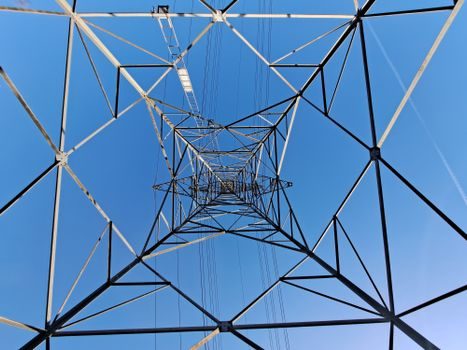
EN 1991-3:2026 (Actions on structures — Part 3: Actions induced by cranes and machines) replaces the prior edition and tightens the classification of bridge, gantry, and wall-jib cranes plus fixed machines with harmonic dynamic loading; the new text clarifies fatigue verification, dynamic-factor modelling, and harmonises partial action factors with EN 1990-1:2023+A1:2026 [S3]. EN 1991-4:2026 (Silos and tanks) covers actions from stored solids and liquids, including thermal differentials and structural modifications, and is relevant to stainless-steel and carbon-steel hopper design in bulk-handling plants [S3].
Three further Eurocode parts issued the same month address steel bridges, towers and masts, and tension components, each carrying revised partial factors and updated Annex guidance that engineers must apply on new CEN-jurisdiction projects from the publication date forward [S3]. Specifying teams should re-check crane runway girders, silo hoppers, and tension rod assemblies against the 2026 Annexes before signing off fabrication drawings.
Competitive Landscape: Top 10 Hold 49% of Capacity
The top 10 global steel producers — including ArcelorMittal, China Baowu Steel Group, Tata Steel, and Nucor identified in the MarketsandMarkets 2026–2031 outlook — represented 49% of global capacity [S4][S5]. China Baowu remains the single largest producer by volume, with ArcelorMittal, Tata, and Nucor anchoring the next tier; Nippon Steel's announced capacity footprint post-2024 transactions is not separately quantified in the cited summaries [S4].
Mid-cap producers and EAF minimills are gaining share in long products, rebar, and merchant bar, where shorter lead times and scrap-based feed economics undercut integrated supply chains on price. For procurement, this means steel-mesh and rebar from regional EAFs can be sourced on 2–4 week cycles, whereas heavy plate from integrated mills typically runs 8–14 weeks.
Decarbonization Trackers: Hydrogen, EAF, and Recycled Integration
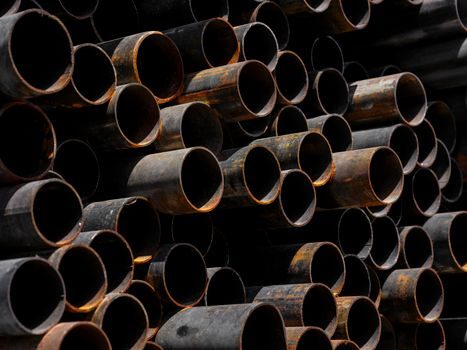
Hydrogen-based steelmaking projects increased 16% globally in the year to early 2026, carbon-reduction technology deployment expanded 21%, and recycled-steel integration rose 18%, according to the Business Research Insights steel-market dataset [S5]. The Specialty Steel industry-trend 2026 review notes that European producers face high energy prices and geopolitical exposure but benefit from local-content incentives tied to green-metal procurement [S7].
DRI-EAF hybrids using natural gas today and hydrogen tomorrow are the dominant new-build template; HYBRIT, H2 Green Steel, and ArcelorMittal's Sestao pilot are the named reference projects widely cited in 2026 outlooks. Procurement teams specifying steel-fiber reinforced concrete, rebar, or merchant bar can increasingly request mill certificates that disclose EAF scrap content and CO2 intensity per tonne, aligned with the EU CBAM reporting scope that took effect for steel in 2026.
Regional Demand Drivers and 2026 Macro Signals
Europe's 2026 outlook is shaped by increased defense spending, expanded infrastructure investment, and rising adoption of green-metal technologies that are pulling local manufacturing incentives into the policy stack, even as high energy prices and geopolitical shocks remain headwinds [S7]. Asia-Pacific demand stays anchored to Chinese property completions and Indian infrastructure build, with ASEAN non-residential construction adding incremental rebar and structural section pull.
North American demand is supported by the Inflation Reduction Act-linked manufacturing reshoring wave, which is pulling plate and structural steel into new battery, semiconductor fab, and EV assembly plants — a demand pocket detailed in the lithium battery production capacity planning and lithium battery production line design coverage. Specifiers tracking 2026 should watch the next Eurocode maintenance cycle, the EU CBAM Phase 2 reporting window, and the next DRI capacity commissioning announcements from Sweden and the U.S. Gulf.
See also our earlier report, Carton Erecting Machine Types: Station Class, Drive, and Output Specs.