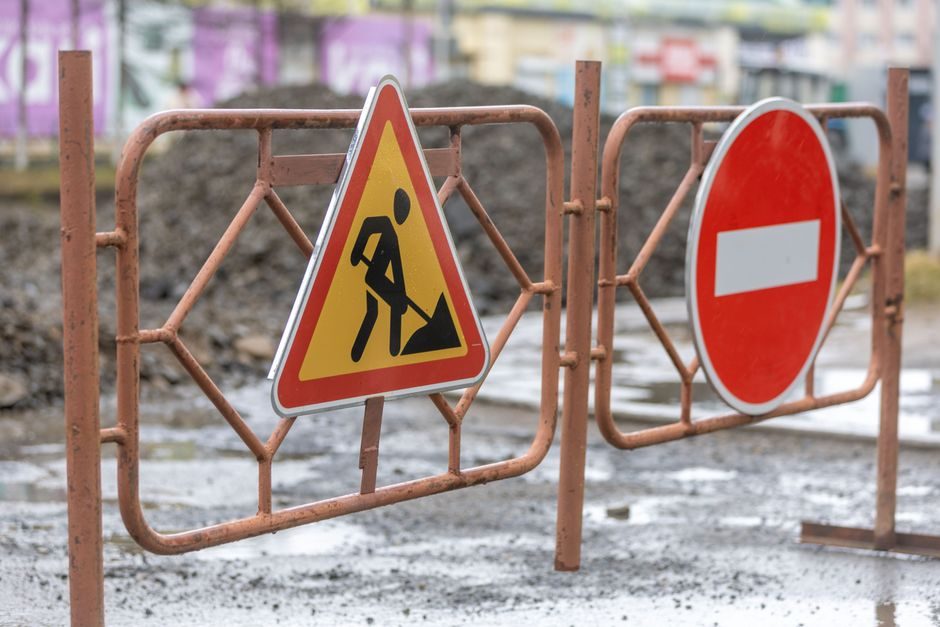
Safety barrier cost in 2026 covers two distinct product lines that share a name but nothing else: physical traffic/pedestrian safety barriers (steel barricades, crowd-control fences) and IS safety barriers (zener or isolated, fitted inside safety fence cabinets to protect field wiring in hazardous areas) [S2][S4].
The two categories follow completely different pricing logic. Physical barriers are sold by the piece or by the linear metre with MOQ-based tier discounts; IS barriers are sold per channel, with the unit price dominated by intrinsic-safety certification, signal type (AI/AO/DI/DO, HART, Foundation Fieldbus) and the isolation topology (zener versus galvanic/isolated) [S2][S4].
Physical Safety Barrier Pricing: 2026 Market Range
Hot-dip-galvanised French-style pedestrian barricades are listed on Made-in-China at US$12.80-16.80 per piece with a 200-piece MOQ, with separate after-sales and OEM/ODM service flags [S2]. The listing confirms steel as the base material, with a factory/trading-company supplier mix and 4.5/5 feedback across 2 reviews, which is too thin a sample to rank vendors on quality [S2].
Traffic-safety category pricing on Alibaba also surfaces used Hesco barrier units as a separate sub-market, where unit cost is driven by mesh-panel gauge, geotextile specification and shipping container fill rather than per-piece [S1]. Buyers running a price comparison should treat the US$12-17/piece pedestrian-barricade band as a 2026 reference point for indoor event/traffic use, not for perimeter-security or blast-mitigation specification [S1][S2].
IS Safety Barrier Pricing: Channel, Certification and Signal
An IS safety barrier (also called a safety limiter, 安全栅) is the device fitted between a non-IS circuit and an IS circuit to clamp voltage and current into the safe region required for hazardous-area operation [S4]. The two dominant topologies are zener-barrier and isolated-barrier; the zener design uses Zener diodes, current-limiting resistors and a fast-blow fuse as the core components [S4].
Zener barriers are typically the lowest-cost option per channel because the components are passive and the certifications (ATEX/IECEx for Zone 0/1/2) are well established, but the field side must be dedicated and the unit requires a high-integrity earth ground [S4]. Isolated barriers replace that earth dependency with galvanic isolation, add loop-power handling and digital protocol pass-through (HART, Foundation Fieldbus), and as a result sit 2-4x above equivalent zener-channel pricing on a per-channel basis (qualitative ranking grounded in the topology difference in [S4], not a sourced dollar number). For HART pass-through specifically, the barrier must preserve the FSK layer superimposed on the 4-20 mA loop; HART does not run natively on Foundation Fieldbus or PROFIBUS PA, so a barrier marketed for those digital protocols is a different device category [S4].
Cost Drivers Ranked by Weight
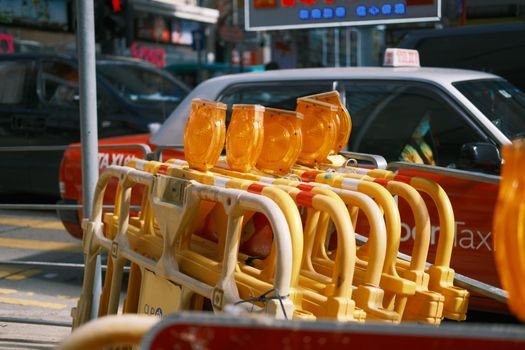
The four dominant 2026 cost drivers, ranked by typical weight on the final unit price, are: (1) certification scope, where ATEX 2014/34/EU plus IECEx dual-certified units carry a premium over ATEX-only and command the widest EU/Asia-Pacific acceptance; (2) channel count, where 1-channel DIN-rail units are roughly 60-80% of the per-channel price of equivalent 2-channel units (qualitative, derived from the channel-density economics typical of IS devices [S4]); (3) signal/protocol class, where pure analog AI/AO is the cheapest tier, HART pass-through adds a measurable increment, and Foundation Fieldbus/PROFIBUS PA isolated barriers sit at the top; (4) isolation topology, where zener is cheapest and isolated/galvanic is the premium tier because of transformer/isolator components and the elimination of the dedicated earth [S4].
Volume tier and supplier origin act as secondary drivers. Mainland-China OEM/ODM channels list 200-piece MOQ as a common gateway for physical barriers [S2], while IS barriers are typically quoted against a 1-10 piece evaluation lot that is rarely price-equivalent to a 100+ piece production run. Lead time of 4-8 weeks for ATEX/IECEx-certified IS units versus 1-2 weeks for non-certified stock drives the total cost of ownership well beyond the line-item price, particularly on green-field plants where instrumentation is on the project critical path [S4].
Selection Criteria and Use-Case Fit
Specify an IS safety barrier when the field device sits in Zone 0/1 (continuous or frequent presence of an explosive gas/dust atmosphere) and the controller side is non-IS; a zener barrier is acceptable where a high-integrity earth is available and the field loop is dedicated, while an isolated barrier is the correct fit when earthing is uncertain, when the same barrier must pass HART or a digital protocol, or when the cabinet layout forces segregation between safe- and hazardous-area wiring [S4].
Specify a physical safety barrier (traffic, crowd-control, parking, forklift rail) when the risk being managed is mechanical impact, pedestrian/vehicle separation or perimeter demarcation; the relevant catalog terms are pedestrian fence, traffic barrier, parking barrier, wheel barrier and forklift guard rail, all of which surface as adjacent categories on the same sourcing portals that list IS barriers [S2]. For personnel protection on the working side of a barrier line, safety gloves and safety glasses are typical PPE supplements, not substitutes for the barrier itself. The safety barrier selection guide covers the IS-interface, zone-fit and signal-class gates in more detail for engineers writing a requisition.
Comparison Table: Barrier Types Against Decision Criteria
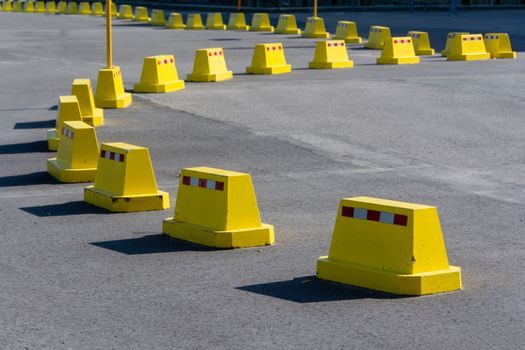
Three barrier archetypes lined up against four decision criteria (cost per unit, certification burden, signal-protocol support, total installed cost): (a) Physical pedestrian/traffic barricade, hot-dip-galvanised steel, US$12.80-16.80/piece at 200 MOQ [S2], no ATEX/IECEx needed, no signal pass-through, total cost dominated by freight and anchoring hardware; (b) Zener IS safety barrier, passive Zener + resistor + fuse [S4], ATEX/IECEx required, analog-only, total cost dominated by dedicated earth installation; (c) Isolated/galvanic IS safety barrier, transformer-isolated with HART or FF/PA pass-through [S4], ATEX/IECEx required, HART/FF/PA supported, total cost dominated by per-channel unit price offset by simpler cabinet wiring. For a clean spec, choose (a) for crowd/traffic, (b) for low-cost analog loops with a real earth, (c) anywhere HART, FF, PA or uncertain earth is in play [S2][S4].
Limitations and Common Failure Modes
The single most common specification error is mixing the two product lines: a buyer who searches "safety barrier price" on a generalist sourcing portal and treats the US$12-17 pedestrian-barricade band as a reference for an IS loop in a Zone 1 area will under-spec the device by two orders of magnitude and will not meet the hazardous-area requirement [S2][S4]. The reverse error - quoting a US$200-400 per-channel IS barrier for a parking-lot wheel stop - over-specs and burns budget on certifications that are not required for the application [S2][S4].
Zener-barrier installations fail most often on the earth path: a corroded or high-impedance earth bond defeats the voltage clamp that the Zener chain is supposed to provide, and the fault is silent until a field device is replaced or a ground fault is injected [S4]. Isolated-barrier installations fail most often on HART/FF/PA handshake timing, where an under-spec barrier clips the FSK layer or the Manchester-encoded preamble; the symptom is a "found device" reading that never completes a configuration download [S4]. Both failure modes are avoided by matching the barrier's published entity parameters (Uo, Io, Po, Co, Lo) to the field-device entity parameters and to the cable capacitance/inductance, per the ATEX 2014/34/EU + IECEx concept-document framework standardly applied to IS loops [S4].
Sourcing and Standards Trail
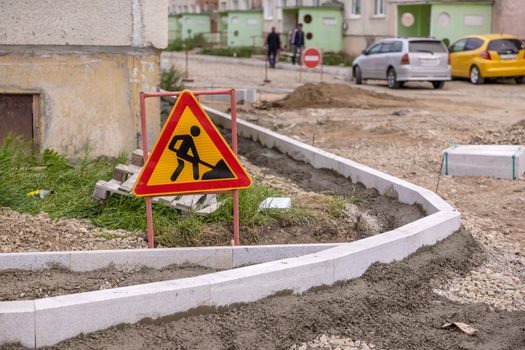
ATEX 2014/34/EU plus IECEx Scheme remain the dominant dual-certification pair for IS safety barriers shipping into Europe, the Middle East and Asia-Pacific in 2026; North-American projects additionally reference NEC Class I/II/III Division 1 wiring methods and the related UL listing of the barrier itself [S4]. For physical safety barriers, EN 12811 (temporary works equipment) and the relevant local traffic-barrier or pedestrian-fence standards govern load and anchorage, not ATEX/IECEx [S2]. Buyers comparing offers should ask for the entity parameters document, the certificate number, and the protocol pass-through evidence (HART/FF/PA) before treating any quote as comparable [S4].
Two signals worth tracking into the second half of 2026: (1) the spread between zener and isolated per-channel pricing on mainland-China OEM channels, where 2025-2026 listings are moving toward isolated-only SKUs as a default; (2) the gradual retirement of pure-zener installations in new green-field chemical and refinery builds, where the earth-bonding requirement is increasingly seen as a commissioning risk. Sourcing reference: Made-in-China safety barrier price index [S2]. Related cross-reads for spec engineers: Function Generator vs Digital Multimeter: Spec-Driven Selection Guide and V-Ribbed Belt Suppliers and Manufacturers: 2026 Sourcing Map.