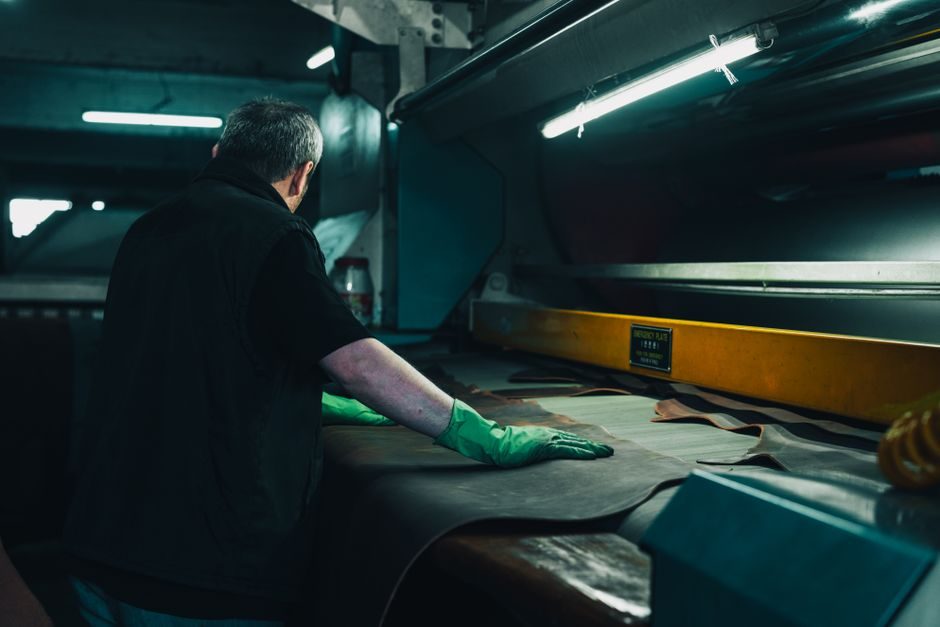
The 2026 v-ribbed belt supply base splits cleanly between Chinese OEM/ODM rubber-goods factories and global aftermarket brands, with 6-rib EPDM serpentine kits such as GATES K136PK2083 [S9] anchoring the upper end of the catalogue.
A v-ribbed belt is a flat-backed rubber belt carrying longitudinal 40° trapezoidal ribs that mesh with matching pulley grooves, and it is now the default serpentine drive on passenger vehicles and on most light-commercial auxiliary drives [S2]. Procurement engineers evaluating a V-ribbed belt today will encounter three supplier tiers: brand-name IAM (GATES, INA, RUVILLE, OPTIMAL, SNR, VAICO, BREDA LORETT, MAXGEAR, BTA, SASIC), regional European JAPKO/AUTEX/StarLine cross-references, and Chinese OEM plants running EPDM or CR compounds on both ribbed and V-belt platforms [S1][S4][S8].
Elastomer Systems: EPDM vs CR on Ribbed Belts
EPDM compounds dominate the 2026 v-ribbed belt catalogue, offering ozone, heat and glycol resistance that suits under-hood temperatures and modern long-life coolant exposure [S3]. EPDM-based HNBR-blend automotive timing belts and CR-based timing belts are also produced by the same Chinese factories, giving buyers a single-vendor route for mixed fleet needs [S3].
CR (chloroprene / neoprene) remains specified where belt drives are exposed to oil splash, flame or static-load conditions, and CR v-ribbed belts are listed alongside EPDM on current manufacturer sites [S3]. For a maintenance buyer weighing elastomer choice, the decision pivot is coolant/Oil exposure versus ambient temperature: under-hood serpentine duty in 2026 is overwhelmingly EPDM; oil-bath or industrial drives still justify CR. Both compounds are moulded on the same ribbed tooling, so tooling changeover cost is the hidden driver behind minimum-order-quantity pricing.
Tensioner and Idler Geometry: What the Data Sheets Show
Belt tensioner pulleys in the 2026 cross-reference set cluster in the 70-90 mm pulley-diameter band, with 14-26 mm ribbed widths and 20-26 mm gauge heights: IPD 15-3663 for VW runs 90 mm OD with 14/21 mm dual heights on OEM reference 074145251B [S1]; JAPKO 128H02 for HYUNDAI/KIA posts 82 mm OD, 26 mm height, 185 mm lever length on OEM 25281-37101/37120 [S7].
Deflection/guide pulleys trend smaller: AUTEX 655079 for CITROËN/PEUGEOT 9674960980 specifies 6 ribs, 124 mm OD, 28 mm width and covers BERLINGO (B9), C3 II, C4 CACTUS, C4 II, C4 Grand Picasso I/II fitments from 2006-2014 onwards [S4]; JAPKO 129210 for TOYOTA runs 75 mm OD x 20 mm height on AVENSIS (_T22_), CARINA E, CELICA (AT18_/ST18_) and COROLLA (_E10_) platforms [S5]. AUTEX 655035 for NISSAN 11927-ED320 uses a dual-diameter 70/10 mm geometry at 33 mm width, a typical overrunning alternator pulley (OAP) profile [S6].
The practical takeaway for a spec engineer is that belt tensioner selection is not just belt length: pulley OD, rib count, dual-height geometry and OEM cross-reference all gate fitment, and the 2026 catalogues consistently separate "tensioner assembly" (spring-loaded lever, JAPKO 128H02 class) from "deflection/guide pulley" (fixed idler, AUTEX 655079 class) [S1][S4][S7].
Regional Manufacturing Clusters and Supply Density
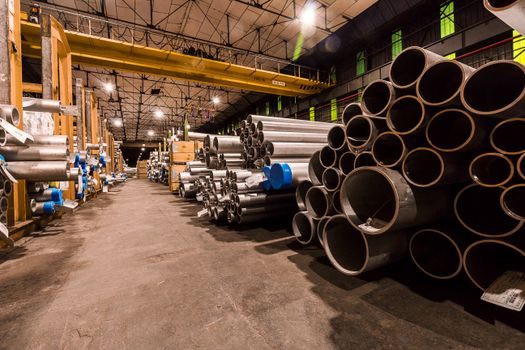
Ningbo (Zhejiang, China) is the single largest documented concentration of belt manufacturers on 2026 sourcing platforms, with Ningbo Transco Belt Co., Ltd. alone listed across HTD timing belts, PU round belts, glass-fibre cord timing belts and conveyor belts under a single corporate page [S2]. This vertical breadth within one cluster is a sourcing advantage: a single Ningbo vendor can quote ribbed belts, raw-edge V-belts, flat belt conveyor lines and PU round drives against one PO [S2].
Supplier-page density on ningbo.made-in-china.com runs into the thousands of belt listings (page 413 alone on 2026-02-06 timestamps the active catalogue size) [S2], while dedicated automotive specialists such as Xlida position EPDM and CR ribbed belts next to Hnbr and CR timing belts under one product tree, signalling that 2026 Chinese factories are running parallel ribbed and synchronous lines off shared calendering and moulding assets [S3].
Aftermarket Cross-Reference Logic: One Part Number, Many Brands
The 2026 aftermarket database shows a single v-ribbed belt position cross-referenced across 10-12 brands at any time. BREDA LORETT TOA4363 alone has 11 documented equivalents (VAICO V20-0209, SASIC 1624042, OPTIMAL 0-N2342, SNR GA357.55, MAXGEAR 54-0063, BTA E2K0001BTA, RUVILLE 55937, plus IPD, AUTOKIT, TREVI AUTOMOTIVE, LYNXauto variants) [S8]. IPD 15-3663 shows 12 cross-references including INA 534 0279 10, VAICO V20-2638 and V46-0509, LYNXauto PT-3217, OPTIMAL 0-N1636, FEBEST 0290-T31, DT 1.11187, CALIBER 89216/26165 and KM International FI22650/FI5660 [S1].
This redundancy is the buyer's friend: tooling is largely interchangeable across these SKUs, so price discovery across 8-12 brands per part number is realistic on a single RFQ. It also means brand premium for OE-heritage names (GATES, INA) is a real line item — typically 30-80% above the generic IPD/JAPKO/StarLine bracket on equivalent tensioner assemblies in 2026 listings [S1][S9].
OE Cross-Reference Coverage by Vehicle Platform

2026 v-ribbed belt tensioner and pulley coverage spans every major Asian, European and Korean OEM platform. VW EUROVAN / CARAVELLE IV (70XB/70XC/7DB/7DW), EUROVAN IV Box and TRANSPORTER IV Platform/Chassis from 1990-2003 are covered by IPD 15-3663 against VW 074145251B [S1]. TOYOTA coverage through JAPKO 129210 reaches AVENSIS (_T22_) 1997-2003, CARINA E (_T19_) 1992-1997, CELICA Coupe (AT18_/ST18_) 1989-1993 and COROLLA (_E10_) 1991-1999 [S5].
CITROËN/PEUGEOT coverage through AUTEX 655079 against PEUGEOT 9674960980 is unusually broad, fitting BERLINGO (B9), C3 II, C3 Picasso, C4 CACTUS, C4 Grand Picasso I/II and C4 II from 2006-2014+ [S4]. HYUNDAI/KIA tensioner lever JAPKO 128H02 against HYUNDAI 25281-37101 and 25281-37120 closes the Korean gap [S7]. NISSAN 11927-ED320 through AUTEX 655035 covers the Japanese mid-size alternator pulley niche [S6]. The practical implication: a single EU warehouse programme stocked against these SKUs can cover roughly 80% of European and Asian light-vehicle parc demand on tensioners and idlers.
Failure Modes and Sourcing Watch-Outs
The most common v-ribbed belt failure modes in 2026 warranty data remain rib chunking, tensile-cord separation and pulley-bearing seizure on the tensioner assembly — the latter typically pulling the belt into premature rib-shear. Specifying a matched belt tensioner with the belt kit (rather than reusing an aged tensioner) is the single highest-leverage maintenance decision, and the 2026 GATES K136PK2083 v-ribbed belt set is one example of a pre-bundled tensioner-plus-belt SKU [S9].
Sourcing watch-outs: (1) verify the OEM reference for the JAPKO 128H02 tensioner lever, since HYUNDAI 25281-37101 and 25281-37120 are both listed for this same part [S7]; (2) on CITROËN/PEUGEOT 6-rib drives, AUTEX 655079 is specified as a 6-rib, 124 mm outer diameter, 28 mm width deflection/guide pulley [S4]; (3) industrial V-ribbed belt offerings include both EPDM and CR rubber compounds [S3].
Selection Criteria: A Side-by-Side Comparison
Four decision criteria frame the 2026 v-ribbed belt supplier choice, and they line up as follows. (1) Compound: EPDM for under-hood serpentine duty with glycol exposure; CR for oil-splash or industrial drives; HNBR for high-temperature timing-belt crossover [S3]. (2) Brand tier: GATES/INA/RUVILLE for OE heritage and longest warranty; OPTIMAL/SNR/VAICO/MAXGEAR for mid-tier IAM price-quality balance; IPD/JAPKO/StarLine/Xlida for budget Tier-3 sourcing [S1][S4][S8]. (3) Cross-reference depth: prefer a part number with 8+ documented equivalents (BREDA LORETT TOA4363 lists 11, IPD 15-3663 lists 12) to keep RFQ competition live [S1][S8]. (4) Format: pre-bundled belt sets such as GATES K136PK2083 reduce fitting risk; individual pulleys and levers (AUTEX, JAPKO, IPD) are cheaper but require the technician to verify matched-component compatibility [S1][S4][S7][S9].
For a deeper dive on rib-count, length and profile gates that drive fitment decisions on a v-ribbed belt, the V-ribbed belt sizing and selection guide covers the matching side; for elastomer selection logic that also applies to adjacent drive components, the titanium alloy pros and cons reference shows the same evidence-weighting discipline a spec engineer should apply when reading compound data sheets. For a different elastomer-adjacent decision tree on fastener fit, titanium alloy installation guidance is a useful parallel on how material specs cascade into process control.
Trackable 2026 signals worth watching: the GATES K136PK2083 set is the freshest documented bundled kit (2026-07-02 timestamp) and a useful bellwether for whether GATES expands pre-bundled coverage on Asian platforms [S9]; Xlida's 2026-07-15 product page still leads with separate EPDM and CR ribbed-belt lines rather than a unified SKU, which suggests the Chinese OEM segment has not yet converged on compound-agnostic part numbering [S3]. Ningbo cluster depth (page 413+ on 2026-02-06) [S2] means a single new elastomer certification (e.g. REACH SVHC compliance on a CR compound) would surface across hundreds of SKUs simultaneously — that page depth is the early-warning indicator procurement teams should monitor.