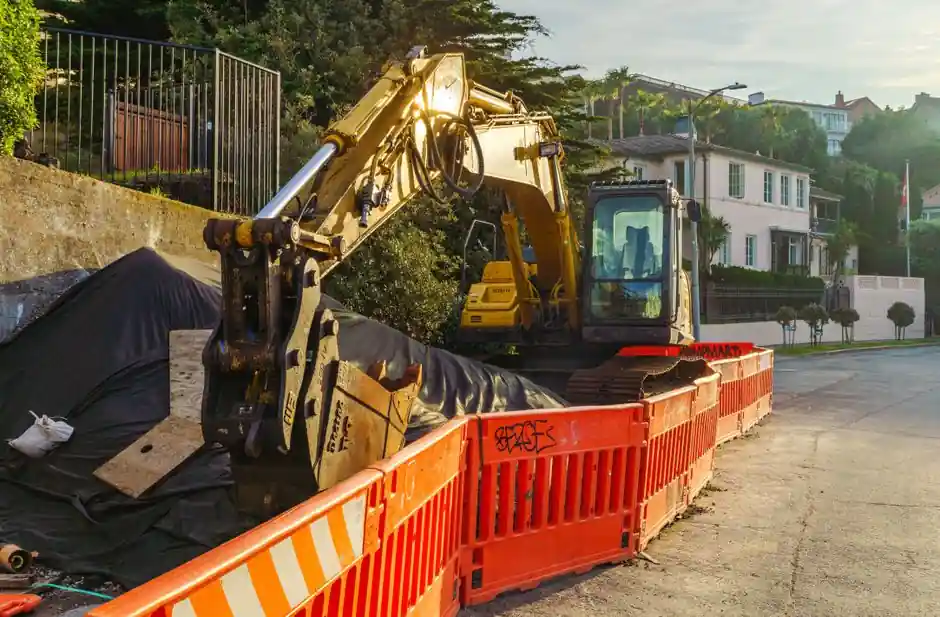
For buyers specifying a safety fence or perimeter barrier in 2026, the dominant material call is steel: properly galvanized and powder-coated steel systems reach 40 to 50 year service life, against 25 to 35 years for chain link and aluminum, and just 10 to 15 years for wood [S2]. The right pick is governed less by style and more by the framework standard, coating class, and post-spacing math that matches your wind zone and threat profile.
Industrial perimeter duty sits in a different universe from residential garden fencing [S1]. A spec-first 2026 buy follows three layers: the framework tube grade (ASTM F1043 group, AASHTO M181 for transport corridors, RR-F-191 for federal chain link jobs) [S3], the infill mesh or panel rating, and the foundation/post embedment for the rated wind load. Treat those three as a single coupled system and the shortlist shrinks fast.
Material durability ranking for safety-grade fence duty
Steel fence ranks first on durability in 2026 spec comparisons, with verified service life of 40-50 years when properly coated, outperforming wrought iron at 30-40 years (maintenance-dependent), chain link at 25-35 years, aluminum at 25-35 years, vinyl at 20-30 years, and wood at 10-15 years [S2]. The ranking is built on five measurable factors: moisture and soil-contact reaction, UV and temperature exposure, strength under impact, coating and finish quality, and ongoing maintenance demand [S2].
Galvanized zinc plus powder coat is the dominant 2026 finish stack for safety fence: the zinc sacrifices itself to protect the steel core, while the powder coat reduces surface wear and UV chalking. In humid or coastal sites, vinyl-coated chain link and aluminum both earn their place because they will not rust, even though they trade raw strength for that corrosion immunity [S2].
Framework standards that actually govern the spec
The 2026 fence framework landscape is anchored on four reference documents that most U.S. commercial, industrial, and transport projects cite on the drawings: ASTM standards (which define fence framework strength, wall thickness, coatings, and dimensional tolerances), Federal Specification RR-F-191 (which governs chain link fence system requirements), AASHTO M181-10 (commonly specified for highway, transportation, and infrastructure fencing), and FAA fencing requirements for airside and perimeter installations [S3].
Inside ASTM, F1043 is the framework group most specifiers pull from. ASTM F1043 Group IC is the high-security tier, and the only domestic-made fence framework meeting it in 2026 is Wheatland's WT-40 line, designed for high-security and specification-driven applications [S3]. One rung down, WT-20 carries a certified minimum yield strength of 50,000 psi and is the dependable option where higher wind loads, longer spans, or increased fence height are required [S3]. Light commercial and industrial jobs typically step further down to WT-15, paired with continuous hot-dip galvanization and a clear polymer topcoat for smoother finish and improved corrosion resistance [S3].
Selection criteria: pick by duty, not by catalog photo
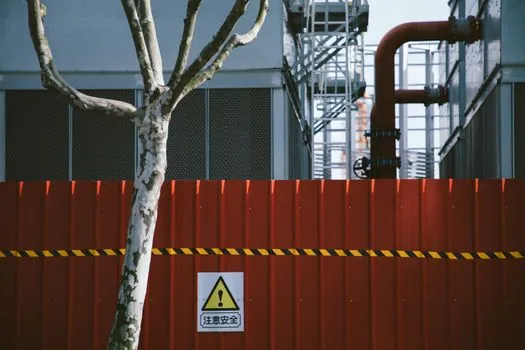
For a buyer or specifier, the shortest path to a defensible 2026 shortlist is to map the duty to the framework tier before you look at panel infill. Light commercial or residential boundary duty maps to WT-15 / Group IA equivalent. Heavy commercial and industrial duty with wind load or taller panels maps to WT-20 / 50,000 psi yield minimum. High-security perimeter, correctional, or critical-infrastructure duty maps to WT-40 / ASTM F1043 Group IC [S3].
Three decision variables dominate that mapping: post spacing (which drives wind-load and impact rating), wall thickness of the framework tube (which drives the yield margin), and the coating class (which drives the corrosion-life margin). Fence specifications today demand a higher level of code compliance than in previous years, and local, state, and federal requirements specify pipe type, post spacing, wind load performance, and corrosion resistance as coupled parameters [S3].
Comparison: main fence options against buyer decision criteria
Lining the four realistic options up against the criteria a safety-fence buyer actually weighs: steel fence scores 40-50 years life, highest impact strength, and high corrosion resistance with proper coating, at a higher upfront cost; wrought iron scores 30-40 years with maintenance, very high impact strength, but lower corrosion margin if paint fails; chain link scores 25-35 years, moderate impact, good corrosion with vinyl coat, and the lowest material cost; aluminum scores 25-35 years, lower impact (bends under pressure), excellent corrosion (will not rust), and mid-range cost [S2].
The decision shortcut: pick steel when impact and lifespan dominate, pick aluminum when corrosion dominates and impact is low (pools, coastal residential), pick chain link when budget and large linear footage dominate, and pick wrought iron only when an operations team can commit to a multi-decade repaint cycle [S2]. Pool duty has its own sub-rule: the 2026 pool-fence buyer shortlist focuses on aluminum and mesh as the two dominant child-safety materials, compared across strength, climb resistance, transparency, and code compliance [S6].
Who should NOT pick the mainstream steel option

Steel is the default 2026 pick, but it is the wrong call in three specific cases. First, residential pool enclosures where non-conductive, rust-free, lightweight material is preferred over raw strength: aluminum and mesh dominate here, and steel's hardness is overkill for a child-safety climb-resistant boundary [S6]. Second, very large linear perimeters (multi-mile utility or municipal runs) where chain link's cost-per-foot advantage outweighs steel's lifespan premium, and the threat model is deterrence rather than forced-entry resistance [S2]. Third, decorative front-yard installations where the buyer is chasing curb-appeal trends (2026 design pulls lean toward horizontal wood/composite and decorative iron/aluminum) rather than a 40-year service life [S5].
For the safety-fence buyer specifically, the failure modes that bite hardest in service are rust at the post-base soil line, wind-load overstress on undersized framework, and brittle infill panels (vinyl, glass) cracking under thermal cycling or impact. Wood's failure mode is rot and warp at ground contact; the 10-15 year life is not a maintenance budget issue, it is a structural-life issue [S2].
Standards and sourcing discipline for 2026 procurement
The 2026 spec stack reads as follows on the print: ASTM F1043 (framework group and strength), AASHTO M181-10 (transport-corridor chain link), RR-F-191 (federal chain link systems), and FAA advisory circular for any airside perimeter [S3]. For pool-safety duty, add the local IBC pool barrier code and any state-specific child-safety amendments; material selection (aluminum vs mesh) follows from those local code constraints, not from generic catalog copy [S6].
Style and finish trends matter only after the framework and code layer is locked. The 2026 design direction favors horizontal wood and composite lines for curb appeal and decorative iron and aluminum for ornamental frontage, but those are residential curb-appeal trends, not safety-fence specification drivers [S5]. If your duty is industrial or commercial perimeter, stay on the framework-spec axis; if your duty is residential boundary, then the style layer becomes relevant. Material cost spreads roughly: steel is the premium pick, aluminum and wrought iron sit mid-range, chain link anchors the low end, and wood and vinyl are budget-tier with shorter service life [S4][S2]. For the rare case where equipment inside the perimeter is sensitive to dust ingress, the same spec-first logic that drives safety barrier selection also drives the infill mesh rating. Across all of these, the buying logic is identical: confirm the framework standard and group, confirm the coating class, then confirm post spacing and wind-load math before you look at color.
Trackable signals for the next 6-12 months: revisions to ASTM F1043 group tables (drives whether WT-40 retains its domestic-only status), AASHTO M181 revision cadence for transport-corridor jobs, and any FAA advisory circular updates touching airside perimeter fence. For buyers sourcing raw steel tube, the spec-first discipline that governs cobalt raw material sourcing maps cleanly onto fence framework sourcing: grade, origin, and standard come before price. Buyers who also handle machine guarding on the same site should cross-reference machine safety standards to keep the perimeter fence and the in-cell guarding on a single code basis.
Detailed specification references: safety fence.