A fall arrest harness must comply with ANSI Z359.11-2021 and OSHA 29 CFR 1926 Subpart M, the 6 ft construction trigger height, and a 130-310 lb combined-user-and-tool capacity window, before any comfort or brand question is even on the table [S3][S4].
The selection mistake I see most often on industrial sites is treating a harness like a generic commodity: crews buy a dorsal-D-ring model, then later need positioning, climbing, or rescue attachment points and end up doubling up on gear. The fix is to specify by D-ring count, webbing material, buckle type, and impact-indicator logic up front, then check that against the actual work task and environment [S1][S3][S4].
Standards Gate: What the Harness Must Comply With Before Anything Else
OSHA 29 CFR 1926 Subpart M requires personal fall arrest systems for construction workers exposed to a fall of 6 ft or more, and the harness itself must be designed to ANSI Z359.11-2021, which covers performance, design, marking, and qualification testing [S3][S4]. General industry falls under 29 CFR 1910.140, with a 4 ft trigger height, and many manufacturers publish dual-rated models to cover both [S4].
OSHA's most-cited violation list in 2025 again placed general fall protection at #1, with fall-protection training requirements also in the top ten at #6, so a compliant harness tag plus a trained worker is the minimum audit-ready package [S3]. Tags must remain intact and legible; if the manufacturer label is missing or unreadable, the harness is effectively out of service regardless of webbing condition [S5].
Capacity is also a hard gate: full-body harnesses covered by ANSI Z359.11-2021 are rated for a combined user-plus-tool mass of 130-310 lb, and exceeding that range puts the arrest-force calculations out of certification [S4]. Workers carrying tools, hot-work gear, or rescue kits need to add that mass to their body weight before sizing the harness.
D-Ring Count and Location: The Core Selection Decision
A 1-point harness carries a single dorsal D-ring between the shoulder blades and is built strictly for fall arrest on vertical or low-clearance work [S4]. A 2-point harness adds a second D-ring (typically side, sternal, or shoulder) and is the minimum for any task that combines arrest with positioning, climbing, ladder safety, or rescue rigging [S3][S4].
Side D-rings sit on the hips and pair with positioning lanyards so a worker can lean against a vertical surface (tower, rebar column, form wall) hands-free; dorsal-only harnesses cannot do this safely and tend to be misused as a substitute [S3][S4]. Sternal D-rings on the chest are used for ladder safety systems and some rope-access climbs, while shoulder D-rings are rescue-only attachment points that keep the victim upright during extraction [S4].
For confined space entry and rescue, the harness needs a front/sternal D-ring for descent devices and a shoulder D-ring pair for hoist extraction; an arrest-only dorsal harness is the wrong tool and has been involved in documented suspension-asphyxia incidents [S1][S4].
Webbing, Stitching, and Buckle Logic
Webbing on compliant harnesses is polyester or nylon strap rated to spread fall forces across the thighs, chest, shoulders, and pelvis; sub-pelvic straps are the key load path that prevents the wearer from sliding through the harness during arrest [S3][S4]. Chest straps must be fastened to keep shoulder straps from separating on impact, and leg straps must be tensioned so a hand cannot slide flat between the strap and the leg [S3][S4].
Buckle choice is a real trade-off: tongue-and-buckle leg straps (classic parachute style) hold adjusted tension under vibration and are common on construction and tower work, while quick-connect buckles speed up donning for crews that clip in and out many times per shift but can loosen if not fully engaged [S3][S4]. FallTech and Malta Dynamics both publish tongue-buckle and quick-connect variants in the same product line, so the decision is task-driven, not brand-driven [S1][S4].
Impact indicators are sewn or color-changing elements that deploy under arrest load; once deployed, the harness is permanently out of service, which removes the visual-judgment step during inspection and is increasingly standard on ANSI Z359.11-2021 builds [S4]. Trauma suspension straps, padding, and reflective trim are comfort and post-fall survival features, not safety-critical for the arrest event itself, but suspension trauma straps are strongly recommended for any worker whose rescue plan exceeds a few minutes [S4].
Matching Harness Type to Work Environment
FallTech groups full-body harnesses by use case: fall arrest (6-12 ft free-fall risk), positioning, ascending/descending, rescue/confined space, and climbing, with the D-ring pattern being the dominant differentiator [S1]. A tower-climb or wind crew will want a multi-point harness with sternal and seat/hip support, while a roofer doing shingle work on a low-slope deck usually only needs dorsal plus side positioning rings [S1][S3].
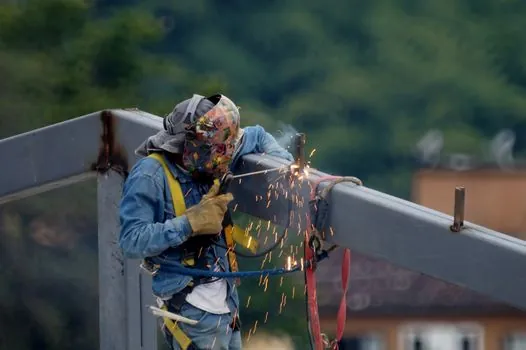
High-heat environments (foundries, hot work near molten metal, welding) call for flame-resistant webbing and aramid-rated stitching rather than standard nylon, plus leather or heat-resistant dorsal keepers; arc-flash harnesses are a defined subcategory with arc-rating labels that must match the site's energized-work plan [S3]. Cold or wet environments favor coated buckles to prevent slip and corrosion, and reflective strips for low-light visibility [S4].
For work over water, a fall arrest harness must be paired with a separate retrieval system, since OSHA fall-arrest rules treat water immersion as a rescue, not a recovery, scenario; this is also where shoulder D-rings become relevant for hoist extraction [S1][S3].
Who Should NOT Use a Standard Dorsal-Only Fall Arrest Harness

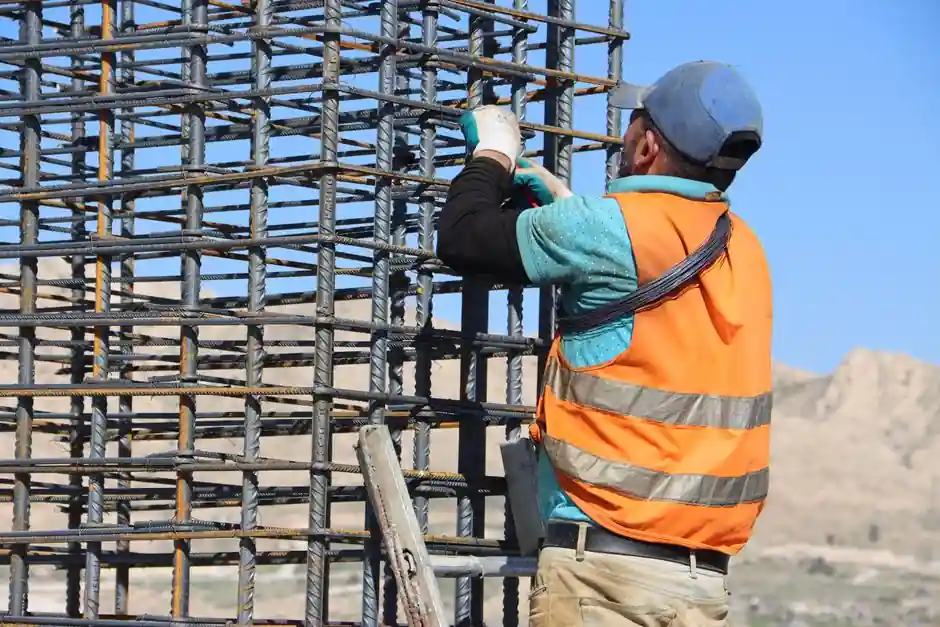
Any task requiring hands-free vertical work (rebar tying on a column, formwork stripping, tower erection) is a poor fit for a dorsal-only harness because workers will improvise with the arrest ring as a positioning point, which is against its design and breaks ANSI Z359.11-2021 use rules [S3][S4].
Confined space entry, industrial rescue teams, and rope-access technicians need sternal plus shoulder or front D-rings, plus seat support, because a dorsal-only arrest can leave a casualty hanging face-down, which both delays extraction and worsens suspension trauma [S1][S4]. For a wider look at how layered safety gear is specified for elevated work, see our insulated tools selection guide.
Workers above 310 lb combined mass need a rated oversized (often 311-420 lb) harness specifically marked for that range; a standard 130-310 lb harness is out of certification at that loading even if the straps visually fit [S4].
Inspection, Service Life, and Field Retirement Criteria
Pre-use inspection must verify the manufacturer's tag, the stitching at every load-bearing junction, the webbing for cuts or burns, the D-rings for distortion or corrosion, and the buckles for full engagement; OSHA requires the tag to be present and legible to confirm ANSI/OSHA compliance, and a missing tag is a field-retirement trigger on its own [S5].
Service life is typically 5 years from first use for nylon and polyester webbing in general industry, with many manufacturers (including Malta Dynamics and FallTech) requiring retirement after any arrest event, after 5 years of use, or after 10 years from manufacture, whichever comes first [S1][S4][S5]. Chemical exposure, weld splatter, and UV-heavy outdoor use shorten that window even without a fall event, so site records should track first-use date and exposure history, not just manufacture date [S4][S5].
Impact indicators that have deployed, any cut deeper than a superficial scuff in a load-bearing strap, or any buckle that does not fully seat are immediate retirement conditions regardless of age [S4][S5].
Comparison: Dorsal-Only vs 2-Point vs Multi-Point / Rescue Harnesses

On a small rebar tying job at 8 ft with no vertical climbing, a 1-point dorsal harness at the lower end of the 130-310 lb capacity range is enough and minimizes snag points; a 2-point dorsal-plus-side model becomes the right pick the moment the worker needs both hands free against a vertical surface [S3][S4]. For confined space, a multi-point rescue harness with sternal and shoulder D-rings plus a seat sling is mandatory, because a dorsal-only rig cannot keep an extracted worker upright [S1][S4].
Cost roughly tracks D-ring count and webbing spec: a basic dorsal harness is the cheapest compliant option, 2-point positioning harnesses add 20-40% in price, and multi-point rescue/confined-space harnesses with seat support and trauma straps are the top of the range [S4]. For a different spec-driven cost map, see our warning tape spec rules and our dust detector spec map for adjacent safety-equipment selection logic.
Selection Logic and Shortlist
Step 1: Confirm the trigger height (6 ft construction, 4 ft general industry) and the free-fall distance (must stay under 12 ft for a standard arrest setup), then verify combined user-plus-tool mass sits in 130-310 lb [S1][S3][S4]. Step 2: Match D-ring count to the work: dorsal-only for straight arrest, dorsal+side for positioning, dorsal+sternal for climbing, multi-point with shoulder rings for rescue and confined space [S3][S4].
Step 3: Pick webbing and buckle for environment: FR webbing for hot work, coated buckles for wet or marine sites, tongue buckles for vibration, quick-connect for high-churn donning [S3][S4]. Step 4: Lock inspection and retirement: tag present, impact indicator undeployed, webbing within 5-year use window, no chemical or heat damage, retirement after any arrest event [S4][S5].
Trackable next signals: OSHA's FY 2025 top-10 list (fall protection at #1, training at #6) and any revision activity around ANSI Z359.11 beyond the 2021 edition, which will shift certification dates and tag requirements across the fleet [S3][S4]. For a complete reference on fall arrest harness components, see our fall arrest harness encyclopedia entry.
Spec-level background on the components involved: pressure transmitter, and flow meter.