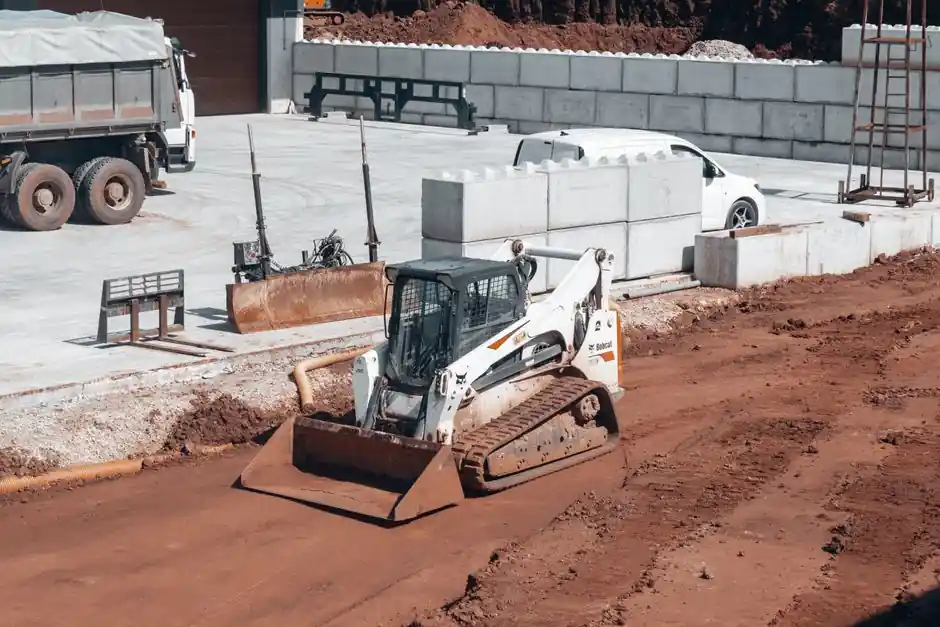
Demolition skid steer selection is a numbers game. Rated operating capacity, auxiliary hydraulic flow, and frame class (small under 1,750 lb ROC, medium 1,750-3,000 lb, large 3,000-4,500 lb) drive attachment match-up with breakers, shears, and pulverizers, per OEM and rental-guide data current to mid-2024 [S7][S8].
Diesel remains the default power source for rigorous demolition because diesel skid steers from brands such as Bobcat, Caterpillar, John Deere, and Kubota deliver the torque and hydraulic muscle needed for breakers and shears, while electric and compact gasoline units stay limited to light interior trim-out [S1].
Frame Size Tiers and Where Each One Earns Its Keep
Three frame tiers map cleanly to demolition workloads. Small-frame skid steers carry rated operating capacity below 1,750 lb, typically under 50 hp, and earn their place in interior demolition, landscaping, and underground work where the machine footprint and low tip weight matter more than raw lift [S8][S2].
Mid-size loaders, defined at 2,000 to 3,000 lb ROC, 60 to 80 hp, and 7,000 to 10,000 lb operating weight, are the demolition workhorses for moderate breakers, mulchers, and concrete pulverizers on general construction sites [S7]. Large-frame units, 3,000 to 4,500 lb ROC and 75 to 100 hp, run heavy-duty hydraulic breakers and demolition shears on exterior structural work [S7].
For ASV as a concrete example within the large tier, the VS-75 vertical-lift model posts 3,500 lb ROC, 8,910 lb operating weight, 74.2 hp engine, and 130 in lift height at pin, numbers that line up with sustained breaker duty on concrete slabs [S2].
Interior Demolition: Pick Compact, Maneuverable, Low-Height
Interior demolition forces a compact envelope. Small-frame skid steers with low overall height and narrow width are commonly the only option for residential interior demo, mall tear-outs, and greenhouse work because larger frames physically cannot clear doorways and corridors [S5][S2].
Recommended selection criteria for interior work: ROC under 1,750 lb, engine power under 50 hp, machine width narrow enough for standard door openings, and compatibility with low-noise, low-vibration attachments such as hydraulic breakers sized to the auxiliary hydraulic flow rating [S1][S8]. Brands such as John Deere and Kubota are frequently cited for interior maneuverability in confined spaces, while attachments like demo shears handle flooring, drywall, and non-structural concrete [S1][S4].
For an overview of how compact loaders compare to other compact earthmoving equipment, see the backhoe loader reference and the skid steer loader encyclopedia entry, both of which frame the size-and-capability envelope.
Exterior Demolition: Lift Capacity, Hydraulic Flow, Stability
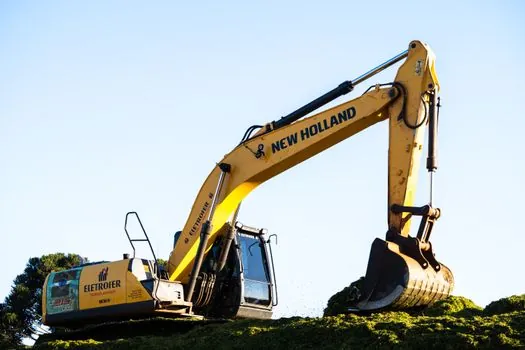
Exterior demolition is where ROC, auxiliary flow, and stability separate productive machines from overloaded ones. Mid-to-large frame skid steers with ROC in the 2,000-4,500 lb band and 60-100 hp engines pair with heavy-duty hydraulic breakers, concrete processors, and demolition shears sized to the machine's auxiliary hydraulic circuit [S7][S3].
Selection criteria for exterior work: ROC at least 2,200 lb, engine power 70 hp or higher for continuous breaker operation, high-flow auxiliary hydraulics to drive 1,500+ ft-lb-class breakers, and either radial or vertical lift geometry matched to the attachment's reach and lift-path demand [S8][S2]. Vertical-lift machines, such as the ASV VS-75, reach 130 in at the pin, useful for loading demo debris into high-sided dump trucks [S2].
For comparison, a wheel loader is more efficient at sustained bulk loading, but cannot match a skid steer in confined exterior demo zones such as alleyways, urban infill sites, or partial-structure take-downs where the compact footprint is non-negotiable [S1][S4].
Demolition Attachment Match-Up and Hydraulic Demand
Attachments drive the spec sheet, not the other way around. Common demolition attachments include hydraulic breakers, demolition shears, concrete pulverizers, and grapples, each with its own hydraulic flow and pressure requirement that the host skid steer must meet on its auxiliary circuit [S1][S3][S4].
Selection criteria: match breaker ft-lb class to machine ROC and hydraulic flow, use demolition shears for rebar and structural steel separation, and spec concrete pulverizers for slab and wall reduction. Tag Equipment's guidance stresses scrutinizing auxiliary hydraulic flow and attachment compatibility as foundational steps before purchase [S1].
For heavier breakout work where a breaker is undersized, contractors often cross over to a demolition hammer specification, which trades skid steer mobility for higher per-strike energy on mass concrete.
Tires, Tracks, and Undercarriage for Demo Sites

Demolition sites punish undercarriages. Puncture-resistant, heavy-duty tires are the default on wheeled skid steers for mixed rubble terrain, while steel-track and rubber-track undercarriages are specified on softer ground or where flotation and lower ground pressure are required [S1].
Mid-size loaders, those 7,000 to 10,000 lb units, can leave deeper tire marks on soft ground, so plan for surface protection or track conversion on finished surfaces [S7]. Regular maintenance items specific to demo duty include hydraulic fluid inspection for particulate contamination, pivot-point greasing, and undercarriage wear checks at every service interval [S1].
Safety Features Specified for Demolition Service
Demolition work is a safety-credentialed application. Required safety features on a demolition-spec skid steer include enhanced cab visibility via camera systems, operator-friendly intuitive controls, and quick-acting emergency shutdown systems, all flagged as non-negotiable in current demolition-equipment guidance [S1].
Selection criteria for safety: pressurized cab with filtered air intake for dust-laden interiors, ROPS/FOPS structure, and reversing alarms. The cab visibility and shutdown criteria are described as essentials in the OEM-aligned demolition guide, though specific certification numbers are not stated in the public guidance [S1].
Side-by-Side Comparison: Small vs Mid vs Large Frame for Demolition
Three frame tiers, four decision criteria. The compact table below lines up the typical demolition envelope so a buyer or rental desk can pick a frame class in one pass [S7][S8][S2]:
Small frame: ROC under 1,750 lb, engine under 50 hp, operating weight roughly 4,000-6,000 lb, best for interior demo, landscaping, and tight residential access; not suitable for heavy breaker or shear work. Mid-size frame: ROC 2,000-3,000 lb, 60-80 hp, 7,000-10,000 lb operating weight, balanced for moderate breakers, mulchers, and concrete pulverizers on general construction sites. Large frame: ROC 3,000-4,500 lb, 75-100 hp, 8,000-12,000+ lb operating weight, runs heavy breakers, demolition shears, and high-reach loading on exterior structural demo [S7][S8].
ASV's VS-75, at 3,500 lb ROC, 74.2 hp, 8,910 lb operating weight, and 130 in pin height, illustrates the upper end of the mid-to-large overlap zone where vertical-lift geometry and breaker-class hydraulics converge [S2].
Decision Gates: When a Skid Steer Is and Is Not the Right Machine
Pick a skid steer when the demo site is confined, the work is mixed (break, sort, load), and the machine must move between locations on standard trailers. Skip a skid steer in favor of a larger excavator or wheel loader when the project is sustained mass-concrete breaking above the host machine's hydraulic flow ceiling, or when reach above 15-20 ft is required for structural takedown [S4].
Selection criteria: if attachment changes happen more than twice per shift, the skid steer's quick-change coupler and compact footprint pay back the rental premium; if the work is single-task mass breaking, a dedicated excavator-hammer combination is more productive per hour. For broader context on how skid steers fit into a mixed fleet, see the backhoe loader selection for agriculture spec map, which covers the same ROC-and-flow trade-off in a different application envelope.
Trackable signals worth watching: ASV, Bobcat, Caterpillar, and Kubota continue to publish updated ROC and hydraulic-flow charts, and 2024-2025 rental-market data shows the mid-size 2,000-3,000 lb ROC tier absorbing the largest share of new demolition-fleet acquisitions per DOZR's brand-level spec aggregation [S2].