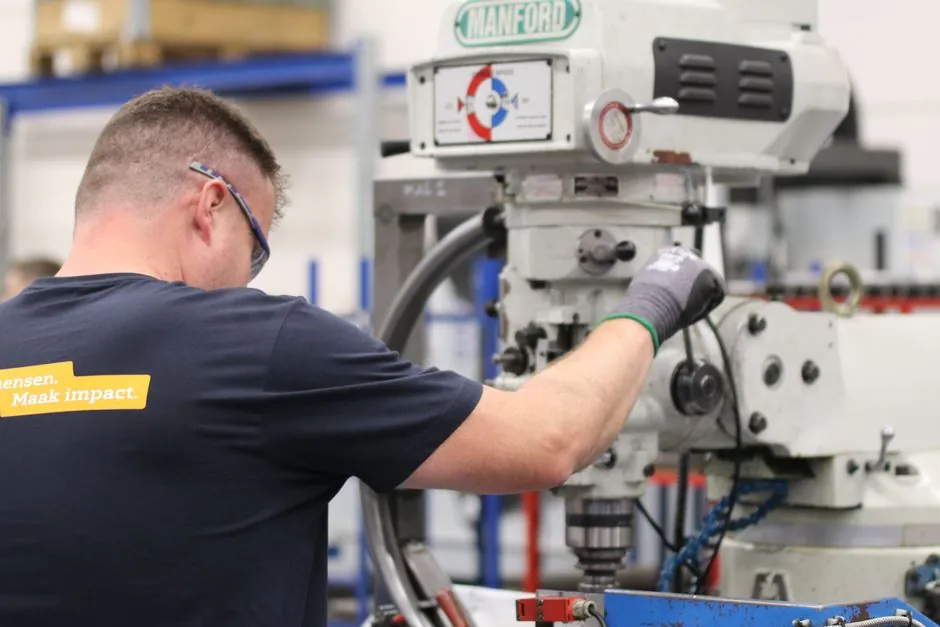
Twenty-nine manufacturers and 54 safety-PLC product entries are indexed on DirectIndustry's Safety PLC manufacturer page, a snapshot of the active vendor set including Siemens Safety Integrated, Allen-Bradley, ABB Control Systems, Mitsubishi Electric Europe, Bosch Rexroth, Omron Electronics, Schmersal, Turck, B&R, Beijer Electronics, Bernstein, Fiessler Elektronik, Eckelmann, and Suzhou Veichi [S1].
A 2022-11-29 index of safety PLCs breaks the catalog roughly into 3 on-board form factors and the rest rack or compact modular chassis, with fieldbuses ranging from PROFIsafe/Profinet and EtherCAT to Modbus/TCP and CANopen [S1]. The article below lines the main options up against SIL/PL target, bus protocol, I/O scalability, and price-tier so a process engineer can shortlist vendors before requesting quotes.
Defining the safety PLC: SIL, PL, and the IEC 61508/ISO 13849 pair
A safety PLC is a logic controller whose I/O, CPU diagnostics, and communication stack are certified to a defined Safety Integrity Level (SIL) under IEC 61508 and a Performance Level (PL a-e) under ISO 13849-1, and which is allowed to host safety and standard logic on the same backplane where the bus protocol carries a safety layer [S1].
KOYO's KOSTAC Safety AZ-C1 is sold as compatible with EN 954-1 Category 4, IEC 61508 SIL 3, and ISO 13849-1:2006 PL e, with a cyclic execution time of 15 ms per scan, 12 K WORD program memory backed by 64 KB internal CMOS-RAM plus FLASH-ROM, and a lithium backup cell rated for a service life of up to 5 years [S3]. The same 15 ms scan class is typical for entry-level safety CPUs from Asian vendors, while European flagship lines usually quote sub-1 ms task times. For an end user, the practical decision is whether the application is rated SIL 2 or SIL 3, because the SIL cap of the certified CPU is the hard ceiling, not the I/O count.
Who it is for, and where a safety PLC is the wrong tool
Safety PLCs are specified for machinery and process cells where a single fault must bring the equipment to a safe state within a defined response time, such as robotic cells (ISO 10218), packaging lines with light curtains, presses (EN 693), and burner management (NFPA 85/86) [S1].
They are not the right tool for three common cases: (1) a single e-stop loop where a SIL 3/PLe safety relay is faster and cheaper to wire, (2) a process control loop that needs SIL 2/3 but no discrete safe I/O, where a Safety Instrumented Function (SIF) on a DCS or process-safety controller such as Rockwell Logix SIS is the correct fit, and (3) a non-safety machine where a standard PLC with safety I/O modules is over-specified. Misuse usually shows up as a cabinet stuffed with relay logic duplicating what a single 16-point safety input module could do, raising the Probability of Failure on Demand (PFD) by adding series components.
Vendor map: top-line players and where they sit in the catalog

DirectIndustry's 2022-11-29 index lists Siemens Safety Integrated with the SIMATIC S7-1500 F-CPU family, Allen-Bradley with the Logix SIS / GuardLogix lines, Mitsubishi with the MELSEC iQ-F FX5 safety extension, Bosch Rexroth with the IndraLogic L series, ABB, B&R, Omron, Schmersal, Turck, Beijer, Bernstein, Fiessler, Eckelmann, and the Chinese line-up including Suzhou Veichi and KOYO (KOSTAC) [S1][S3].
That list is dominated by the four big automation houses (Siemens, Rockwell, Mitsubishi, ABB) plus two strong motion-control entrants (Bosch Rexroth, B&R); the remainder are regional or specialty suppliers that compete on price, on-board form factor, or on niche certifications. A 2022-11 catalog slice shows Fiessler Elektronik with 2 products, Schmersal and Turck with 1 each in the safety-PLC taxonomy, and KOYO with the AZ-C1 family positioned as a low-cost, "standard of the new age" entry point [S1][S3]. For most global OEMs the shortlist is usually 2-3 vendors: one big-line European (Siemens or ABB), one North-American (Rockwell), and one Asian cost-tier (Mitsubishi, KOYO, or Omron).
Selection criteria compared across the main product families
Fiessler's PSC1 compact controller accepts up to 64 I/O on the base module with 14 safe inputs and 4 safe 2 A pp-switching semiconductor outputs, switchable to 2 safe p/n-switching outputs [S1]. The SCR P programmable safety controller is positioned as a smart alternative to classic safety relays, with a network-compatible SCx family supporting Profinet, Modbus/TCP, and EtherCAT, up to 394 connected safe devices, 154 safety inputs, and 68 independent safety outputs rated 0.5-6 A each [S1].
Comparative view: (1) entry-level compact class (Fiessler PSC1, KOYO AZ-C1, MELSEC FX5 safety extension) targets sub-64 I/O panels with SIL 3/PLe at the lowest cost per point; (2) mid-range modular class (Siemens ET 200SP F, Allen-Bradley GuardLogix, ABB AC500-S) covers 100-1,000 I/O with PROFIsafe/CIP Safety on Profinet or EtherNet/IP; (3) high-end integrated process-safety class (Rockwell Logix SIS) is dual-certified SIL 2/SIL 3 for process and hybrid safety with redundancy engineered for high availability [S1]. Pick on the four decision axes: SIL target (2 vs 3), bus protocol already on the plant, I/O scale (under 100 vs over 500), and whether the safety logic has to share a backplane with a standard PLC control program.
Bus protocols, safety layers, and what actually runs on the wire
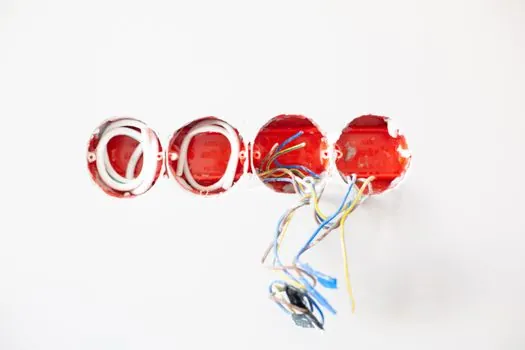
PROFIsafe on Profinet, CIP Safety on EtherNet/IP, and Safety over EtherCAT (FSoE) are the three safety communication layers most commonly listed in the 2022-11 safety-PLC catalog, with Modbus/TCP and plain Profinet used for non-safety diagnostics on the same CPU [S1].
Engineers should treat the safety layer and the fieldbus as separate decisions: a controller can carry CIP Safety on EtherNet/IP for safety and Modbus/TCP for a third-party VFD on the same Ethernet switch, but a single failure on the switch then becomes a common-cause failure that has to be covered by the safety case. Wire-level redundancy (e.g. dual PROFINET ports on the SIMATIC S7-1500 F-CPU and dual EtherNet/IP ports on GuardLogix) is the usual mitigation, and any safety PLC without redundant comms should be flagged at the PFDavg calculation stage.
Failure modes, constraints, and what the catalog does not show
The 2022-11 vendor pages rarely publish a Safety Manual extract or a PFDavg / PFHd figure; the Siemens, Allen-Bradley, and ABB lines are the main exceptions, and even there the numbers are buried in a separate FMEDA report under NDA [S1]. KOYO's AZ-C1 page lists scan time, memory, and battery life, but not the proof-test interval or the diagnostic coverage (DC) needed for a SIL 3 claim [S3].
Three constraints bite during commissioning: (1) the firmware version of the safety CPU is locked to a TÜV-certified combination, so a routine standard-PLC update can void the safety signature if applied unilaterally; (2) wiring of safe inputs must follow the manufacturer's cross-circuit and short-circuit diagnostics rules (typically a dual-channel OSSSD or equivalent) or the SIL claim collapses; (3) the lithium backup cell life of up to 5 years is a hard maintenance interval that operators routinely miss on entry-level units [S3]. For machine safety retrofits, the more common failure is mis-pairing a SIL 3/PLe certified module with a non-certified sensor, which drops the loop to SIL 1 regardless of the controller's rating.
Standards, sourcing, and how to read a safety-PLC datasheet
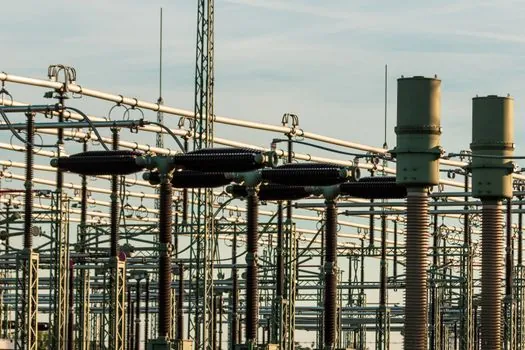
The two normative anchors for a safety-PLC bid are IEC 61508 (functional safety of E/E/PE systems, with IEC 62061 as the machinery-specific derivative) and ISO 13849-1 (safety of machinery, with Performance Levels a-e) [S1][S3]. The vendor has to furnish a Type/Mark approval, a Safety Manual, an FMEDA, and a TÜV or equivalent certificate; absent any of those, the SIL/PL number on the catalog is a marketing claim, not an engineering fact [S3].
For an apples-to-apples RFQ, ask each vendor for: (a) the certified SIL cap and PL per ISO 13849-1, (b) the safety task scan time and worst-case response time, (c) the PFHd or PFDavg and the assumed proof-test interval, (d) the safe I/O count by channel type, and (e) the bus protocol list with the safety layer named (PROFIsafe, CIP Safety, FSoE). Cross-check those against the fire safety and machine safety standards that govern the end equipment, and you have a defensible shortlist in a single sheet. Two trackable signals to watch through the rest of 2026: KOYO and other Asian vendors moving sub-15 ms scan times into their compact safety lines, and the big four adding native OPC UA over TSN with a safety layer to replace PROFIsafe/CIP Safety at the fieldbus tier.
See also our earlier report, Tapered Roller Bearing Selection for Food Processing Lines: Materials, Seals, and.