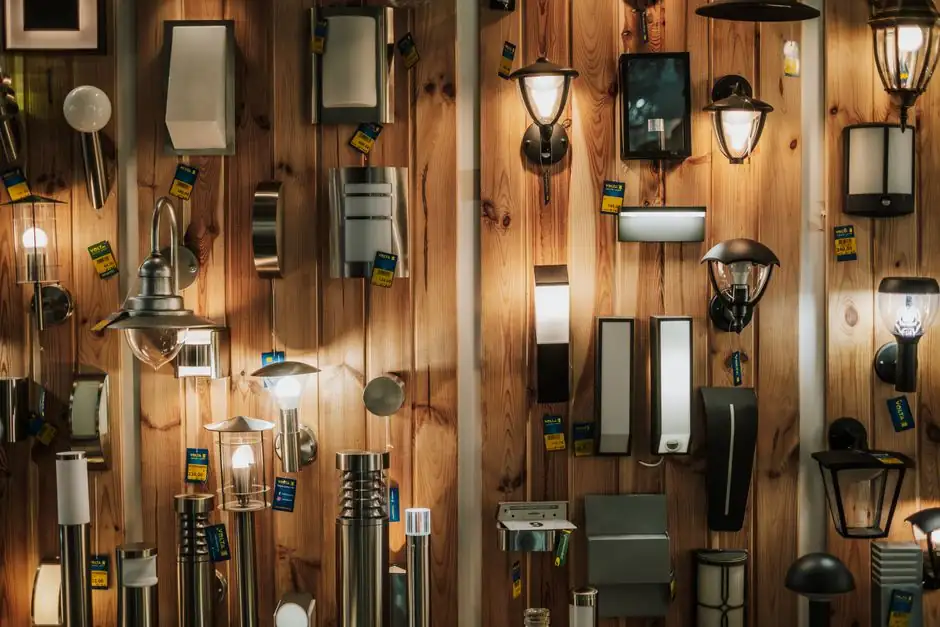
Aluminium, brass, stainless, and glass-shaded luminaires are best finished on a suction cabinet fed with 100–240 mesh glass beads at 0.3–0.5 MPa, a configuration widely recommended for thin-wall reflective parts because the low impact energy avoids warping the spun or stamped reflectors [S1][S3].
Lighting-fixture workshops almost always run indoors, so wet or sealed-cabinet dry units with dust emission held at or below 10 mg/m³ are the practical ceiling, while heavy cast-iron lamp-posts and outdoor bollards are the only lighting products that justify a 0.6–1.0 MPa pressure-feed system with 20–80 mesh brown corundum [S3][S4].
Match cabinet type to fixture geometry, not to marketing copy
Sandblasting machines split into four operating families, suction, pressure-feed, wet, and rotary/roller, and each has a clearly defined role in a lighting production line [S1][S3]. A suction cabinet (manual or automated) is the standard pick for shades, reflectors, downlight trims, and small brass lamp-orders because it accepts a 0.3–0.5 MPa supply from a 7.5–11 kW compressor and needs only 0.8 m³/min of air at the 8 mm Dominant nozzle pattern cited in common cabinet spec sheets [S3][S5]. Pressure-feed rigs require 15–37 kW compressors at ≥0.8 MPa, which is justified only when fixtures are heavy castings, large post-top heads, or steel-housing industrial high-bays [S3]. Wet blasting and pulse-filtered dry cabinets are the answer for indoor finish rooms where dust is regulated and the part is too thin or too polished for direct dry impact [S5][S6].
For batch work such as screws, lamp-holder rings, and small cast shade connectors, a roller or crawler sandblasting machine (Model 60, 80, 100) running 80–100 mesh glass beads handles parts under 15 cm without manual handling and gives the most repeatable Ra 0.8–3.2 µm pre-coating profile [S3][S4].
Abrasive pairing by fixture substrate
Glass-bead blasting at 80–120 mesh is the default for aluminium, stainless, and brass fixtures, because the bead is hard enough to clean oxide without cutting the soft metal and the resulting matte profile bonds cleanly with subsequent powder coating or plating [S1][S4]. For aluminium and zinc die-cast lamp bodies, 100–240 mesh glass beads or fine resin/plastic media are specified to keep the 0.3–0.5 MPa pressure low enough that wall sections below 1.5 mm do not deform [S3]. Glass and crystal shade frosting uses softer abrasives such as walnut shell or fine glass bead, again at the low end of the pressure range, which is the same operating window used for decorative work on chandelier bobeches and ornamental brass arms [S1]. Steel grit or 40–80 mesh brown corundum is reserved for rust and scale removal on heavy steel lamp-posts and industrial high-bay housings, and only on equipment rated for 0.6–1.0 MPa [S3][S4].
Nozzle wear matters more than abrasive choice in a lighting line: the workshop rule is to replace any suction nozzle when its bore grows by +25% over the original diameter, otherwise Ra uniformity drifts and the matte etch on a reflector becomes patchy [S3].
Air supply, cabinet size, and dust compliance
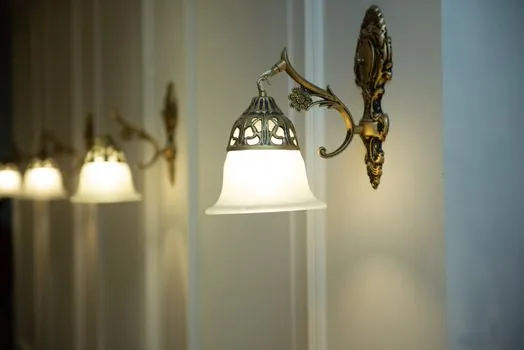
Air supply is the first non-negotiable. A suction cabinet needs 0.8 m³/min and a 7.5 kW compressor, a pressure system needs a 15–37 kW compressor with receiver pressure held at ≥0.8 MPa, and any pressure-type system will always draw more air than an equivalent suction rig [S3][S5]. Cabinet interior dimensions should be sized to the largest fixture plus a 100 mm clearance per side; the 6050 to 1515 cabinet series in common spec sheets cover work envelopes from 600 × 500 × 580 mm up to 1500 × 1500 × 850 mm, with 250–750 W dust-extraction fans matched to each cabin, so even a 1 m post-top lantern head can be processed on a 1212 cabinet without manual handling outside the cabin [S5].
For indoor lighting factories, dust emission must stay at or below 10 mg/m³ to pass environmental inspection, which is why most current cabinet designs combine a polymer oil/water filter, a pulse-jet dust box with imported cartridges, and an all-copper dust fan in the 250–750 W band [S3][S5]. Abrasive charge per cycle is 5–7 kg of strictly dry media on the working screen for the cabinet class shown, and the abrasive has to be sieved to keep residue at ≤5 grains/cm² on the surface before any powder-coat or plating step [S3][S5].
Suction cabinet vs pressure-feed vs roller vs wet: a four-criteria comparison
Decision criteria for a lighting line are fixture size, fixture material, daily volume, and indoor air-quality compliance. On those four axes the four machine types line up as follows: (a) a suction cabinet covers parts 10–100 cm across, all fixture alloys, low-to-medium volume, and reaches the ≤10 mg/m³ dust floor with a pulse filter; (b) a pressure-feed rig handles parts above 50 cm and heavy cast steel, but needs a 15–37 kW compressor and is harder to keep below the dust floor; (c) a roller/crawler unit is purpose-built for small parts under 15 cm at high volume, and does not touch large shades or glassware; (d) a wet or dust-free cabinet is the only practical option for indoor lines with strict dust limits, for glass shade frosting, and for any part too thin to risk dry impact [S1][S3][S4][S5].
For most lighting OEM finish rooms, the recommended standard configuration is a Model-80 roller with 100-mesh glass beads for lamp-holder rings and small castings, plus a 9080 or 1010 suction cabinet with a 600 W dust fan and 0.8 m³/min air supply for shades, trims, and reflectors, which together cover roughly 90% of the production mix without exceeding the indoor dust ceiling [S4][S5].
Workflow gates, pre-coat cleanliness, and standards to anchor
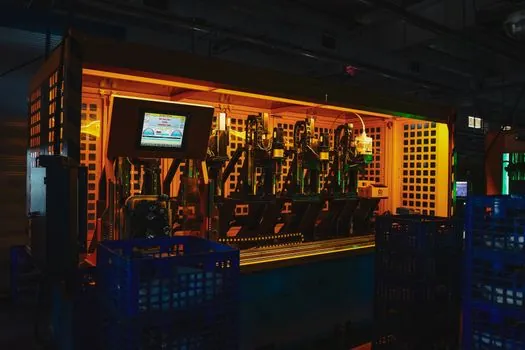
Pre-coat cleanliness is not a soft target. The widely cited workshop gate for subsequent painting is Sa 2.5 with surface residue ≤5 grains/cm², and surface roughness should sit at Ra 1.6–3.2 µm for powder coating or Ra 0.8–1.6 µm for electroplating, both of which are reachable with the 80–120 mesh glass-bead prescriptions above [S3]. For wet/dust-free lines the abrasive charge stays at 5–7 kg per cycle and the media must be strictly dry, since moisture in the cabin is the dominant cause of abrasive clogging at the gun [S5][S6].
General industrial guidance on dust collection still points buyers to enclosed systems with a dedicated collector and media-recycle loop, which lowers consumable cost and reduces the 10 mg/m³ emission risk on indoor lines [S1][S5]. For lighting-fixture buyers cross-shopping adjacent equipment, the same indoor-dust logic that drives cabinet selection also shapes the choices laid out in this sand blasting machine selection map for farm machinery, and the wet/dry question parallels the cooling-medium decisions in fluid-bed vs rotary sand cooler trade-offs for foundries.
Track two signals through the next sourcing cycle: first, the indoor dust-emission threshold of 10 mg/m³, which is the binding constraint on cabinet choice for any lighting OEM running finish rooms inside a populated plant; second, the 7.5–37 kW compressor band, which is the hidden driver of total cost because the cabinet price tag rarely includes the matched compressor and receiver. A buyer who locks both before the RFQ will eliminate roughly two-thirds of the model range on the first cut.
The underlying component specifications are covered under sand blasting machine, shot blasting machine, and lighting equipment and electric lamps.