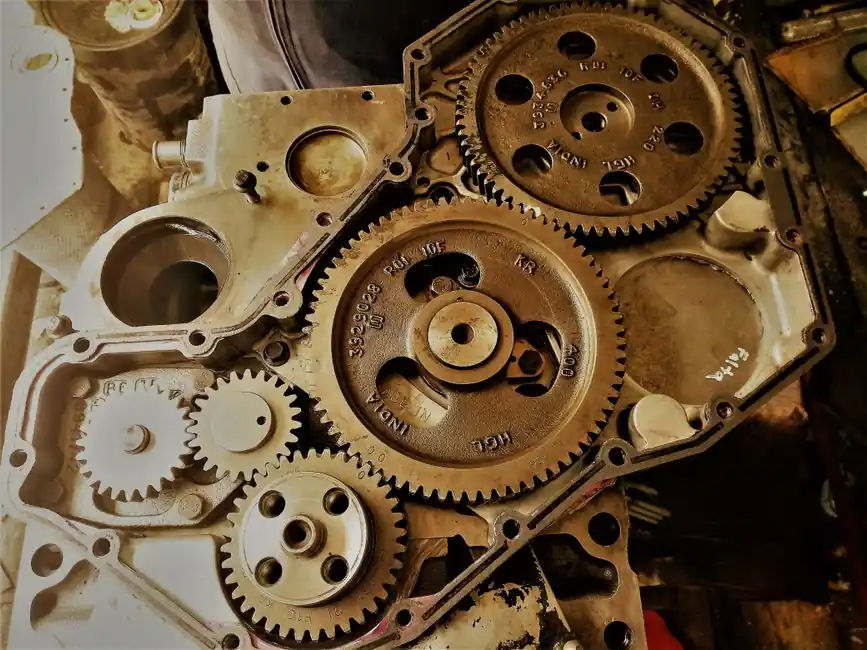
Engine blocks, cylinder heads, transmission cases, exhaust and intake manifolds, differential housings, steering knuckles, control arms, oil pans, and water-pump housings are the most commonly listed automotive parts produced via sand casting molds [S3].
Aluminum alloys dominate passenger-car body and chassis castings because of their high strength-to-weight ratio and corrosion resistance, while iron and mild steel cover heavy-duty engine blocks and brackets [S2][S4]. Sand casting is best matched to lower to mid-size production runs, where the disposable mold breaks away at the end of each cycle and is rebuilt quickly [S2].
Alloy and Material Selection by Part Family
Aluminum is the most commonly specified sand casting material in automotive work, with typical alloys including ADC12, AL6061, and A356, paired with base sands such as silicochromite and chromite to control metal-mold reaction [S4].
Iron and mild steel remain the workhorses for engine blocks and high-load brackets: grey iron offers excellent castability and machinability, ductile iron delivers higher tensile strength and shrinkage, and malleable iron combines ductility with corrosion resistance [S4]. Mild steel with carbon content in the 0.15% to 0.30% range is widely used for low-cost structural castings, but it is prone to porosity, shrinkage, and cracking during machining [S4].
For non-ferrous options beyond aluminum, bronze (aluminum bronze, manganese bronze, silicon bronze) gives high strength and wear resistance, brass is favored for corrosion-resistant fittings, and zinc allows thinner walls than aluminum at the cost of density [S4]. Copper and lead are still used for specialty plumbing and pipe fittings, but lead requires strict handling controls due to health risk [S4].
Process Routes: Green Sand, Resin Sand, Shell, and Core-Made Hollows
Sand casting for hollow automotive parts, such as intake manifolds and water jackets inside cylinder heads, uses a sand core placed inside the casting mold to form internal cavities that would otherwise be impossible to demold [S5]. Core design rules include resin selection matched to pouring temperature, controlled venting to vent gas without metal penetration, mechanical or print-based core positioning to hold location during pour, and shrink compensation to offset alloy-specific solidification shrinkage [S5].
Green sand remains the default for low-to-mid volume runs because tooling is cheap, the mold breaks down at the end of the cycle, and excess sand is recycled [S2]. Resin-bonded sand and shell molding extend the same process into higher-tolerance surfaces, finer draft detail, and cores that survive hotter pouring temperatures typical of iron engine blocks [S5].
Versatility is a structural advantage: sand castings can form a wide range of shapes and sizes, accept almost any metal alloy, and support short lead times because the tooling is easier to build than a permanent die [S2]. For complex geometries with undercuts, thin walls, or intricate details, sand molds are often the best option, because the sand is sacrificed rather than drafted off a rigid die [S7].
Where Sand Casting Wins, and Where It Loses
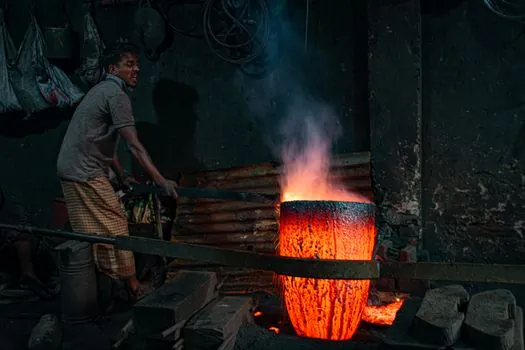
Sand casting is ideal for prototype work and small quantity runs where lead time, not per-piece cost, is the bottleneck [S2]. For alloy wheels specifically, the same sand-mold family splits into two methods: gravity casting fills the mold with molten alloy under gravity, while pressure casting uses an injection or vacuum system to push metal into the wheel cavity [S2].
Sand casting is the wrong choice when production volumes are high and the part has uniform thin walls that suit high-pressure die casting, when surface finish requirements approach investment-cast levels, or when the design is small enough that investment casting's wax pattern cost is amortized across the run. The trade-off is concrete: low tooling cost, short lead time, and high alloy flexibility are paid for in coarser surface finish and wider dimensional tolerance compared to permanent mold and investment routes [S2][S1].
Decision Criteria and a Side-by-Side Comparison
Use this criteria grid to screen a part before opening a tooling PO: match the part geometry, alloy, run size, and required surface to a process family, not to a brand. [S2]
Aluminum sand casting wins on weight and corrosion resistance, accepts chromite or silicochromite base sand, and fits any run size but peaks on short lead-time work [S2][S4]. Iron and steel sand casting wins on compressive strength and high-temperature stability for engine blocks, but adds weight and demands more aggressive shakeout, risering, and shakeout-line dust control [S4]. Bronze and brass sand casting win on corrosion resistance and machinability for fittings and small structural parts, but cost more per kilogram than iron [S4].
Process-wise, green sand is the lowest-cost route and the easiest to recycle, but it caps surface finish and detail; resin-bonded sand and shell molding raise surface quality and core complexity at higher binder cost [S2][S5]. For a related process benchmark on tooling cost versus volume, see the Die Casting Die Selection for Hardware: 2026 Spec Map.
Tooling, Lead Time, and Production Economics
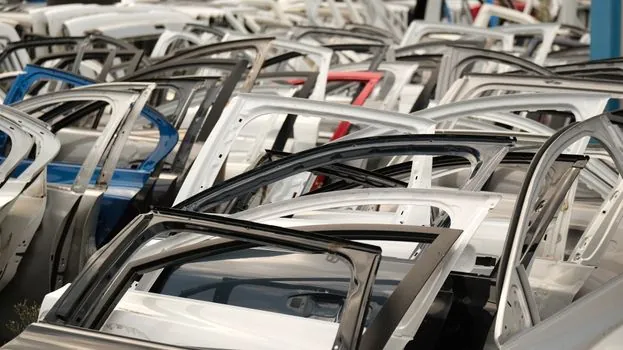
Sand molds are quicker to build, break down, and recycle than permanent molds, which is why small quantity runs and prototypes route through sand first, not die casting [S2]. Turnaround times involving sand casting are often much shorter because the tooling is easier to build, and excess waste and falloff are easily recyclable, especially when using aluminum [S2].
Foundry capacity has scaled around this economics: a 20,000 m² Dongrun facility houses 200 production and test equipment units and serves Fortune 500 OEMs down to small and mid-size programs, with automotive and trucking castings as a core line [S3]. On the supplier side, sand mixers and mold base systems are sized to the resin line, while sand coolers and resin sand lines determine the bonded-sand throughput ceiling.
Failure Modes and Design Rules to Enforce Up Front
Iron castings suffer from poor mechanical properties for asymmetric or complex shapes; grey iron in particular has high compressive strength but low tensile strength, so thin, asymmetric sections are a known failure zone [S4]. Mild steel castings trend toward porosity, shrinkage, and cracking during machining, so riser placement and feeding distance must be engineered, not assumed [S4].
Core-related defects in hollow automotive castings trace back to five recurring causes: poor resin selection for pouring temperature, inadequate venting, core shift during pour, missing shrink compensation, and skipped simulation before tool cut [S5]. The downstream effect is the same: scrap engine blocks, miscast intake runners, and brake calipers that leak pressure tests.
Selection Checklist and Trackable Signals

Before locking a sand casting mold route, confirm four things: the alloy is on the foundry's allowed list (commonly aluminum, bronze, brass, zinc, lead, copper, iron, mild steel, stainless steel), the part geometry tolerates sand-core demolding, the annual volume fits the chosen binder system, and the required surface finish is realistic for green sand or requires a resin upgrade [S4][S2]. For high-horsepower engine and agricultural equipment lines, mission-critical sand castings are typically co-located with investment casting and precision machining under a one-stop supplier model, which shortens iteration loops on prototype parts [S1].
Two signals to watch over the next two quarters: the spread of resin-bonded sand lines into mid-volume aluminum suspension and knuckle programs, and the move by tier-1 suppliers to qualify chromite and silicochromite base sands as a default for aluminum pours to cut metal-mold reaction defects [S4][S5]. For shops that also run mold-and-die production, the parallel spec conversation on shielding gas for heat treatment is covered in Industrial gas selection for mold and die making: nitrogen, argon, and the spec gates, and shops weighing sand against higher-volume die routes can benchmark the trade-off in Die Casting Die Selection for Hardware: 2026 Spec Map.