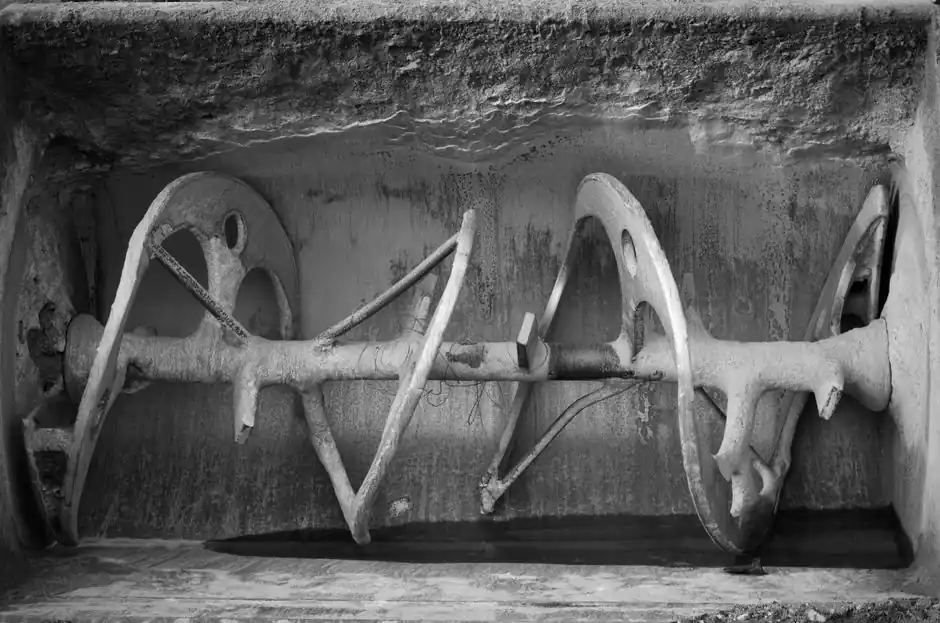
Sand mixers serving energy equipment foundries and adjacent powder-handling lines span four principal architectures, with nameplate capacities from 1 t/h to 100 t/h and installed powers from 15 kW to 75 kW per unit [S1].
Energy-sector applications include wind-turbine hub castings, gas-turbine iron and steel components, transformer core sand testing rigs, and battery-material powder blending, all of which use either bentonite-bonded green sand, resin-bonded sand, or dry-powder homogenization as the core mixing duty [S1][S4].
Four Sand Mixer Architectures and Where They Fit in Energy Lines
Planetary rotor sand mixers run 3-4 rotors in combined revolution and rotation, eliminating dead zones and delivering 20-30 batches per hour at 10-50 t/h, with 2-4 minute cycles typical [S1]. Rotor-type blade mixers rely on high-speed impact and shear, processing 5-80 t/h in 3-5 minute cycles with notably low sand grain breakage, which suits resin-bonded and sodium-silicate systems used in steel and high-alloy castings [S1]. Wheel-type sand mullers grind with heavy wheels and turn the bed with scrapers, sitting at 1-20 t/h and 5-8 minute cycle times; they are the lowest-cost option for clay-bonded green sand and remain common in small and mid-sized iron foundries [S1]. Continuous sand mixers feed, mix, and discharge in a single stream, rated 40-100 t/h for 24/7 automated molding lines, and are the natural fit for high-volume ductile-iron and steel castings feeding energy-equipment OEM supply chains [S1].
The sand mixer category, distinct from high-shear chemical power mixers, is defined by its tolerance for abrasive silica grain, bentonite binder, and water moisture control in the 2-5 percent range.
Throughput, Power, and Cycle-Time Comparison Across the Four Types
Spec bands for the four architectures line up against four decision criteria, capacity, installed power, cycle time, and liner material, in the table below, drawn from the manufacturer reference set [S1].
Planetary rotor: 10-50 t/h, 30-75 kW, 2-4 min/batch, ceramic or polyurethane liner. Rotor (high-speed blade): 5-80 t/h, 22-55 kW, 3-5 min/batch, high-chromium iron liner. Wheel muller: 1-20 t/h, 15-45 kW, 5-8 min/batch, cast iron liner. Continuous: 40-100 t/h, no fixed batch cycle, liner selection per sand chemistry [S1].
For energy-equipment castings where mold strength and surface finish drive casting yield, the planetary rotor and continuous platforms dominate because both deliver uniform binder coating and stable moisture within tight tolerance bands [S1].
Energy and Wear Economics: kWh per Tonne and Liner Life
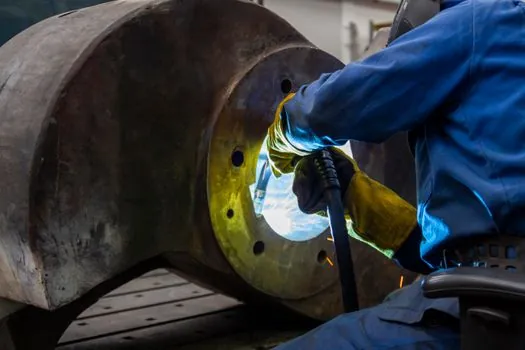
Foundry-grade sand mixers in this class are specified at 15-30 kWh per tonne of sand processed, a band that lets a buyer convert nameplate kW into operating cost using the cycle time and capacity above [S1]. Tungsten-carbide-tipped scrapers, ceramic liners, and polyurethane wear surfaces are the standard wear packages for the abrasive silica service, and modular designs allow field replacement of these parts without full teardown [S1].
The same modularity, plus frequency-controlled rotor speed, is what allows a single planetary unit to run both high-precision iron castings and the less demanding jobbing-shop work that energy-equipment job shops often mix in [S1]. Buyers who ignore liner material at the spec stage typically see 2-3x the annual wear-part spend on a power mixer platform adapted to sand duty, because standard high-chromium iron liners in chemical mixers are not designed for the impact-plus-shear loading of silica grain [S1].
Adjacent Powder-Mixing Lines for Battery and Energy-Material Production
Energy equipment is no longer just castings: battery-material, dry-mortar, and refractory powder lines use ribbon, plough-shear, and paddle architectures that share control philosophies with sand mixers but run different kinematics [S4]. Double-shaft paddle mixers paired with screw conveyors can reach uniform sand-and-additive blending within 2 minutes for dry-mortar duty, and horizontal ribbon mixers typically need 5-15 minutes for chemical and new-material powders [S4]. The vertical ribbon, conical screw, conical ribbon, plough shear, and continuous horizontal ribbon geometries cover viscosities from free-flowing granules to pastes, with optional heating or cooling jackets on selected models [S4].
When a process line combines a foundry sand mixer upstream with a powder blender downstream, the energy management and metering architecture (silos, hoppers, weighing systems, and screw conveyors) becomes the binding constraint, not the mixer itself [S4]. Buyers specifying these integrated lines should therefore request batching accuracy and cycle data from the system integrator, not just the mixer OEM's single-unit kW figure.
Selection Workflow: Four Project Parameters Before You Pick a Rotor
Industrial mixer selection is governed first by the physical properties of the materials to be mixed, including viscosity, particle size, and solids loading, and only second by nameplate capacity [S2]. For energy-equipment sand service, the four-parameter checklist maps cleanly: required output in t/h (1-100 across the four architectures), mix design tolerance (binder uniformity, moisture band, grain-breakage cap), site power and compressed-air availability, and downstream integration (manual molding, automatic molding line, or continuous pour) [S1][S3]. Slurry-mixing guidance for mining and construction lines uses the same four-parameter logic, although slurry work adds colloidal versus paddle shear as a primary axis [S3].
Mixing intensity should also be distinguished from blending intensity, because a gentler homogenizing duty on a green-sand line produces very different results than a high-shear dispersion duty on a battery-slurry line [S2]. For foundries that already run both castings and powder-blend work, dual-platform procurement (planetary rotor for castings, ribbon or plough for powders) avoids forcing one machine into a duty it was not designed for, and is the configuration most NDT equipment laboratories and tier-1 energy OEM suppliers standardize on.
Failure Modes, Limits, and What Sand Mixers Are Not For
Sand mixers are not slurry mixers: a planetary rotor unit will not produce the colloidal-grade cement suspension a high-shear mill generates for grouting or ground improvement, and the gap shows up as bleed water, pump wear, and incomplete fracture penetration on the grout side [S3]. A foundry sand mixer is also a poor substitute for a dry-powder ribbon blender when the duty is dry-mortar or battery-material homogenization, because the rotor kinematics over-process the bentonite and crush additives [S1][S4].
Common failure modes in the field include over-greased bearings on the high-speed rotor shafts, scraper gap drift that allows dead sand to build up on the muller pan floor, and liner wear that pushes cycle times past 8 minutes per batch, all of which can be caught with the simple rule that cycle time and kWh/tonne should be re-verified quarterly against the OEM's commissioning baseline [S1]. Buyers who skip this verification typically discover binder-coating drift as scrap, not as a measurement, which is the most expensive way to learn that the rotor was running past its design window.
Track the binder-moisture tolerance band, the kWh/tonne number from the last 90 days of production, and the liner-replacement interval; if any of the three drift more than 10-15 percent from the OEM commissioning data, the rotor geometry, the binder system, or the feed screening is the most likely root cause and should be the next node investigated.
See also our earlier report, Laser Screed Selection Guide: Specs, Types, and FF/FL Trade-offs for Concrete Floors.