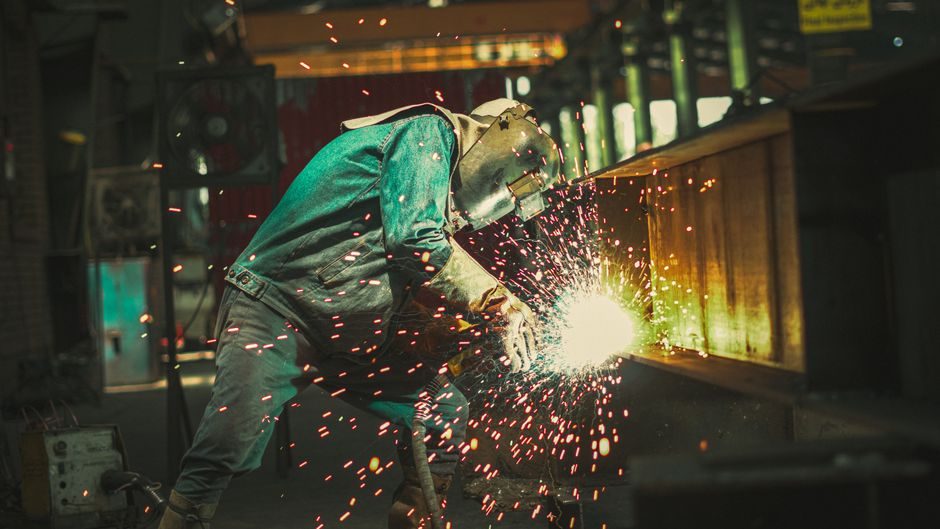
Sandblasting equipment divides into three duty classes — mini sand blasting machines, portable sand blasting machines, and bulk sand blasting machines — categorized by manufacturer product literature and standard industry segmentation [S3].
Global market value reached US$480 million in 2023, up from US$390 million in 2017 at roughly 3.5% CAGR, with Asia-Pacific (driven by Chinese OEM supply) and Europe the dominant regional markets [S3]. On Made-in-China.com, 2,000+ sandblasting equipment manufacturers currently list 6,000+ products spanning everything from US$75–80 dental micro-etchers to US$57,999 industrial blast rooms [S1][S8].
Duty Class Breakdown: Mini, Portable, Bulk
The three-class taxonomy — mini, portable, bulk — is anchored in product line naming across the major Chinese OEM catalogs, where Qingdao Puhua and Qingdao Cerant list Mini bench-top units, Portable wheel-mounted rigs, and Bulk walk-in blast rooms as separate SKUs [S1]. Compressed air is the typical propellant, with centrifugal wheels used on bulk shot-blasting machines where shot (steel cut wire or cast shot) replaces silica sand to avoid operator silicosis exposure [S3].
Within bulk class, sub-types include Steel Pipe Inner Wall Sandblasting Machine, Overhead Chain Shot Blasting, Roller Conveyor Pass-Through, and Hook-Type Shot Blasting Machine — each geometry-matched to a part-handling workflow [S1]. Mini and portable units are typically paired with cabinet enclosures and dust collectors; bulk walk-in rooms add lighting, reclaim floors, and operator respiratory protection per OSHA 1910.94 abrasive-blasting general industry requirements.
Abrasive Media Selection: From Sand to Soda
Abrasive aggressiveness maps to application: shot blasting with metal shot and sandblasting with silica sand are the most aggressive; glass bead, plastic media (walnut shell, corncob), and baking soda (sodablasting) are progressively milder; dry-ice and ice blasting sit at the non-abrasive end for coatings removal without substrate damage [S3].
Steel shot, glass bead, and garnet are the standard media on industrial bulk machines; soda-blast cabinets dominate graffiti, fire-restoration, and food-equipment cleaning because the soft media will not etch stainless. For safety, the silica-sand prohibition in abrasive blasting has been in place across consumer and occupational use since 1974 OSHA standard 29 CFR 1910.94, driving the shift to garnet, aluminum oxide, and steel media in current OEM offerings.
Pressure vs Suction vs Wet Blasting
Three propellant systems exist: pressure (abrasive in a sealed pressurized pot, faster cut rate), suction (venturi draw, lower consumption, lighter duty), and wet (water-injected to suppress dust) [S4][S9]. Alpha-blast markets pressure-fed rigs as the productivity baseline, with the high-velocity stream and dust load flagged as the defining operator hazards of the application [S4].
JL Sandblasting Equipment specializes in high-pressure and wet blasting solutions for dust-sensitive environments [S9]. Problast Inc., founded 1999 with 15+ years operating experience per its corporate site, focuses on field-driven design iterations and equipment built by blasters for blasters [S6]. Both pressure and suction systems depend on adequate compressed-air supply — nozzle CFM at 100 psi ranges from ~3 CFM for a #2 nozzle to ~25 CFM for a #8 nozzle, which dictates the matching air-compressor capacity and is the single most undersized spec on new rig purchases.
Cabinet vs Open Nozzle vs Blast Room
Three enclosure types define the working envelope: bench-top cabinets (parts up to ~1 m³, view window + gloves, dust collector), open-nozzle outdoor work (ship hulls, structural steel, bridge decks), and walk-in blast rooms (parts up to truck size, full lighting and reclaim) [S5]. Miles Supply's product line explicitly groups Blast machines, SandHandler, Sandblast Curtains, Dust Collectors, and Air filters as a matched accessory chain — you cannot run a blast room without the dust collector and reclaim system matched to its CFM and media density [S5].
Cabinet-class equipment from Chinese OEMs lists from US$1,000–6,000 FOB for a small Sand Blast Cabinet per the 2026 Made-in-China factory floor [S8]. Bulk walk-in rooms from Qingdao KEEJOO Group (sand blasting room, foundry machinery, dust collector, specialty equipment) and Qingdao Cerant (steel pipe inner-wall, overhead chain, roller conveyor, hook-type shot blasting) sit at the US$20,000–57,999 end [S1].
Application Map: Automotive, Marine, Oil & Gas, Construction
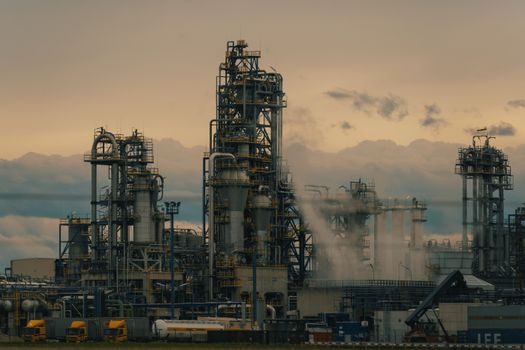
Manufacturer-segmented end uses are Automotive, Construction, Marine, Oil and Gas, Petrochemical, and Others [S3]. Marine and oil-and-gas work drives the bulk of large open-nozzle consumption — tank farms, offshore platform decks, ship hulls — and is where wet-blast and vacuum-recovery systems are specified to contain toxic coatings (lead, hexavalent chromium) on aging infrastructure. Construction and structural steel are the second-largest application, typically using portable suction-fed rigs on I-beams, rebar, and concrete formwork.
Automotive and restoration work (classic car frames, motorcycle parts) primarily use cabinet enclosures with glass bead or fine garnet to preserve dimensional tolerances. A 2026 reference walkthrough of pressure and abrasive matching for these applications — the actual duty-selection math — is in Sandblasting Equipment Selection: Pressure, Abrasive, and Duty Match.
Specification Comparison Across the Three Duty Classes
Comparing the three classes against four decision criteria — typical working pressure, abrasive compatibility, dust load, FOB price band — gives specifiers a single lookup: Mini units run 40–80 psi suction or pressure, suit glass bead or fine garnet, generate low dust handled by a cabinet filter, and ship at US$75–1,000 from Anyang Yingpai Dental-style micro-etchers through entry Chinese cabinets [S8]. Portable rigs run 80–110 psi pressure-fed, handle garnet/steel shot at higher media flow, need operator-supplied breathing air and a portable dust collector, and price at US$1,000–10,000 [S1][S7].
Bulk walk-in rooms and conveyorized shot-blast systems run 80–120 psi pressure-fed or centrifugal wheel, handle steel shot and cut wire at multi-ton-per-hour throughput, require full-room ventilation and NFPA 654 dust-explosion mitigation, and price from US$20,000 (hook-type, Qingdao Cerant) to US$57,999 (Shijiazhuang Ouyun specialty lines) [S1]. Used and refurbished portable / dustless units on Alibaba in 2026 offer a 30–60% discount versus new, useful for short-term project deployment but with no warranty on blast pot valves or nozzle wear [S7].
Selection Criteria: What to Match First

Four specs must be locked before vendor selection: (1) part size and throughput (kg/h or m²/h), (2) abrasive media and its mesh size, (3) air supply — CFM at working pressure — from a matched compressor, and (4) dust collection CFM with explosion-venting per NFPA 654 for combustible metal dust. Skipping the air-compressor match is the dominant cause of under-performing installations; a #6 nozzle at 100 psi needs ~13 CFM, and most 185 CFM diesel compressors on construction sites can only feed one such nozzle at a time. [S5]
Cabinet-vs-room decision is geometry-driven: if the largest part fits through a 1.2 m door, a cabinet is cheaper to operate; beyond that, a walk-in room with mechanical reclaim pays back in 12–18 months on labor. Marine and petrochemical work often specifies vacuum-recovery or wet-blast to meet coating-removal containment rules. For the broader process-equipment spec chain feeding a blasting bay — drive selection for conveyor reels, hydraulic press tonnage for forming fixtures, gas detection for confined-space entry — see the related spec maps on How to Choose a Hydraulic Press: Tonnage, Frame, and Drive Specs and Portable Gas Detector Selection for Food Processing: Spec Map and Sensor Match. For downstream handling of blasted parts, Roller Chain Pros and Cons: Spec-Driven Selection Map for Industrial Drives covers the conveyor power-transmission side.
Limitations, Hazards, and Failure Modes
The two dominant operational hazards are silicosis from silica media (banned for blasting in most jurisdictions since 1974) and dust explosion from accumulated combustible fines — mitigated by NFPA 654 housekeeping and explosion venting on the collector. Operator respiratory protection is mandatory for open-nozzle work above 5 m²/h throughput; supplied-air hoods (NIOSH-approved Type CE continuous-flow) are the standard rather than half-mask respirators. [S3]
Failure modes by class: cabinet — view-window crazing, glove seam leaks, dust-filter saturation (pressure drop > 8 in w.c.); portable — pot pop-off at over-pressure, hose coupling wear, nozzle tip erosion (replace when orifice grows 1.5 mm); bulk — reclaim-floor wear, elevator-bucket cracks, dust-collector bag burn-through.
Sourcing, Standards, and What to Verify Before Purchase
Verified sourcing channels in 2026: Made-in-China (2,000+ OEM suppliers, factory-direct FOB pricing tiered US$75 to US$57,999), Alibaba (new + used/dustless portable), and India regional distributors covering paints, refractories, and waterproofing applications [S1][S2][S7][S8]. Alpha-blast (US) and Miles Supply (US) cover new abrasive-blast distribution in North America, with Problast Inc. (US) as a specialty OEM founded 1999 [S4][S5][S6].
Standards to verify at the spec sheet: OSHA 29 CFR 1910.94 abrasive-blasting general industry; NFPA 654 dust-explosion prevention; ISO 8501 surface preparation grades (Sa 1, Sa 2, Sa 2½, Sa 3) for coating-ready steel; ASTM D4940 for abrasive conductivity; NACE SP0178 for high-pressure water cleanliness where wet blast is used.
Component reference pages worth checking: anti static equipment, pressure transmitter, and flow meter.