
Sandblasting, also termed abrasive blasting, uses an air-compressor-driven blast pot and handheld nozzle to propel abrasive media at high velocity against a substrate, with working pressure typically ranging from 80 psi for light profiling up to 150 psi for heavy coating removal [S3].
The core hardware chain is consistent across vendors: portable air compressor → moisture separator → blast pot (pressure or siphon) → blast hose → nozzle (tungsten carbide, silicon carbide, or boron carbide) → abrasive metering valve → deadman or remote control handle [S1][S3]. Selection therefore turns on which component is sized to which duty, not on a single brand decision.
Pressure-Blast vs Siphon-Blast vs Wet/Vacuum: Three Operating Classes
Pressure-blast pots hold media in a pressurised vessel and push it through a metering valve into the air stream, delivering roughly 3-4× the productivity of a siphon (suction) system of equal nozzle size, which is why commercial contractors almost always run pressure pots on production work [S1][S3]. Siphon pots draw abrasive up into a venturi from a non-pressurised hopper using only the compressor's airflow, and are preferred for low-volume, intermittent, or hobby use because they cost less and are simpler to maintain [S3].
Wet/vacuum or "dustless" blasting injects water at the nozzle to suppress airborne dust, and is increasingly specified on sites with crystalline-silica exposure concerns, because it captures fines at the point of generation rather than relying on downstream ventilation [S1]. The trade-off is reduced visibility at the work face and a need for rust-inhibitor additives when the substrate cannot be dried immediately.
Nozzle, Hose, and Compressor Sizing: The Four Thresholds
Nozzle bore dictates almost every other spec: a 1/4" nozzle consumes roughly 80-100 cfm at 100 psi, a 3/8" nozzle 200-250 cfm, and a 1/2" nozzle 350-450 cfm, so the air compressor's rated free-air delivery (cfm) at working pressure must be sized to nozzle bore before any pot is ordered [S1][S3].
Nozzle material is the second decision: tungsten carbide lasts longest on steel shot, silicon carbide is cheaper for short-run garnet or glass bead work, and boron carbide is reserved for production-volume alumina oxide where wear cost dominates [S1]. Blast hose diameter must oversize the nozzle by at least one standard step (commonly 3/4" or 1" ID hose for a 3/8" nozzle) to limit pressure drop and maintain impact velocity at the workpiece [S1].
Compressor receiver tank and after-cooler capacity matter as much as peak cfm, because pressure-blast pots draw in short, high-flow pulses; undersized receivers cause pressure sag that drops nozzle velocity and worsens abrasive breakdown [S3]. A moisture separator with downstream desiccant or refrigerated drier is mandatory on any pot blasting mineral or slag abrasives, since wet media packs the metering valve and ruins finish consistency [S1].
Abrasive Media: Mesh, Hardness, and Substrate Match
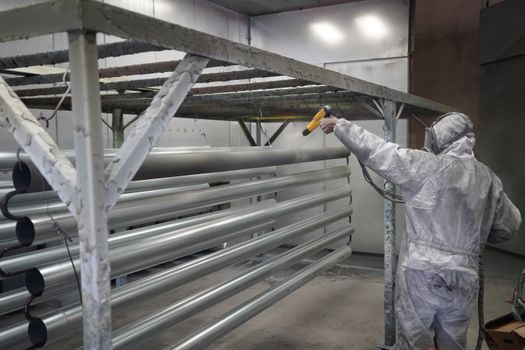
Silica sand has been progressively restricted on occupational-health grounds, with most industrial buyers now specifying garnet, aluminium oxide, glass bead, or steel grit depending on the profile and recyclability target [S1]. A 80-120 mesh garnet removes 4-8 mil of rust and old coating per pass; coarser 20-40 mesh garnet strips heavy mill scale in one pass but leaves a deep anchor profile unsuitable for thin-film coatings [S1].
A practical comparison for buyers choosing media for steel substrate: | Media | Typical mesh | Hardness (Mohs) | Profile depth | Recyclability | Best duty | |-------|--------------|-----------------|---------------|---------------|-----------| | Garnet (almandite) | 80-120 | 7.5-8.0 | 2-4 mil | 2-3 cycles | Paint prep, marine | | Aluminium oxide | 36-80 | 9.0 | 3-6 mil | 5-10 cycles | Tool steel, die cleaning | | Glass bead | 100-325 | 5.5-6.0 | <1 mil | 5-8 cycles | Peening, cosmetic finish | | Steel grit / shot | 25-80 | 6.0-7.5 | 4-8 mil | 200+ cycles | Heavy scale, wheel blast rooms | | Crushed glass | 30-70 | 5.5-6.0 | 2-4 mil | 1-2 cycles | Concrete profiling |
Mesh and hardness values above are drawn from generic abrasive-handling practice; the recyclability and profile-depth columns are operating norms widely reported in vendor literature [S1]. The selection logic is straightforward: match profile depth to coating system, match hardness to substrate (softer than substrate for cosmetic, harder than rust scale for stripping), then choose the highest-recyclable media your budget allows.
Safety Gear and Breathing Air: Non-Negotiable Subsystems
Abrasive blasting is classified as one of the harshest industrial applications because of high-velocity particles and respirable dust, and the operator's protective envelope is a separately selected subsystem, not an accessory [S1].
Minimum envelope: a CE/NIOSH-approved abrasive-blast helmet (NOVA 3 or equivalent) with supplied-air respirator, a breathing-air filter assembly with carbon and particulate stages, climate-control tube for hot or cold sites, abrasive-resistant blasting suit, and leather or rubber-cotton blasting gloves rated for the nozzle pressure in use [S1]. Any respirable crystalline-silica exposure above the occupational limit must trigger wet blasting, vacuum recovery, or a sealed blast-room solution, because the helmet only protects the operator breathing zone, not bystanders [S1].
When a Standard Blast Pot Is the Wrong Choice

For one-off furniture or automotive restoration at hobby cadence, a siphon cabinet is cheaper and safer than rigging a 150 psi pot, and the finish is adequate for paint prep on non-critical surfaces [S2][S4]. For production yards, however, siphon pots cap productivity at roughly 1/3 of a same-compressor pressure pot and inflate abrasive consumption by 20-30% because of venturi losses [S1][S3].
A pressure-blast pot is also the wrong tool inside a vessel with limited ventilation, because the dry, high-dust discharge will exceed silica exposure limits within minutes regardless of operator PPE; in that case wet blasting or full enclosure with dust collector is the only compliant option [S1]. Buyers who skip this trade-off end up either overpaying for cabinet-grade production or, worse, underspecifying a pot for a duty that will burn through consumables in weeks [S2].
Shortlist Logic and Sourcing Signals
A useful buyer shortlist sequence: (1) match the duty class (siphon / pressure / wet-vacuum) to production volume and dust constraints; (2) size compressor cfm to nozzle bore using the 80-450 cfm band; (3) pick nozzle material to expected abrasive throughput; (4) lock in media grade and mesh for the coating system being applied; (5) treat the helmet and breathing-air filter as a separate, mandatory line item rather than a bundled option [S1][S3].
Trackable signals for the next buying cycle: vendors that publish ISO 8501-1 surface-prep grade compatibility with their nozzle and media combinations, and distributors that stock matched remote-control valves and deadman handles for compliance with the deadman-switch requirement that most regulators codify for pot pressures above 90 psi [S1][S3]. Buyers comparing industrial valve and deadman-handle options should weight pneumatic over electric for intrinsically safe sites, and verify that the abrasive metering valve trim is tungsten or urethane rather than commodity rubber for any pot exceeding 100 psi service [S1].
For buyers mapping a wider equipment fleet, the same pressure-vs-flow-and-duty logic that governs how to choose a hydraulic press applies: start from peak duty, then derate components, not the other way around. Cross-checking compressor cfm and dust-collection duty against process-control instrumentation such as a flow meter on the abrasive feed line gives a measurable production benchmark rather than a stopwatch estimate.
Component reference pages worth checking: anti static equipment.