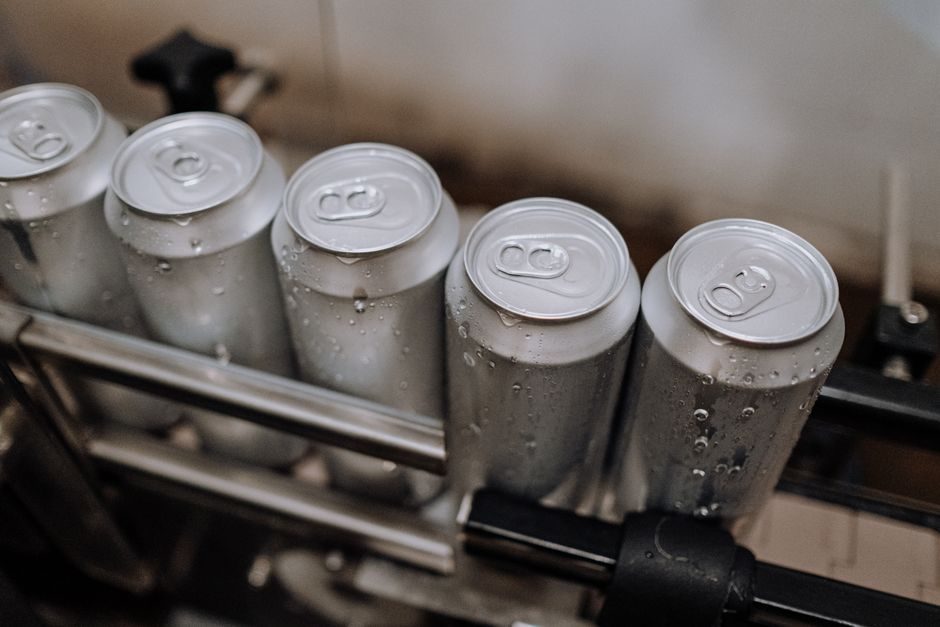
Filling machines sort cleanly along two axes — how the dose is measured (volumetric, gravimetric, flowmeter, vacuum, piston, auger) and how the cycle is driven (manual, semi-automatic, fully automatic) — and the axis that drives capital and validation cost is the metering principle, not the conveyor [S3][S7].
A modern liquid filling line in 2026 typically pairs SS 316 product-contact surfaces, a PLC or servo-driven station, a no-container/no-fill interlock, and drip-free nozzles as baseline features, with optional ATEX-rated panels for flammable thinners and solvents [S1][S3]. The taxonomy below is built from manufacturer catalogs published 2026-06-08 and 2026-07-21.
Metering Principle: Volumetric Piston vs. Flowmeter vs. Loadcell vs. Vacuum
Volumetric piston fillers — the workhorse for viscous and semi-viscous liquids — dose by cylinder stroke, with the Hanlar HMP/3000 offering selectable ranges of 5–50 mL, 10–100 mL, 100–1000 mL, and 500–5000 mL, all PLC-adjusted and built with SS 316 wet parts [S1].
Flowmeter fillers such as the Hanlar HMF/3000 measure liquid through a metering flowmeter and allow per-nozzle calibration, which suits high-viscosity and aggressive liquids where piston seal life is poor [S1]. Loadcell (gravimetric) fillers — including the BT/250 and B/120 drum, tin, and bucket fillers covering 5–40 kg — win on accuracy for bulk chemicals and lubricants because mass is measured directly, independent of viscosity drift [S1].
Vacuum fillers (Hanlar HMV/3000) use a free-flow/vacuum principle to fill bottles to the same level regardless of internal volume, and the vacuum pull suppresses foam — the standard solution for glass cleaner, vinegar, and similar foaming liquids [S1]. For flammable thinners, the Hanlar HMEX/2000 ships with ex-proof cables, sensors, and control panel, all certified for the hazard zone [S1].
Automation Tier: Manual, Semi-Auto, and Fully Automatic Lines
Semi-automatic machines — typified by the Hanlar T/500 piston filler and B/120 bucket filler — are pneumatic, wheel-mounted, and recorded via mechanical indicator, making them the default for short-run SKUs and contract packers [S1].
Fully automatic lines bundle filling into a sequenced cell with a filling machine, a capping machine, and a labeling machine, controlled by PLC with the no-container/no-fill interlock as a standard safety feature, per Khodiyar Industries' published 2026 spec sheet [S3].
Auger filling machines, form-fill-seal (FFS) machines, and tablet packing machines extend the same taxonomy to dry product and pharma, with auger fillers using a screw to meter powder mass and FFS machines forming the pouch inline before dosing [S3].
Product Form Match: Liquid, Viscous, Paste, Powder, and Granule
Liquid fillers with PLC control are the default for free-flowing beverages, water, juice, and carbonated drinks, and the Well Machinery catalog organizes its beverage lines by container substrate — plastic bottle, glass bottle, and can — with separate sub-lines for water, juice, carbonated, wine, and condiment [S2].
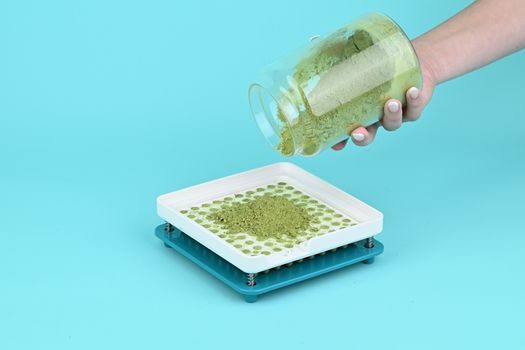
Viscous and paste products (sauce, mayonnaise, cosmetic cream, lubricating oil) call for piston or servo-driven volumetric fillers, while powders and granules require auger or cup-meter dosing, per Khodiyar's product breakdown [S3][S4].
Aggressive chemicals — thinners, solvents, bleach — need ex-proof electrical components and chemical-resistant seals; the Hanlar HMEX/2000 is the cited example with full ATEX-style component certification [S1].
Container Format and Line Integration
Container choice locks the upstream and downstream equipment: plastic-bottle lines integrate a bottle blowing machine and preform injection system, glass-bottle lines feed via unscrambler and air conveyor, and can lines require seamer integration not present in bottle cells [S2].
Dongtai (Jinan) and MAKWELL both publish 15-year track records covering the full packaging machinery cell, including emulsifying machines and labelling/capping machines, which matters when a buyer needs a single-vendor line-acceptance test rather than a multi-vendor integration risk [S4][S8].
Wenzhou Zhangshi specializes in pharmaceutical and food packaging, leading with ZS-series oral liquid fillers, shrink wrap machines, and tube fill-seal units, making it the cited reference for pharma-grade stainless and cleanability [S5].
Materials of Construction and Hygienic Specs
SS 304 is the default for non-corrosive food and beverage product contact, while SS 316 is standard for pharmaceutical, dairy, and aggressive chemical service because of its higher nickel and molybdenum content and superior chloride pitting resistance [S3].
Seals and O-rings are specified per product chemistry rather than as a stock item — the Hanlar HMP/3000 spec sheet states explicitly that seal materials are chosen with reference to the chemical specification of the product, which is the right engineering practice for anything beyond neutral aqueous liquids [S1].
Drip-free nozzles and the no-container/no-fill interlock are listed as standard rather than optional on the Khodiyar spec sheet, and they directly cut product giveaway and floor-cleaning downtime on viscous lines [S3].
Standards, Compliance, and Sourcing Specs
Buyers should write the RFQ around metering principle, contact material grade, fill range, accuracy tolerance, and ex-proof rating rather than generic throughput, because two machines with the same bottles-per-minute number can differ by a factor of three on giveaway cost at scale [S1][S3].
For flammable solvents specify ATEX/IECEx component certification on cables, sensors, and control panel individually, as the Hanlar HMEX/2000 does — full-machine certification is only as strong as its weakest sub-component [S1].
Two trackable signals to watch: the spread of servo-driven volumetric fillers into mid-viscosity food lines (replacing pneumatic pistons for accuracy and energy), and the consolidation of bottle-blowing, filling, and capping into single-vendor turnkey cells from Chinese OEMs like Well Machinery and MAKWELL [S2][S8].
Related analysis: Coding Machine TCO: 5- to 10-Year Cost Stack, Driver Map, and Sourcing Specs.