Fastmarkets launched calculated FOB China battery-grade lithium prices on 28 October 2026 [S1].
A defensible seaborne lithium carbonate price combines a declared product specification, a standardized delivery basis, verified market observations and a named assessment provider, with contract terms covering the transaction date, quantity and adjustment mechanism.
Seaborne Price Basis and Scope
A seaborne price represents lithium carbonate that moves through an international trade route, but the quoted location must be stated. CIF Asia includes the cost of lithium carbonate, insurance and freight to the specified Asian destination; it does not describe an FOB China transaction at the loading port [S2].
The grade also has to be explicit. FOB China and CIF Asia are therefore different price bases and should not be compared as if they represented the same landed cost.
Price reporting agencies provide several lithium carbonate assessment categories, including battery-grade, technical-grade and recycled material. S&P Global introduced daily recycled lithium carbonate assessments in 2024 for DDP China and CIF delivery bases, demonstrating that the assessment basis and material route must be separated rather than grouped under one undifferentiated carbonate price [S3][S6].
Assessment Inputs and Price Discovery
A seaborne assessment can therefore combine transaction evidence with market information from producers, traders, distributors, battery manufacturers and other participants, but the published methodology must identify which inputs carry the most weight.
Fastmarkets launched calculated FOB China battery-grade lithium prices on 28 October 2026, making the calculation basis part of the assessment record rather than an informal conversion from CIF or domestic pricing [S1]. Calculated prices are useful when a direct FOB transaction is not continuously available, but buyers should still retain the underlying specification, formulae, publication timing and any quality or quantity adjustments.
The method must also handle observations that are not fully equivalent. Common adjustments concern chemical grade, purity, delivered location, shipment size and timing, but no adjustment should be applied without a stated rule in the relevant methodology. This is especially important when comparing an Asian CIF benchmark with an FOB China series or a recycled carbonate assessment.
Benchmark Comparison for Seaborne Procurement
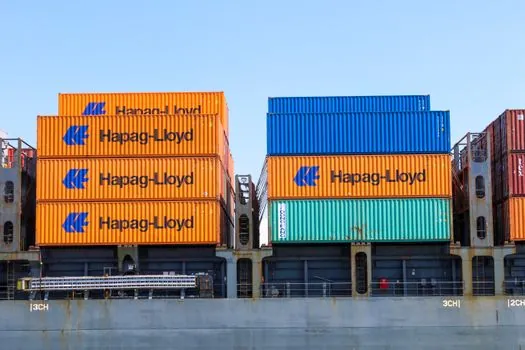
For a high-concentration buyer comparing assessment choices, location matters because FOB China ends the seller's risk at the named port, while CIF Asia carries freight and insurance to the destination. Freight and insurance affect the buyer's landed cost, but they do not make the two market observations identical [S1][S2].
The comparison turns on four criteria: delivery basis, material specification, publication frequency and contract function. A buyer needing an Asian landed reference should use a CIF assessment, while a Chinese exporter pricing at origin needs FOB China. Recycled carbonate requires a recycled series, and a hedge requires a contract whose settlement specification matches the buyer's exposure.
Contract Terms That Determine the Payment Price
The assessment number is only one contract variable. The purchase agreement should identify whether the final invoice uses an assessment, a negotiated fixed price or an assessment plus a stated differential, and should specify the publication date or pricing window used to fix that assessment [S2].
Quantity is equally important because a small spot parcel and a full commercial shipment may not support the same observed transaction basis. Parties should define the accepted lithium carbonate grade, minimum purity, permitted moisture or impurity limits, shipment quantity, incoterm, named port or destination, and the date from which freight or insurance adjustments apply. These details determine whether the quoted assessment can actually settle the physical purchase.
Currency, tax treatment and payment timing also belong in the pricing schedule. For transfer-pricing work, a dedicated lithium transfer-pricing framework can add the cost-curve and arm's-length dimension, while BMI's dedicated methodology provides the market-price leg of that analysis [S8][S9].
Use Cases and Appropriate Market Participants

Seaborne assessment pricing fits battery manufacturers, cathode producers, automaker supply chains, miners, traders and merchants that need a repeatable market reference for a physical lithium carbonate transaction. The CME contract description identifies miners, battery manufacturers, automakers and merchant traders as participants using the Fastmarkets CIF CJK assessment for hedging and price discovery [S5].
The method is less suitable for a buyer who will not state a delivery basis or product grade, or who expects the assessment to replace shipping terms, laboratory release procedures and quality remedies. It is also unsuitable for treating technical-grade or recycled material as battery-grade without a separate quality adjustment and an assessment that covers that supply stream [S3][S6].
For physical procurement, the assessment should support, not replace, the sales contract. For financial risk management, the cash-settled CME lithium carbonate futures and options use the Fastmarkets CIF CJK assessment and can extend up to 24 months forward. These instruments separate commodity-price exposure from physical delivery, which means a hedged producer still needs an operational contract for logistics and quality [S5].
Limitations, Verification and Failure Modes
The main failure mode is basis mismatch. A CIF Asia benchmark cannot be substituted for FOB China without accounting for the difference in delivery conditions, and the benchmark grade must match the contracted material. Applying a 99.5% battery-grade assessment to a different grade or mixing virgin and recycled supply without a transparent adjustment creates a settlement dispute. [S4]
Timing is a second failure mode. CME states that its underlying contract is fueled by daily Fastmarkets assessments and settled using arithmetic averages published each business day of the contract month [S5]. A buyer copying a displayed index without preserving the observation date, averaging convention and publication record loses the audit trail needed to reproduce the invoice calculation.
Market structure creates the third constraint. Benchmark describes lithium as a volatile and opaque market, which supports using independent assessment services rather than relying on a single merchant quote [S2]. Even so, an assessment is not a physical quality certificate. Contract settlement still requires agreed sampling, laboratory acceptance criteria, release mechanics and claims procedures.
Cost Drivers and Total Cost of Ownership

For the physical seaborne buyer, freight and insurance are explicit cost drivers because a CIF Asia price carries them to the destination, whereas FOB China leaves those costs with the buyer under the named delivery rule [S1][S2]. Currency, shipment size, port handling, demurrage, insurance, payment terms and credit exposure can change the landed cost even when the assessed lithium carbonate price is unchanged.
Material quality is another cost driver. Paying for battery-grade material with a minimum purity of 99.5% adds value compared with lower-grade material, but it can also increase inspection, rejection and segregation risk if the contract lacks precise acceptance rules [S2]. Buyers should price the full lifecycle: the assessment-linked purchase price, inland and port charges, ocean freight, insurance, financing, inspection, storage, demurrage and expected quality-handling costs.
Volume affects execution cost more than the benchmark calculation itself. A large contract may obtain a narrower differential to the assessment than a small spot purchase, but the commercial value of that differential must be weighed against warehousing, credit and inventory exposure. The published $19,750 per tonne benchmark therefore represents one reference point, not a complete delivered cost [S2].
Implementing a Reproducible Pricing Clause
A usable seaborne pricing clause names the provider, assessment series, product grade, delivery basis, pricing date, currency, quantity range and any permitted quality or freight adjustment. It should also state which publication takes precedence if an assessment is missing, revised or affected by a methodology change, rather than leaving the fallback to an undocumented dealer quote. [S9]
Fastmarkets' 28 October 2026 launch adds calculated FOB China battery-grade pricing to the available seaborne decision set, while Benchmark's 2 September 2026 CIF Asia assessment provides a landed regional reference of $19,750 per tonne for minimum 99.5% battery-grade spot material [S1][S2]. Buyers should preserve each quote's date and methodology, compare like with like, and review the FOB-to-CIF components before approving a contract price.