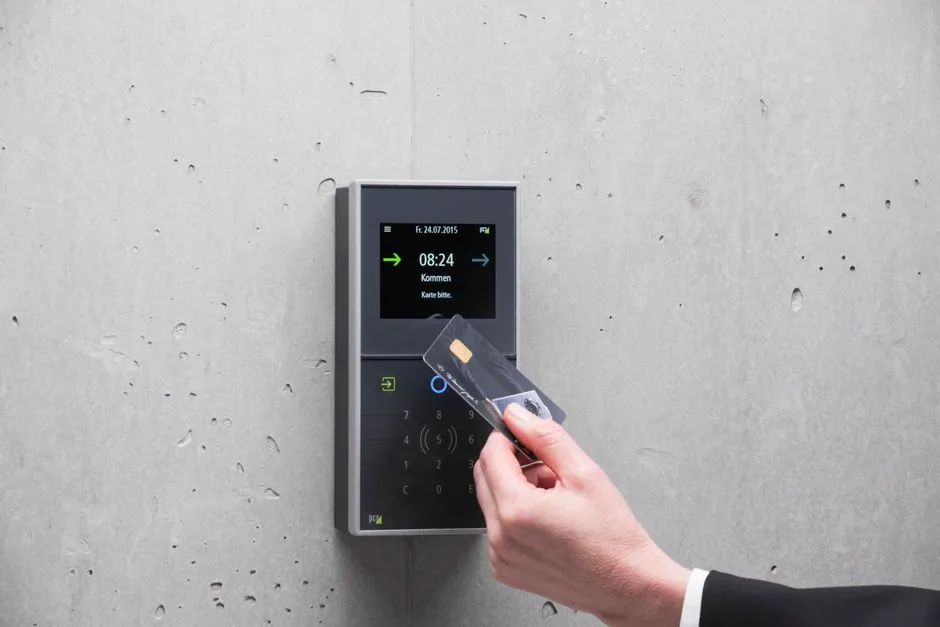
Fire alarm control panels should use unique programming credentials, because NFPA 72, 2013, Section 23.2.2.2 requires fire alarm systems to be protected from unauthorized program changes [S4].
The control must separate operational access from configuration rights, assign ownership through commissioning records, and preserve an auditable handover process when a maintenance contractor or building owner changes.
Program Protection Has Two Access Tiers
The Fire Alarm Panel Password Finder provides default User (Level 2) and Programming (Level 3) access codes for more than 45 fire-alarm manufacturers. These roles should not share one password because routine investigation or reset work does not require authority to alter the site database.
Simplex 2050 and 2250 Foundation Series documentation separates Level 1 user credentials from Level 3 access used to change the control-unit password, showing that manufacturers can make programming authority distinct from basic operator access [S2]. This structure supports a practical split between operators who handle events and engineers who modify the system configuration.
Level 3 should be restricted to competent personnel carrying out approved engineering work.
Default Codes Are Not Commissioning Credentials
The Fire Alarm Panel Password Finder provides default Level 2 and Level 3 access codes for more than 45 fire-alarm manufacturers.
Password behavior is model-specific rather than universal. This makes the exact panel model and its approved documentation more reliable than a generic code list.
At commissioning, replace every applicable factory or inherited code with a unique system credential, record who approved the change, and test both access levels. Do not assume one default works across a product family: the reference identifies different codes for Simplex 4100, 4100ES, 4008, and 4010ES platforms [S5].
Compare Operational and Engineering Access
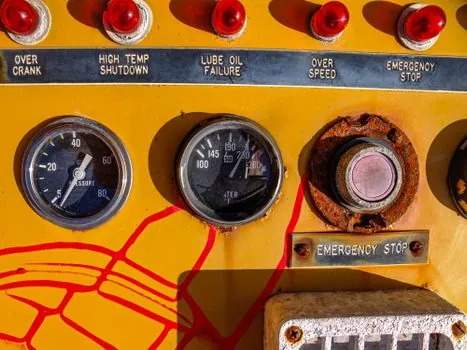
For a broader architectural comparison, networked and standalone panel architectures affect where the programming database and access controls reside; see Networked vs Standalone Fire Alarm Control Panels.
Contract Ownership and Handover Are Operational Controls
Password protection works only if the system owner can identify who may change the program and recover access after a vendor transition.
Those operational assignments should be recorded separately from the credential itself so that service continuity is not confused with unrestricted database ownership.
NFPA provisions become legally relevant only where adopted by the applicable jurisdiction. The authority having jurisdiction, or AHJ, can impose requirements more restrictive than the baseline national standard, particularly where access control and fire alarm functions are integrated [S6]. The handover process must therefore follow the adopted code and the approved permit or commissioning plan.
Disclosure alone does not define the outcome. If the building owner holds a Level 3 code, the agreement should state who may use it, whether use requires approval, how changes are recorded, and whether access must be returned. These controls reduce ambiguity without placing a sensitive credential in general maintenance documentation.
Site Documentation Must Match the Installed Panel
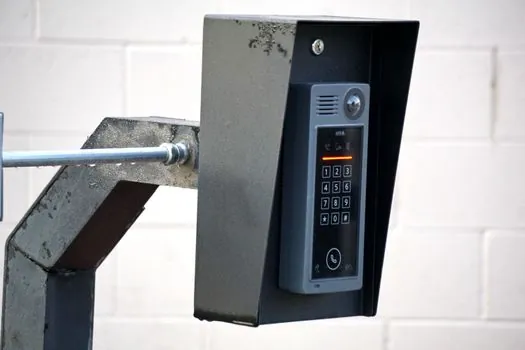
Site handover records should identify the panel family and model, the access tiers, the authorized personnel, the programming custodian, and the process for recovering or transferring credentials. The model identifier must be exact because default and commissioning behavior vary across 45-plus listed brands, including Notifier, Simplex, EST, Kentec, Advanced, Morley-IAS, Gent, Hochiki, Siemens, Bosch, GST, and Zeta [S5].
Engineers should check the manual for the installed panel rather than relying on a generic code finder. Honeywell categorizes fire alarm control panels as a product category. The programming credential should therefore be handled as part of the complete fire alarm control panel configuration, including detection, notification, interfaces, and any linked subsystems.
Include a controlled procedure for emergency access. If the credential holder is unavailable, the responsible engineer should know who can authorize recovery without placing a default code back into service. A lost credential can then be treated as a controlled maintenance event instead of an invitation to search for factory passwords.
Verify Protection Through Commissioning Tests
Commissioning should demonstrate that an unauthorized Level 3 entry is rejected and that Level 2 access permits only the intended operations. The verification record should cover the installed panel, the changed Level 3 credential, the authorized Level 2 users, and the programming custodian [S2][S4].
Three measurable checks form a sound acceptance sequence. First, verify that the factory programming code no longer opens the programming functions. Second, verify that an authorized Level 2 user can perform only the assigned operational tasks. Third, verify that the Level 3 user can perform configuration work without weakening audit, handover, or ownership controls.
Default-code examples illustrate why this test matters. The listed GST IFP8, GST5000, and GST200 programming code is 24110022, while listed Kentec Syncro, Taktis, and Elite programming code is 3333 [S5]. If either credential still opens the programming tier, the commissioning closure is incomplete even if normal alarm operation appears functional.
Do not include the active Level 3 code in routine work orders, monitoring tickets, or general access-control instructions. Keep a controlled release record, identify the approving authority, and re-test credential changes after firmware replacement, service-contract transfer, or a major system reconfiguration.
The trackable control is simple: a unique Level 3 credential, a named programming custodian, and a signed handover record for every vendor or ownership change.