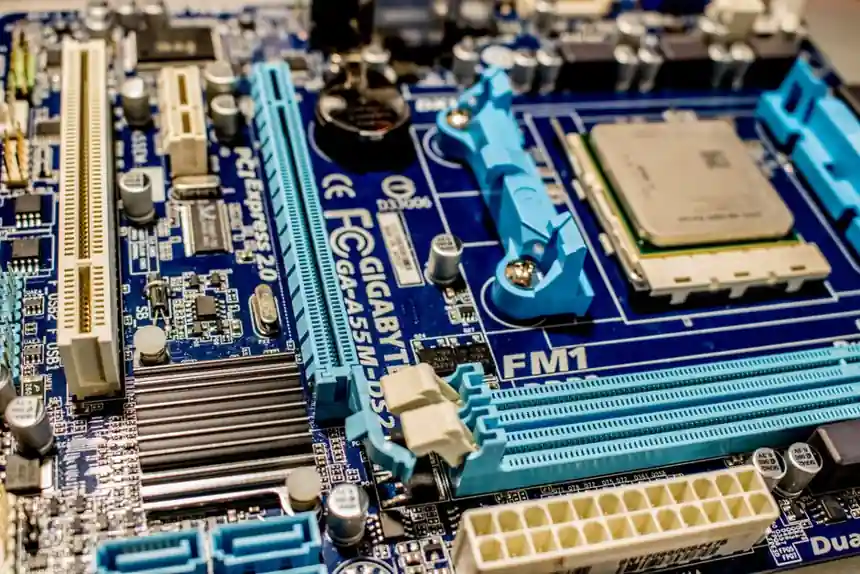
Nitrogen trifluoride and tungsten hexafluoride supply for semiconductor fabs involves a limited group of qualified suppliers and requalification cycles lasting six months to two years.
NF3 serves in-situ chamber cleaning, while WF6 supplies tungsten CVD for contacts and vias; both are classified as specialty electronic gases delivered in cylinders or tube trailers rather than through fab bulk-gas pipelines [S2][S3].
NF3 and WF6 perform non-interchangeable fab duties
NF3 is used for remote-plasma cleaning of chemical vapour deposition chambers between process runs, with its clean rate and by-product profile tied to a qualified chamber-cleaning recipe [S2][S3]. WF6 is a tungsten precursor for chemical vapour deposition in contacts and vias, and its per-wafer consumption rises as 3D NAND gains conductor layers [S2].
The distinction matters because NF3, WF6 and other specialty gases have no practical substitutes, while specialty gases generally arrive at purities from 5N to 7N, equivalent to 99.999% through 99.99999% [S3].
For a new supplier, nominal chemical identity is only the starting point.
Qualification is the principal supply constraint
Qualification and requalification cycles of six months to two years make a qualified gas supplier strategically difficult to replace [S2]. This operating constraint supports advance purchase planning for NF3 and WF6, but a long qualification cycle does not automatically justify multiple sources if the candidate gas has not demonstrated comparable process performance.
Bulk gases such as nitrogen, oxygen, argon and hydrogen are generated at or beside the fab and piped in, while specialty gases arrive in cylinders and tube trailers [S3]. An interrupted specialty-gas supply can stop a line within days, and requalification can take six months to two years.
Contract design should distinguish the chemical from the service package. Gas quality, cylinder configuration, cabinet and manifold compatibility, delivery frequency, emergency response, technical support and product-change notification all affect qualification and continuity. For procurement teams tracking delivery performance, lead-time volatility as a supply-risk KPI provides a broader framework for measuring supplier performance beyond unit price.
Compare on qualification, purity, capacity and continuity
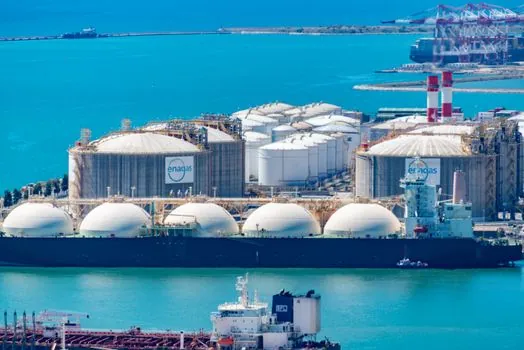
NF3 and WF6 should be compared against four decision criteria rather than treated as interchangeable commodities: process function, purity and impurity control, qualified supplier capacity, and delivery continuity. NF3 is the chamber-cleaning gas, so clean rate and by-product chemistry dominate its acceptance test. WF6 is the tungsten deposition precursor, so film step coverage, resistivity and contact resistance must be re-established if the source changes [S2].
The comparison supports different sourcing priorities. NF3 contracts must protect chamber-cleaning performance and address fluorine-feed availability. WF6 contracts must protect deposition repeatability, address tungsten-semiconductor process integration, and monitor alternatives that could reduce future demand. WF6 demand has been linked to rising conductor layers in 3D NAND, while molybdenum deposition was investigated as a possible replacement whose commercial implementation remained uncertain in the cited forecast [S1].
On-site generation is an option, not automatic substitution
On-site fluorine generation can replace delivered NF3 in chamber-cleaning applications by using F2 at the fab, giving selected operations a path that reduces dependence on finished NF3 cylinders [S1]. The approach does not make NF3 interchangeable across every recipe, because clean rate, by-product profile and chamber conditions remain part of the qualified process [S2].
For WF6, the more credible substitution route is a different deposition material and precursor rather than another cylinder of the same gas. Molybdenum was proposed as a tungsten alternative for advanced memory conductors, but the earlier industry assessment found no Mo precursor product identified in the field and no official device-maker transition announcement at that point [S1]. A molybdenum-based process would require full film, integration and reliability requalification rather than a gas-supply substitution.
Fab-specific generation also adds plant complexity. The economic case depends on gas consumption, generation equipment utilization, purification performance, redundancy, site permits, operator requirements and the capital needed to support chamber uptime. No single generic purity claim can validate an on-site installation, because the tool and chamber recipe still govern the final acceptance test.
Specialty gases fit a concentrated supplier structure

The supplier set named in the electronic-gases assessment included Air Products, Air Liquide, EMD/Merck, Linde, Matheson Gas, SK Materials, Gazprom, Huate Gas and Peric [S1]. A newer market overview also identifies SK Specialty and PERIC in NF3 supply, while broader tracking lists Air Liquide, Linde, Air Products, Merck KGaA, SK Materials, Taiyo Nippon Sanso, Resonac Holdings and Kanto Denka Kogyo among electronic-gas participants [S3][S4].
The market data should be treated as scope-dependent rather than combined. TECHCET’s 2022 forecast placed NF3 and WF6 within a US$5 billion specialty-gas segment expected to reach US$6.5 billion after 30% growth over five years, including 72% forecast growth for NF3 [S1] (2022-09). A separate 2026 estimate valued semiconductor electronic gases at about US$6.9 billion [S3], while DataM Intelligence estimated semiconductor specialty gases at US$6.15 billion in 2025 and projected US$12.8 billion by 2035 at a 7.6% CAGR during 2026–2035 [S5].
These figures cover different product and market definitions, so they are directional indicators rather than interchangeable measurements. One market model places ultra-high-purity electronic specialty gases at US$4.80 billion in 2025 and US$14.20 billion in 2036, a 10.4% CAGR [S4]. The common engineering conclusion is stronger than the forecast spread: demand growth is increasing the value of local production, purification and resilient delivery, but qualification remains the binding constraint.
Match the supply model to fab consumption
NF3 supply is suited to cylinder or bulk-delivery systems backed by supplier capacity near the fab, while WF6 sourcing must add precursor-specific qualification and process-change control [S2][S3]. The named delivery hardware for electronic specialty gases includes ISO containers, tube trailers, high-pressure gas cabinets with automated purge, and point-of-use abatement scrubbers [S4].
A credible source is not simply a company that sells NF3 or WF6. It must document purity, trace-metal and moisture control, fill and packaging configuration, delivery capacity, emergency response, and the change-control process for the qualified material. The qualification package should also include evidence from comparable process steps rather than generic certificates alone.
Who is this supply model for? It fits advanced logic, 3D NAND above 300 layers, advanced DRAM and semiconductor fabs operating across multiple regions [S4]. It is less suitable for non-semiconductor users that do not require sub-parts-per-billion impurity control, electronic-grade cabinets or six-month to two-year supplier qualification [S2].
NF3 and WF6 are not generic industrial commodities. A defensible supply strategy links local qualified capacity, 5N–6N or higher material quality, contamination control, recipe-specific qualification and delivery continuity. Track lead time, cylinder fill rate, product-change notices, supplier capacity additions and requalification status as the five operational signals that determine whether gas supply can keep pace with fab demand [S2][S3][S5].