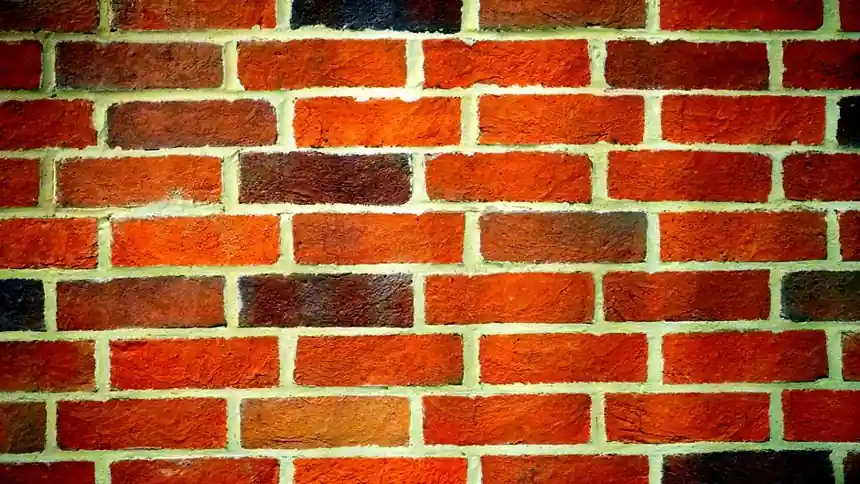
For a high-abrasion industrial floor base, specify 1-3/16-inch-thick floor brick rather than ordinary masonry, with the surface selected for traffic, chemicals, and impact.
The decision covers floor brick, concrete masonry units, fired clay brick, and resilient wall-base alternatives for industrial plants, warehouses, process areas, and equipment bases.
Define the Service Envelope Before Choosing a Unit
Industrial flooring must be selected against a defined service envelope rather than abrasion resistance alone. Belden identifies abrasion, impact, thermal shock, water, oils, acids, alkalis, and wheeled traffic as simultaneous hazards in industrial operations [S2].
General industrial floors include plating, papermilling, pickling-tank areas, chemical-processing zones, dairies, meat-processing plants, bakeries, laboratories, and food plants where sanitation and cleanability matter [S2]. Acid-resistant brick and tile floors are also used in chemical processing, petrochemical, pharmaceutical, metal-refining, and selected food-and-beverage facilities [S5].
Record the actual chemical concentration, exposure duration, operating temperature, cleaning chemistry, traffic class, wheel-load range, impact regime, and substrate movement before selecting a product. Belden states that its chemical-resistant brick flooring system provides chemical resistance and may be exposed to oils, acids, and alkalis [S2].
Compare the Four Principal Construction Options
Floor brick provides the strongest combined abrasion and chemical-protection case in the research, but joints, traffic direction, and installation quality determine service life. The following comparison sets the main options against abrasion, chemical exposure, impact behavior, and maintenance. [S2]
For comparison with resin wall-base systems, rubber and vinyl bases address appearance and wall protection, but the supplied product information does not establish the same abrasion, impact, or chemical-resistance envelope as a 1-3/16-inch floor-brick system [S6][S7].
Choose the Floor-Brick Surface by Traffic Pattern
This dimensional change matters because one surface texture is not being substituted for another without rechecking module, joint, and installation details.
Use abrasive or double-abrasive faces where abrasion is the dominant mechanism. The double-abrasive option is a separate surface designation, not a guarantee of twice the service life, and no wear rating appears in the supplied manufacturer data [S3].
Use vertical-fibre brick where grip, impact resistance, and oily or greasy conditions dominate.
Do not select smooth brick for an uncontrolled high-abrasion aisle. For comparison, ordinary concrete may chip under dropped tools, fork lifts, and thermal shock, while brick has greater impact resistance but may shift under repeated pallet-jack or tow-motor loading [S4].
Design the Wall Base as a Layered System
A durable floor base depends on the brick, mortar, membrane, substrate, and joint details as a system, not on the brick unit alone. Belden describes a three-way protection arrangement comprising chemical-resistant brick, chemical-resistant mortar, and a chemical-resistant membrane [S2].
The exposed unit is only one part of the installation: preparation requires a clean, dry, uncontaminated substrate, and acid-resistant mortar is applied to the prepared surface and the brick back and sides [S5].
The International Masonry Institute detailing collection includes hundreds of details for brick, block, stone, ceramic tile, terrazzo, plaster, AAC, and related masonry systems, with details reviewed for constructibility by its technical team and trade reviewers [S1]. Use these details as coordination resources, then adapt the selected detail to the actual brick format, substrate, chemical schedule, and wall-floor junction rather than copying a generic residential base.
The industrial flooring decision should separate surface durability from continuity. A resistant field tile does not compensate for an unprotected perimeter, failed joint, or incompatible membrane.
Control the Failure Modes at Joints and Transitions
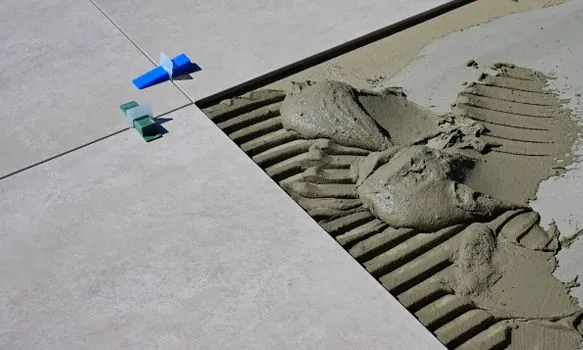
The most credible chemical-protection failure path is through the joints, not through the center of the brick. Brick floors can separate under high traffic, and repeated pallet-jack or tow-motor pressure can shift units or create uneven surfaces [S4].
Chemical-resistant masonry also has three documented exposure limits: Belden excludes acid fluorides and strong hot caustics from its general resistance claim [S2]; standard concrete can absorb acids, oils, and harsh cleaners unless sealed [S4]; and
Verify acid or alkali concentration, temperature, and duration directly with the brick and mortar manufacturers before procurement.
Installation still requires controlled curing, inspection for cracks, gaps, and unevenness, and testing before full operation. Guy Nielson states that curing time varies with mortar type, temperature, and humidity, and recommends controlled chemical exposure of a test area after cure [S5].
Use Resin Bases Only for Their Documented Role
Rubber and vinyl wall bases are finishing and impact-protection components, not automatically qualified substitutes for a masonry floor base. Mannington identifies appearance, performance, and life-cycle cost as the three selection factors for rubber wall base [S6].
Roppe describes its Type TV thermoplastic vinyl base as durable and economical, but the supplied specification does not establish a 1-3/16-inch thickness, fired-clay body, chemical linings, or vertical-fibre abrasion surface [S7].
Use a resilient base where the requirement is a replaceable wall finish, controlled profile, or economical interior protection. Use brick or another qualified industrial flooring system where the base must tolerate heavy abrasion, impact, chemicals, thermal shock, and wheeled equipment together. The fired brick option should likewise be specified only after its surface and chemical suitability are documented.
Issue a Procurement-Ready Selection Schedule

A defensible schedule identifies the product as chemical-resistant floor brick, states the exact size, surface, body, thickness, color or wear designation, and required chemical-compatibility evidence. Available dimensional combinations include 3-7/8 by 8 by 1-3/16 inches for smooth, abrasive, and double-abrasive surfaces, and 4 by 8 by 1-3/16 inches for the vertical-fibre surface [S3].
Require the bidder to identify the mortar, membrane, substrate preparation, joint treatment, cure regime, perimeter condition, transition details, and inspection plan. The installation sequence is explicit: prepare, set out, mortar, place and align, cure, inspect, correct defects, and perform verification before operational loading [S5].
Do not accept "abrasive brick" as a complete specification. Write the surface designation, format, duty profile, chemical exclusions, and installer responsibilities into the purchase documents. For the shortlist, choose vertical-fibre brick for impact and oily conditions, double-abrasive brick for severe wear, fully vitrified tile where a nonporous hygienic surface is decisive, and ordinary brick or block only when lower-duty exposure is documented.
Track two items before award: a signed chemical-compatibility matrix covering every process and cleaning chemical, and an approved wall-floor transition detail using the selected brick format and membrane system [S1][S2][S5].