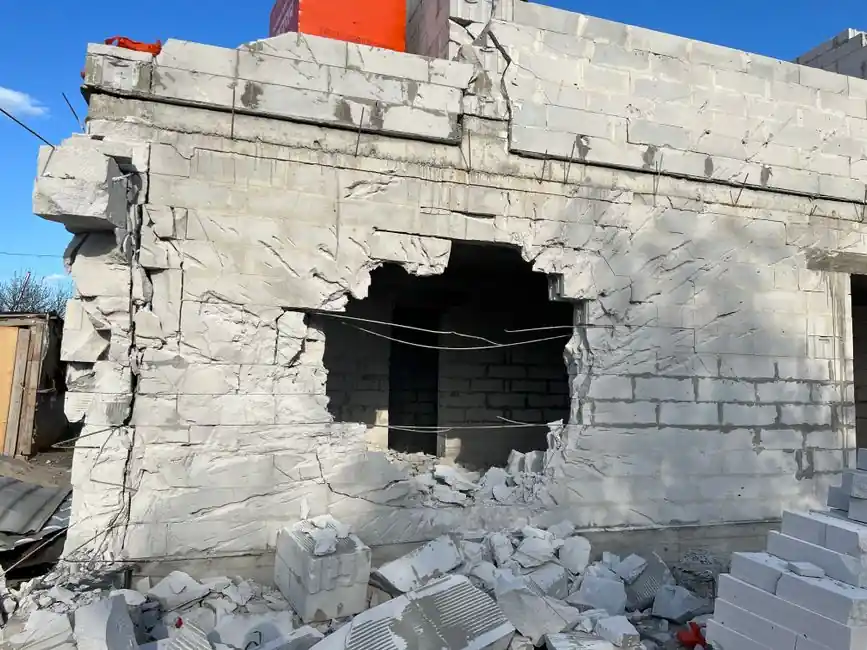
Reinforced concrete masonry units, laid with steel bars and cores filled with concrete, provide a flexible pool-wall system; one design example places CMU construction at US$35,000–60,000 for basic work and US$60,000–100,000 or more for custom designs [S3].
The enclosure's function determines the material: CMU forms the pool-shell walls, while dry-stacked segmental block is used for retaining walls [S1][S3].
Define whether the wall retains soil
A pool wall is a water-retaining shell when it forms part of the basin and carries internal water pressure, while a surrounding retaining wall resists lateral earth pressure. These duties should not be merged in one generic block specification, because pool walls require continuous waterproofing, reinforced concrete, accurate geometry, and compatible plumbing penetrations [S3].
Segmental retaining walls are dry-stacked from precast concrete units, while masonry retaining walls use poured concrete or concrete block and may receive a stone facing [S1]. If the enclosure retains a slope, its surcharge, drainage, and total height determine whether it is a gravity wall, a reinforced wall, or a combination of both.
Segmental retaining walls are generally attractive and more budget-friendly than masonry walls [S1]. CMU pool construction offers strength and flexibility in design and allows more control over shape and size than pre-made fiberglass pools [S3].
Compare CMU, segmental block and brick
Reinforced CMU combines modular masonry dimensions with steel reinforcement and an infilled concrete core, making it the leading option when the enclosure forms the pool basin [S3]. Segmental retaining walls are constructed by dry-stacking precast concrete blocks, and their price is influenced by the wall's length and height [S1].
A practical comparison is therefore straightforward: choose CMU for water resistance and custom geometry, segmental block for economical soil retention, brick for appearance over a stable substrate, and insulated concrete formwork, or ICF, when thermal performance is the priority. ICF pool guidance states that insulated concrete forms can speed pool construction and that their insulating foam prevents more than 80% of pool heat loss [S4].
Specify the structural pool-wall system
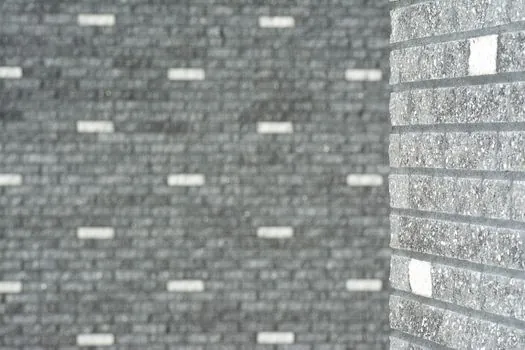
CMU pool walls use stacked concrete masonry units that are reinforced with steel bars and filled with concrete to create a solid structure [S3]. Those stages make the wall a structural and watertight assembly rather than a stack of decorative blocks. Dimensions, depth, steps, seating, soil conditions and drainage must be fixed before excavation [S3].
These figures describe one 16 ft, 4.9 m, pool, not a universal detail for every size, depth and soil condition; the structural engineer must adapt them to the calculated loads and local geotechnical conditions.
Steel reinforcement increases strength, and filling the hollow units with concrete creates a more solid wall [S3]. Reinforcement placement still depends on wall height, retained height, soil, water density, hydrostatic loading and exposure, so using a two-row detail without project-specific verification would be poor engineering practice.
Choose masonry, segmental block or ICF
CMU pool construction offers flexibility in design and allows more control over shape and size than pre-made fiberglass pools [S3]. CMU pool construction allows more control over shape and size than pre-made fiberglass pools [S3].
Dry-stacked segmental block is the appropriate alternative for a separate enclosure retaining wall. The research describes segmental walls as more budget-friendly than masonry and identifies unit size, wall shape and color as cost and appearance variables [S1]. It is not a substitute for a reinforced waterproof shell when the same wall must retain both soil and pool water.
ICF is a distinct third system for a custom pool shell. The cited manufacturer states that its insulating foam prevents more than 80% of pool heat loss, and that BuildBlock and BuildRadius ICF pool systems reduce energy costs by more than 60% [S4]. These are product-specific performance claims, not guarantees for an unbranded ICF installation.
Control cracking and waterproofing failures
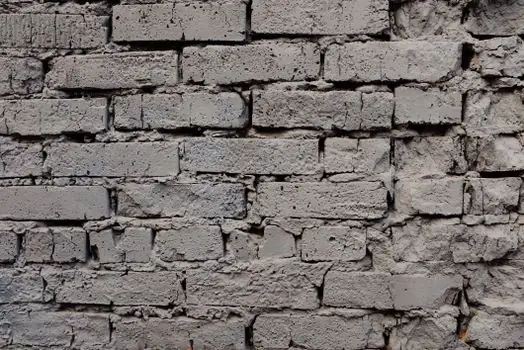
Cracks are the principal failure mode identified for a CMU pool without a liner. For masonry walls, the cited discussion notes that cracks can be filled and repainted, whereas cracks in C-block construction cannot be corrected in the same way once they develop [S5]. A liner or plaster system can conceal some defects, but it does not replace movement control, reinforcement continuity, drainage or a sound structural base [S3][S5].
The specified finish sequence is a concrete base, block wall, reinforcement, concrete infill, waterproof coating, then plaster, tile or paint [S3]. Plumbing, filters, pumps and drainage must be coordinated with the shell rather than installed as afterthought penetrations [S3]. Waterproofing should cover the internal pool face continuously, and any chemical resistance should be checked against the selected plaster, coating and tile system before construction.
The pool should be filled before final finish work is judged, and structural movement or recurring wetness should be treated as a defect rather than accepted as cosmetic cracking [S3][S5]. A brick or stone appearance does not remove the need for a continuous waterproof membrane behind the visible facing.
Match the wall to site and budget
A separate segmental retaining wall is generally the economic choice where the enclosure only retains soil, while reinforced CMU is the more integrated solution where the wall must retain soil and contain water [S1][S3]. The 2026 CMU cost range starts at US$35,000 for basic construction, rises to US$60,000 for the upper end of basic work, and reaches US$100,000 or more for custom designs [S3]. Pool dimensions, depth, labor rates, finish type, lighting, heating and waterfalls also affect the total [S3].
Do not select brick merely because the enclosure is described as a brick wall. Masonry can crack and require filling and repainting, so a brick face over a sound CMU backing is a finish decision, while using brick itself as the pool shell transfers waterproofing, reinforcement and movement-control duties to a material not documented for that duty in the research [S3][S5].
Engineers who need a wall-to-wall thermal comparison can use the U-value analysis for a 200 mm AAC block wall as supporting information, but AAC should not be substituted for a load-retaining pool shell without project-specific structural and waterproofing design.
Set the specification and inspection gates
A compliant project package should identify the wall as a pool shell, soil-retaining wall, decorative enclosure or a combination, then show separate details for each duty [S1][S3]. At minimum, record excavation dimensions, wall height, pool depth, base thickness, footing dimensions, reinforcement, concrete infill, waterproofing, finish, plumbing penetrations and drainage [S2][S3].
Material documentation should include CMU dimensions and grade, mortar or adhesive where applicable, reinforcing-steel diameter and spacing, concrete strength, waterproof-coating compatibility, drainage stone or geocomposite, and the selected finish [S2][S3]. For segmental walls, specify block type, allowable height, batter, base course, geogrid requirements, drainage and cap detail rather than treating the unit as a generic masonry block [S1].
Before closing the excavation, inspect footing width and thickness against the approved design, then verify reinforcement placement, core fill, tie-ins and drain continuity. For the 8 by 8 by 16 ft example, this means checking the stated 16 in, 406 mm, minimum footing width and 8 in, 203 mm, recommended thickness against the engineer's approved drawing [S2]. The shortlist is CMU for an integrated reinforced shell, ICF for an insulated custom shell, segmental block for separate soil retention, and brick for a non-structural facing.