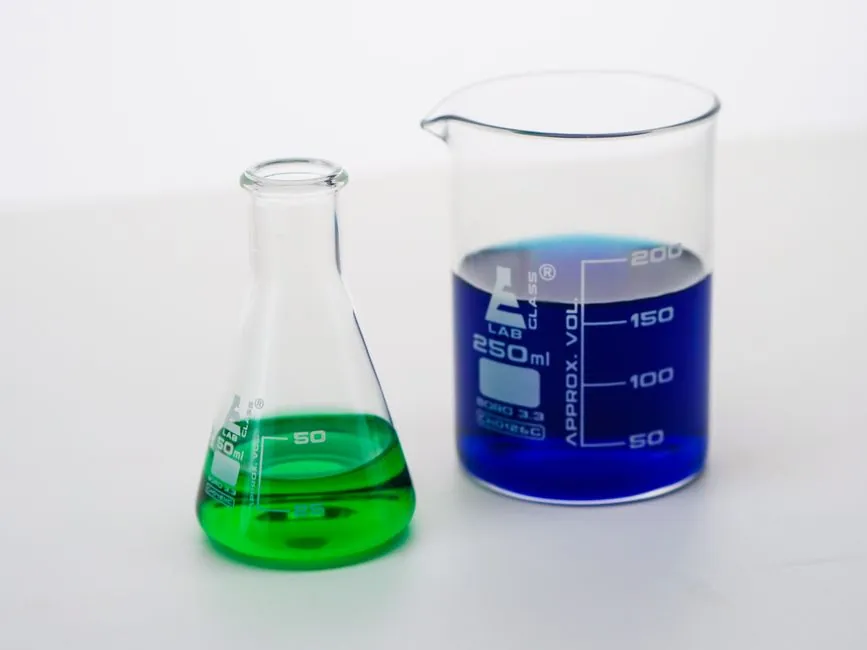
A chemical resistance chart covering 82 solutions rates vinyl ester as having good resistance to 79 at 50°C, versus 48 for isophthalic polyester [S2].
The decisive variables are resin chemistry, chemical concentration, temperature, exposure time and laminate design, with vinyl ester, isophthalic polyester and orthophthalic polyester showing materially different results [S2][S4][S7].
How to Read an FRP Chemical Resistance Chart
Chemical resistance means retaining mechanical, visual and dimensional properties during prolonged contact with a solution, gas or vapor at a defined concentration and temperature [S2]. It is not a permanent “safe” or “unsafe” label for the chemical family.
FRP avoids the electrochemical corrosion process that consumes metals, making it useful in chloride, salt and dilute-acid environments [S2]. Compatibility still depends on the resin continuous phase, corrosion barrier, liner, cure quality and process condition [S2][S3].
For FRP composite equipment, review the exact chemical, concentration, operating temperature and exposure profile. A medium rated at 20°C should not be assumed acceptable at 60°C merely because its chart entry remains unchanged [S2][S4].
Compare Vinyl Ester, Isophthalic and Orthophthalic Polyester
Vinyl ester retains 79 good-resistance entries out of 82 chemicals at 50°C, while isophthalic polyester retains 48; at 20°C, the corresponding totals are 80 and 73 [S2]. This comparison makes vinyl ester the more defensible starting point for mixed acid, alkali, salt or solvent service, but not an automatic approval.
For a broad mechanical comparison of glass-fiber and carbon-fiber reinforcement, see Fiberglass FRP vs Carbon Fiber FRP. Chemical compatibility still depends on the resin barrier rather than reinforcement stiffness.
Acids, Alkalis, Bleach and Oxidizers

One 2026 comparison rates hydrochloric acid as excellent for FRP and good for GRP, sodium hydroxide as good for FRP and fair for GRP, and acetic acid as good for FRP but poor for GRP [S1]. Those broad ratings do not define concentration, immersion duration or maximum service temperature.
Oxidizers demand separate review. A 2026 compatibility guide specifically flags hypochlorite and peroxide as chemicals requiring detailed data rather than blanket approval [S4].
Concentration can reverse simple expectations. Specify the minimum, normal and maximum concentration rather than using the product name alone.
Solvents Are the First Exclusion Line
Such ratings apply to the stated resin, concentration, temperature and exposure regime, not to every FRP product or every dual-laminate configuration.
Isophthalic polyester and vinyl ester can therefore receive different ratings for the same solvent [S2][S7].
For solvent-handling applications, industrial solvent identity and operating temperature must be documented before the liner is selected. A rating for 5% aqueous acetic acid cannot be transferred to glacial acetic acid, and a 20°C immersion result cannot be extended to a hot process stream [S2][S5].
Temperature Changes the Engineering Result
Vinyl ester changes from 80 good ratings at 20°C to 79 at 50°C across the 82-chemical dataset, but “almost unchanged” does not mean temperature-independent [S2]. Continuous hot service, thermal cycling and vapor exposure still require confirmation from resin-specific data and the proposed laminate [S2][S4].
Design for the actual shell temperature, not only the bulk liquid temperature. Outdoor FRP in hot climates also receives UV exposure, dust, salt-laden air and daytime shell heating, which affect coating and liner durability [S4].
Liner and Corrosion Barrier Can Govern Service Life
FRP structural strength comes from glass reinforcement, while the resin-rich inner liner and corrosion barrier provide the primary chemical barrier [S4]. Poorly cured surfaces, voids and under-cured regions can permit water ingress and osmotic blistering, especially in hot-water service [S2].
Fillers are not recommended for FRP composites intended to acid service because they can increase permeation and reduce corrosion resistance [S3]. Resin selection, reinforcement, surface veil, cure system and fabrication method therefore belong in the same tank specification, not in separate purchasing decisions [S3].
ECR-glass reinforcement is more resistant than conventional glass in acidic environments because it is boron-free [S2]. That does not solve alkaline or solvent attack, and it does not replace a compatible resin-rich barrier and qualified fabrication procedure [S2][S4].
Build a Traceable Compatibility Decision
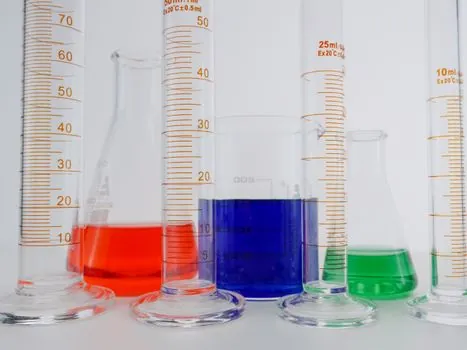
A defensible selection requires at least five inputs: exact chemical identity, concentration range, temperature profile, duty cycle and current safety data sheet [S4]. Include impurities, by-products and cleaning chemicals because the complete process mixture may be more aggressive than the primary product [S4].
Compare the proposed chemical against a resin-specific chart covering 82 acidic, alkaline, saline and solvent solutions [S2]. Record the resin, reinforcement, liner, concentration and temperature for every acceptance, and require a documented supplier recommendation for exceptional service [S4].
Do not treat a generic “acid-resistant” label as an approval. For an acid or solvent storage tank, require the chemical concentration, maximum temperature, immersion duration, resin family and corrosion-barrier construction to match the specific service [S1][S2][S4].
The next trackable check is a 10°C design-temperature increase against the selected chart: if the rating changes, the resin and liner require fresh review rather than extrapolation from room-temperature data [S2].