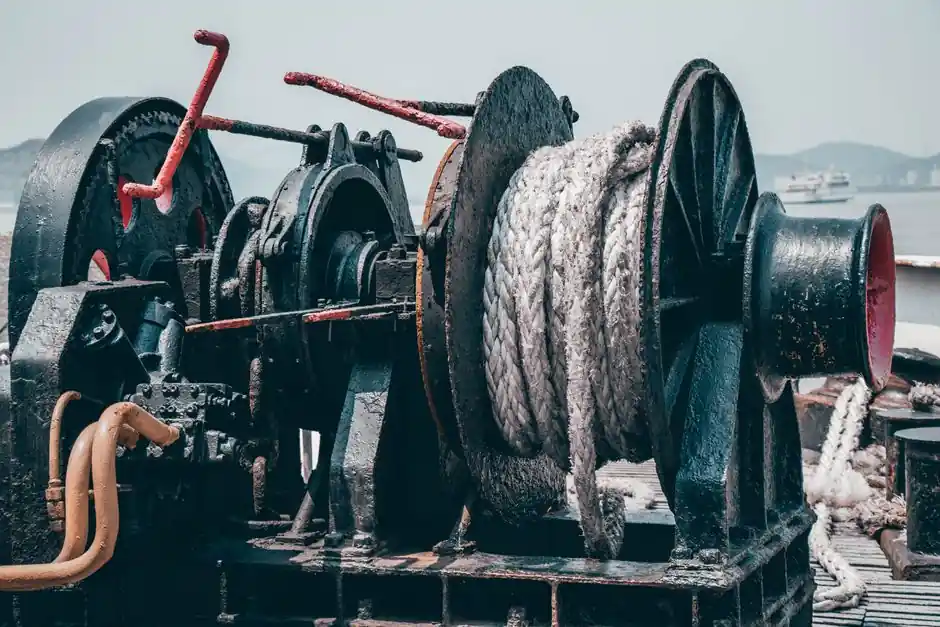
A marine butterfly valve should combine 90-degree isolation, compact construction, and a material set suited to seawater, ballast, cooling, fire-main, or fuel service.
Selection must also address pressure and temperature, face-to-face length, connection type, classification-society approval, testing, actuation, and the installation consequences of vibration and limited space [S2].
Marine Valve Types Matched to Service Severity
Concentric, double-offset, and triple-offset butterfly valves differ in pressure capability, seat contact, operating torque, and maintenance burden, so the valve geometry should follow the service rather than a general marine preference [S4][S5].
A concentric resilient-seated valve is the economical choice for low- and medium-pressure water, cooling-water, HVAC, and similar isolation duties, but it is normally unsuitable for demanding high-pressure or high-temperature service [S4][S5]. Its shaft and disc are centered on the pipe centerline, and the elastomer seat is compressed to achieve bubble-tight shutoff [S5].
Double-offset geometry moves the disc away from the seat before most of the opening stroke, limiting contact to the final 5% to 7% of closure, reducing torque and seat wear; this design serves higher-pressure water, steam, hydrocarbon, chemical, and oil-and-gas services [S5]. High-performance butterfly valves can cover Class 150 to Class 600, while metal-seated and fire-safe variants extend their use into demanding installations [S4].
Triple-offset valves add an inclined conical sealing geometry, allowing the disc and seat to engage without rubbing during rotation and producing torque-seated metal-to-metal shutoff [S5]. They are suited to severe service, LNG, refining, power generation, steam distribution, and emergency shutdown applications where low wear and higher-temperature sealing justify their higher initial cost [S4][S5].
Pressure, Temperature, and Flow Set the Valve Class
The design pressure and design temperature must be selected from the worst credible operating condition, not the normal seawater or fuel-service values, and the resulting pressure class must be checked against the applicable class rule [S2][S9].
Resilient-seated valves address low- to medium-pressure applications, double-offset designs extend to Class 150 through Class 600, and triple-offset metal-seated designs serve the most severe pressure and temperature duties [S4]. The pressure rating still depends on body construction, disc, shaft, seat, end connection, and actuator loads; a valve class number alone is not a complete design specification [S4][S5].
For modulating service, pressure drop is a design input rather than a post-installation surprise. A butterfly valve used for control should be selected so it absorbs 25% to 50% of the total system pressure drop, with the remaining system loss kept outside the valve [S1]. A ball valve may be preferable where very low differential pressure and unrestricted full-port flow are more important than installation length.
Flow medium, fluid temperature, allowable pressure loss, required shutoff, and the number of operating cycles should be fixed before choosing the seat and offset geometry [S9]. Steam, hydrocarbons, and corrosive chemicals require attention to seat material, while a resilient seat that is chemically unsuitable for the medium can fail even when the body alloy is acceptable [S4][S5].
Seawater Resistance Starts with Body, Disc, Stem, and Seat
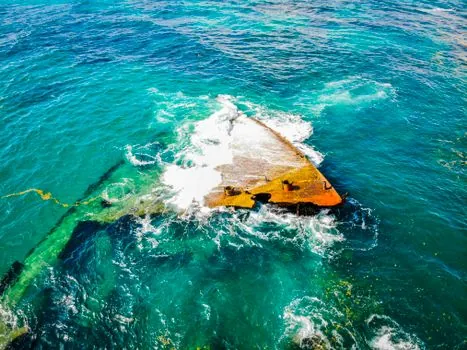
For continuous seawater service, the body, disc, stem, seat, and exposed fasteners must be assessed as one corrosion system because each wetted component can limit valve life [S2][S4].
Ductile iron with epoxy coating combines strength and lower cost for low- and medium-pressure seawater cooling, HVAC, and general seawater systems, while WCB carbon steel offers higher mechanical strength and pressure capability for high-pressure and offshore applications but requires corrosion protection [S2]. Stainless steel CF8M, equivalent to 316, provides stronger chloride resistance than CF8, equivalent to 304, for fresh water and corrosive media [S2].
Aluminum bronze offers seawater and galvanic-corrosion resistance for cooling-water, ballast-water, and offshore systems [S2]. Marine disc options include SS316, aluminum bronze, duplex stainless steel, and nickel aluminum bronze, with aluminum bronze or duplex stainless steel commonly preferred for long-term seawater exposure [S2]. Marine stem options include SS410, SS420, SS431, SS316, and duplex stainless steel, while ordinary carbon steel is less reliable in seawater [S2].
FRP composites are lightweight, non-conductive, corrosion-resistant, and suitable for seawater, chlorine, and aggressive chemicals [S4]. Copper-nickel bronze and titanium are also identified for marine applications, but material selection must be matched to the complete service envelope, including chlorides, galvanic couples, temperature, erosion, and crevice exposure [S7]. EPDM suits seawater and cooling water, while PTFE is used where resistance to highly corrosive chemicals is required [S2].
Connections and Installation Geometry Control Feasibility
Flanged, wafer, lug, and threaded connections each affect vessel space, alignment, corrosion exposure, and replacement requirements, so the connection must be selected with the pipework layout rather than independently [S2].
Butterfly valves have a shorter face-to-face length than gate and globe valves, which is valuable where pipes, equipment, and cables occupy limited space [S2]. Wafer and lug configurations can reduce installed length, while flanged construction simplifies inspection or removal in larger marine systems; the final decision depends on pipework standard, vessel class, and project specification [S2].
Valve orientation also affects assembly, stem access, actuator clearance, and service conditions. An operator should confirm the permitted installation orientation, stem direction, handle or gearbox position, and available handwheel clearance before releasing the purchase order [S2][S9].
For actuated isolation, specify 90-degree rotation, operating torque at the selected pressure differential, cycle frequency, fail position, and available electrical supply. Pneumatic and electric actuation are both used for automated butterfly valves, but marine duty also requires the actuator enclosure and control arrangement to suit the installation space and environmental exposure [S4].
Marine Certification and Testing Form the Purchase Package
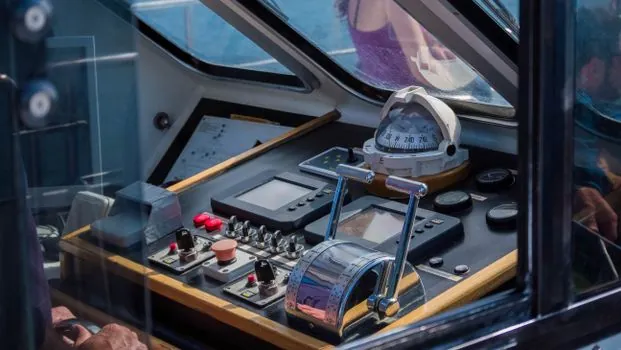
A technically suitable valve is not procurable for a classed vessel until its certification, testing, marking, and documentation match the ship system and approving authority [S2].
The purchase specification should identify the governing classification-society requirement, nominal size, pressure class, body and trim materials, connection, face-to-face dimension, actuator type, and required product certificates [S2]. Classification-society certification and testing are selection gates in their own right, not paperwork to be added after commercial comparison [S2].
Testing should cover shell and seat leakage, operation, and the functional check of the actuator and any limit switches or position feedback [S2]. Material documentation should trace the body, disc, stem, seat, gland, and fasteners, because a seawater-resistant body does not prove that every wetted or exposed component is compatible [S2].
For fire-main and other safety-related service, the specification should state the required fire-safe design and qualification evidence rather than assuming that every metal-seated butterfly valve provides the same result [S4]. Triple-offset designs are available with fire-safe trim, and some designs have been tested to API 6FA, but project acceptance still depends on the stated service, size, pressure, and governing requirement [S4].
Selection Criteria Compared by Valve Architecture
The most practical comparison is architecture against four marine decision criteria: installation envelope, seawater durability, pressure-temperature range, and seat life. [S2]
This comparison applies to architecture rather than a universal installation: a resilient-seated valve can be efficient for cooling-water isolation, while ballast, fuel, steam, or fire-main service may justify a double- or triple-offset design [S4][S5]. For deeper specification work, the marine ball valve selection guide provides a useful contrast for full-bore isolation, while a butterfly valve remains the stronger choice where face-to-face length and rapid 90-degree closure dominate the layout decision.
Procurement Check Before Order Release
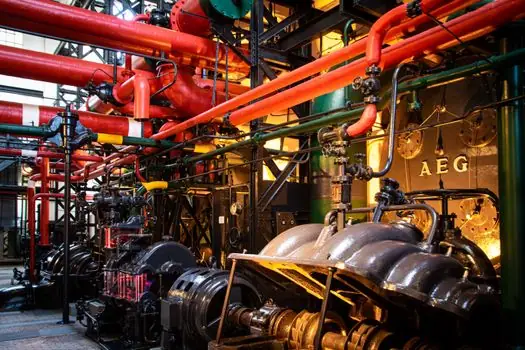
Release the valve enquiry with six completed fields: system service, design pressure, design temperature, fluid composition, connection and orientation, and certification class [S2][S9].
Add the selected offset architecture, body, disc, stem, seat, and fastener materials, actuator voltage or instrument-air supply, fail action, and required tests [S2]. For control duty, include the design flow rate, upstream and downstream pressure conditions, allowable valve pressure drop, and required leakage class [S1][S9].
Two trackable signals should remain open through procurement: vendor approval against the stated classification and material schedule, and confirmed test scope covering shell leakage, seat leakage, actuation, and installed accessories [S2]. These checks prevent a nominally corrosion-resistant valve from becoming an installation liability because its class, documents, actuator, or service envelope was left undefined.