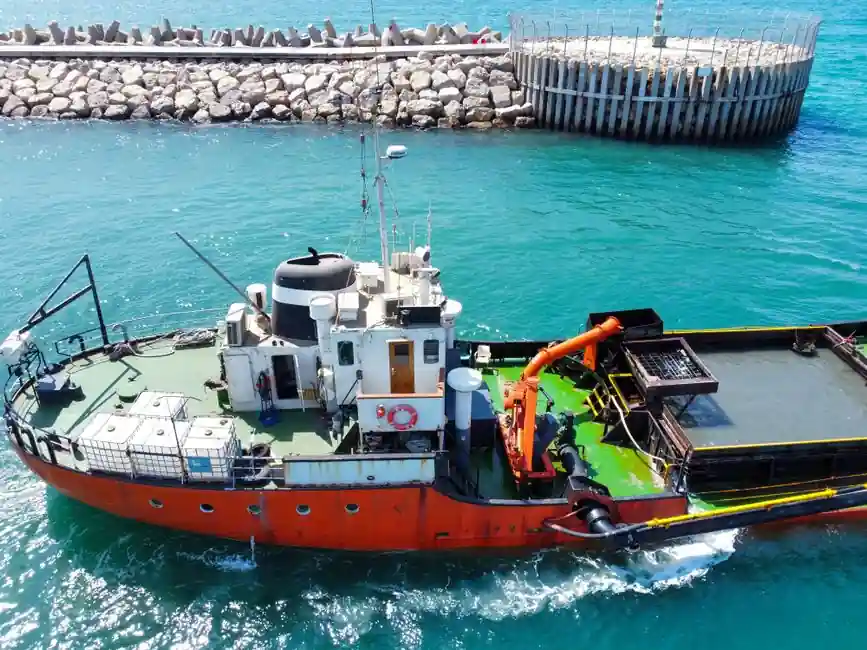
For marine service, body material outranks almost every other spec line, with nickel-aluminium bronze (UNS C95800) and ASTM A216 WCB carbon steel carrying the bulk of seawater and offshore duty, the latter commonly upgraded with a C5M marine paint system per ISO 12944 [S2][S3][S4].
Selection is governed less by pipe size than by the combination of medium, class, fire-safe duty, and class society rules (SOLAS, DNV, API 6D), which together decide whether a 1-piece threaded bronze, a 3-piece stainless, or a trunnion-mounted carbon steel double-block-and-bleed is the right answer [S2][S3].
Why Body Material Decides Everything Else
Marine ball valve bodies are typically drawn from five material families: bronze, brass, stainless steel, cast/ductile iron, and titanium or nickel alloys, each mapped to a different service band [S3].
Nickel-aluminium bronze (UNS C95800) is the workhorse for high-velocity seawater, fire-main, and hydraulic service because it resists pitting and crevice corrosion in chlorinated water far better than plain bronze or brass [S2]. For hull penetrations and small-bore fuel lines, plain bronze and brass threaded ball valves remain common, with commercial US retail pricing in the $26.97 to $388.10 band across 1/4" to 2" sizes [S7]. For larger bore topside and engine-room lines, ASTM A216 WCB carbon steel with a C5M coating scheme (e.g. JC Fig 515AIT, 1" to 8" full bore) is the default for cost-driven marine and offshore builds [S4]. Stainless variants (typically 316/316L) sit in the middle for chemical, ballast treatment, and LNG fuel service where cleanliness and lower corrosion rates justify the cost premium over WCB. Cast and ductile iron bodies are used in non-corrosive, low-pressure bilge and freshwater duty, while titanium and higher nickel alloys (e.g. Monel, super-duplex) are reserved for severe subsea or acid service where neither bronze nor coated carbon steel is adequate [S3].
Pressure Class, Bore, and Port Geometry
Class selection follows service: 150/300 lb flanged bodies cover most shipboard fuel, cooling, and ballast duty, with 600 lb and above reserved for high-pressure hydraulic and subsea manifolds, and class society rules (DNV, ABS, Lloyd's) layered on top of ASME B16.34 ratings [S2].
Bore choice is the next decision. Full-bore (full-port) ball valves match pipe ID and minimise pressure drop, which is why they dominate subsea and high-Cv process duty, including the JC Fig 515AIT 1" to 8" full-bore carbon steel range used in offshore marine packages [S4]. For a direct comparison of full-bore versus reduced-bore trade-offs in Cv, pressure drop, and piggability, see the full-bore vs reduced-bore breakdown. Reduced-bore designs trade a small pressure penalty for a stiffer ball, lower torque, and lower cost, which is why they remain common in general fuel, lube-oil, and bilge service on commercial vessels. For modulating duty rather than simple isolation, Bray's V-control guidance restricts V-port selection to a calculated Cv falling between 20% to 80% of port opening, and round-port control valves to 30% to 80%, with sizing per the ANSI/ISA-75.01.01 flow equation [S5]. Outside that window, control quality degrades and cavitation risk rises.
Seat, Seal, and Fire-Safe Construction
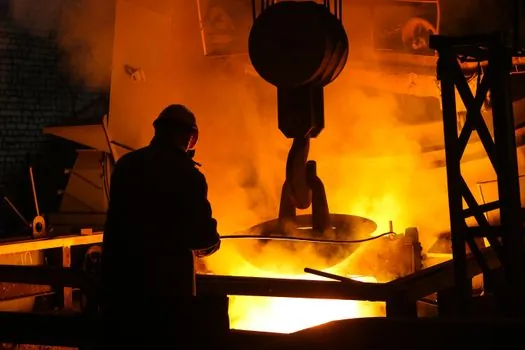
Seat material sets the temperature, chemical, and fire-safe envelope. PTFE and R-PTFE remain the default for shipboard chemical and fuel service up to roughly 200°C, with metal seats (typically 316 stainless with hard-facing) specified for high-temperature or fire-safe duty beyond PTFE's limit [S2][S5].
Marine specification usually overlays ISO 10497 or API 607 fire-safe qualification on top of the seat choice, plus low-emission packing per API 622 or ISO 15848 for VOC-controlled cargo and gas-fuel service. For general marine fuel, ballast, and seawater systems, soft-seated PTFE-lined valves are standard; once the line sees sustained temperatures above ~200°C, or carries sour hydrocarbon where NACE MR0175 applies, the spec shifts to metal-seated trunnion designs with hard-facing on ball and seat. Anti-corrosive coatings (epoxy, galvanising) are added as a barrier layer on carbon steel bodies in addition to the alloy choice itself [S2].
Spec Comparison Across the Common Marine Builds
Putting the most common marine ball valve builds side by side against four decision criteria clarifies where each one fits. [S2]
Threaded bronze 1-piece (e.g. IBV series, 1/4" to 2") rates medium on pressure (typically 150 to 300 psi WOG), high on corrosion resistance in seawater, low on cost, and limited on fire-safe or modulating duty, so it lands in fuel, bilge, and small-bore cooling lines. ASTM A216 WCB with C5M coating, flanged or welded, 150 to 300 lb, rates high on pressure and temperature headroom, medium on corrosion resistance (relying on coating), medium-to-high on cost, and is fully compatible with API 6D, DNV, and ISO 10497 fire-safe builds, making it the offshore and topside default [S3][S4]. 316/316L stainless, full-bore flanged, 150 to 300 lb, rates high on corrosion resistance and cleanability, medium on pressure rating, high on cost, and is preferred for chemical, LNG fuel, and ballast-treatment service [S3]. Trunnion-mounted, metal-seated, double-block-and-bleed in carbon or stainless steel, 600 to 1500 lb, rates very high on pressure and fire-safe integrity, medium on corrosion (depending on alloy), very high on cost, and is mandatory for subsea manifolds, high-pressure hydraulic, and critical isolation [S2][S3]. A V-port or segmented control ball should only be chosen when true 20% to 80% modulation is in scope; otherwise a standard ball valve on/off pattern is cheaper and more reliable [S5].
Limits, Failure Modes, and What Not to Use
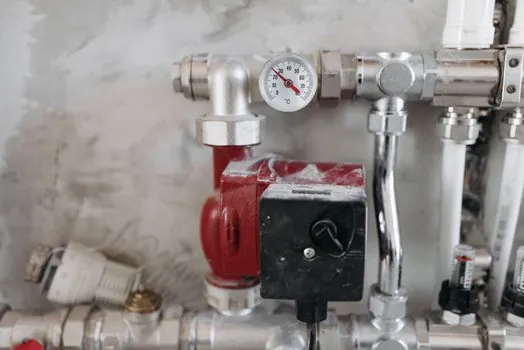
Ball valves in marine service fail in three predictable ways: seat softening or creep when a soft seat is used above its temperature rating, galvanic corrosion at body-to-pipe joints where dissimilar metals meet without isolation, and stress corrosion cracking in stainless bodies exposed to chlorides under sustained tensile stress [S2].
Plain brass and standard bronze should be kept off high-velocity, aerated seawater lines where dezincification and impingement attack shorten service life; switch to nickel-aluminium bronze or a coated WCB body instead [S2][S3]. Cast iron is unsuitable for any seawater or fuel service; it belongs only in freshwater and low-pressure bilge duty. Standard carbon steel without a marine-grade coating (C5M or equivalent per ISO 12944) will pit rapidly in saltwater splash zones, which is why paint spec is treated as a valve spec line, not a finishing detail [S3][S4]. Nylon-bodied ball valves appear in small-bore marine plumbing (drain, bait-well, low-pressure water) at retail pricing around $48.99 to $79.99 for 1/2" to 1" sizes, but they are not a candidate for fuel, hydraulic, or any Class-approved service [S8]. Soft-seated PTFE valves are also a poor choice for sustained temperatures above their rating or for any service where the valve must remain sealing after a fire event; specify ISO 10497 or API 607 fire-tested metal-seated builds instead. For cargo, fuel, and any system covered by class society rules, an unbranded or uncertified ball valve is a commercial risk that class surveyors will reject regardless of how it performs on the bench [S2].
Sourcing, Standards, and the Compliance Trail
Every marine ball valve selection should carry a paper trail back to the governing rule set: SOLAS for life-safety systems, DNV or equivalent class society rules for hull and machinery, API 6D for pipeline isolation, API 607 or ISO 10497 for fire-safe qualification, ASME B16.34 for pressure-temperature ratings, and NACE MR0175 for sour service where applicable [S2].
Documentation typically includes the material test report (EN 10204 3.1) on body and ball, fire-safe certificate, seat/leakage class per API 598 or FCI 70-2, coating system per ISO 12944 (e.g. C5M for offshore marine atmospheric exposure), and any class society type approval. Suppliers such as JC Valves publish marine-specification lines in ASTM A216 WCB with C5M coating across 1" to 8" full-bore sizes as a stockable offshore platform [S4]. Asahi Type-21 and similar pattern marine ball valves are widely stocked for OEM and retrofit duty, with full spec sheets available from marine-focused distributors [S6]. For engine-room and small-bore commercial vessel plumbing, the US marine aftermarket is dominated by bronze IBV and flanged ball valves in the $26.97 to $388.10 price band, plus nylon-pattern valves in the $48.99 to $79.99 retail range for non-classed plumbing [S7][S8]. On a ball valve selection, the audit-worthy line items are body material and standard, seat material, pressure class, bore (full vs reduced), fire-safe certificate, coating system, and class society approval; if any of those are missing, the spec is incomplete for marine service.
A trackable next node for specifiers: confirm whether the chosen valve carries a current DNV or IACS class type-approval certificate covering both body material and seat/fire-safe package, not just a generic CE or ATEX mark. Also watch whether suppliers are quoting the latest C5M coating per ISO 12944 (a 2025-09 RAM Universal datasheet shows JC Fig 515AIT in WCB with C5M paint as a current offshore stock line) or falling back on unspecified marine paint [S4].