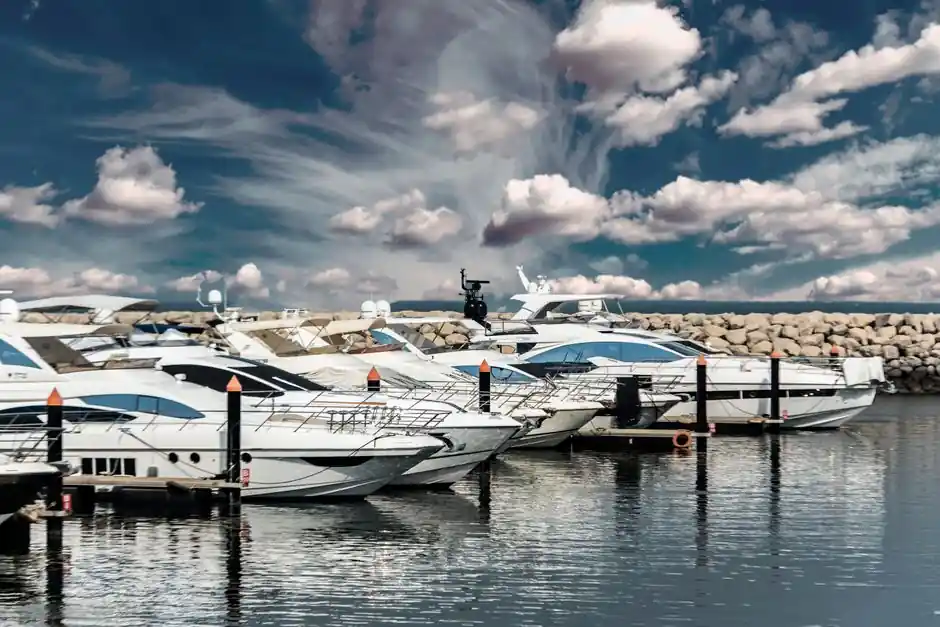
A marine hydraulic actuator must deliver the calculated load at the minimum available system pressure while meeting the required stroke, speed, duty cycle, and fail-safe response.
Rotary actuators suit steering and engine controls, while linear cylinders suit high-force marine equipment; both require a hydraulic power unit, fluid compatibility, corrosion protection, and suitable marine approval.
Define the actuator duty before comparing output ratings
Hydraulic rotary actuators are suited to high-torque marine functions, including propeller steering, because hydraulic pressure and displacement determine the available output [S1]. For linear duties, determine the required force, operating pressure, stroke, speed, flow, mounting geometry, duty cycle, and mechanical loading before selecting an actuator [S6].
A rated torque or force is only one part of the selection. The actuator must also produce adequate output at the system's minimum working pressure, reach the specified speed without excessive flow demand, and complete the stroke under the worst environmental and loading conditions. For rotating equipment, also define the shaft angle, allowable backlash, direction of rotation, and mechanical connection to the driven device.
HEINZMANN lists the RE 2222-3G, RE 2231-1GH, and RE 2233-1G as hydraulic actuators for marine engines [S2]. These ranges illustrate why the installed load, not engine power, should drive model selection.
Match rotary and linear mechanisms to the application
Rotary hydraulic actuators use hydraulic energy to produce torque and suit propeller steering and other high-torque marine duties [S1]. Linear hydraulic actuators generate straight-line force and are appropriate where a ram or cylinder must translate a load through a defined stroke. A hydraulic cylinder is the mechanism to evaluate for push, pull, lifting, clamping, or machinery motion.
For engine governors, proportional control and backup behavior matter as much as output. The RE 2222-3G is a proportional actuator featuring a two-stage, high-stiffness, backlash-free hydraulic servo mechanism [S2].
For valve duties, the rack and pinion actuator converts piston-driven linear movement into compact rotary motion, while scotch-yoke mechanisms suit higher-torque quarter-turn applications [S5]. Neither mechanism should be selected solely by valve nominal diameter: stem force, torque requirement, travel, speed, and mounting interface determine the mechanical arrangement.
Compare actuator types against marine selection criteria
Hydraulic systems excel where high force or torque is required, whereas electric systems offer precise positioning, repeatable control, excellent response, clean-room compatibility, and lower fluid-system complexity [S4]. Pneumatic systems are associated with fast operation and hazardous-area use, but pressure losses, inadequate inlet pressure, and air contamination can impair consistency [S4].
These figures make electric actuation credible for smaller engine-control duties, but they do not establish suitability for a high-torque steering or heavy linear marine load.
Size hydraulic power from pressure, flow, and load
Hydraulic sizing starts with the working load, required force or torque, operating pressure, stroke, speed, flow, mounting geometry, duty cycle, and mechanical loading [S6]. For a basic linear force calculation, theoretical cylinder force is obtained from pressure multiplied by piston area; gross stroke speed follows actuator velocity divided by pump flow; thrust direction determines whether the rod area must be included.
Do not mistake theoretical hydraulic force for usable marine output. Apply appropriate factors for seal friction, fluid compressibility, backpressure, mechanical efficiency, side loading, acceleration, and shock loading. The actuator also needs to complete its stroke over the full permitted fluid-temperature range without cavitation, excessive pressure, or unstable velocity.
Marine rotary selection requires the same discipline. Determine output torque at the actuator shaft, account for gearbox ratio and efficiency where applicable, and verify that the hydraulic servo can control the load across its complete angular range.
For a hydraulic power unit, match pump flow to actuator demand and relief-valve capacity to the maximum working pressure. A hydraulic pump and hydraulic valve must preserve controllability at low load, hold the load without drift, and provide the intended emergency or shutdown response.
Engineered for salt, vibration, duty, and fail-safe behavior
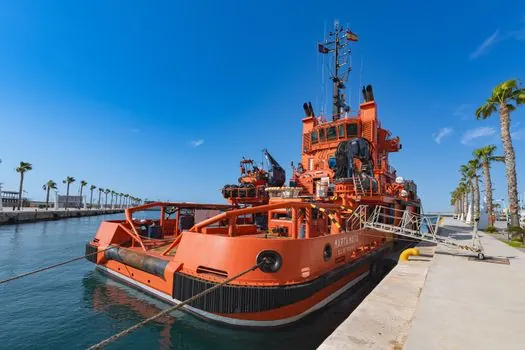
Marine actuators must tolerate saltwater, vibration, and heavy use while maintaining precise motion control [S3]. Material selection, surface finish, shaft or rod seals, corrosion protection, and mounting stiffness therefore belong in the procurement specification, not as optional finishing details.
Specify the environmental exposure, fluid type, fluid-temperature range, duty-cycle frequency, vibration level, required ingress protection, and class or regulatory approvals before selecting a supplier. Marine hydraulic engine actuators from HEINZMANN are stated to carry certificates from major shipping classification societies, and the cited models support original-equipment and retrofit installations [S2]. Request the exact certificate and approval scope for the selected model rather than accepting a general marine statement.
Define failure behavior explicitly. A proportional hydraulic actuator can include start or boost-pressure fuel-limiter options and a mechanical-hydraulic governor as a ballhead backup [S2]. For machinery or valve actuation, confirm whether loss of hydraulic power causes the load to stop, drift, retract, or move to a defined safe position; add a mechanical brake, spring arrangement, or separate emergency function where the load cannot remain stable by friction alone.
Use hydraulic actuation only where its system burden is justified
Hydraulic actuation is a poor default for every marine device. An electric actuator is generally preferable when the required force is modest, clean installation matters, and precise feedback or diagnostics justify the more complex electric drive [S4]. It removes the need for hydraulic-fluid storage and piping, but the motor, gearing, controls, and environmental protection must still fit the space and duty.
Hydraulic equipment is also a poor choice where leakage into accommodation, machinery spaces, or the marine environment is unacceptable without secondary containment and a fluid-specific maintenance plan. Pneumatic actuation is not a direct substitute for every hydraulic load because lower usable force density, pressure losses, and air contamination can change speed and positioning performance [S4].
Do not select a marine pump merely because it is labeled for marine service. Confirm that its flow, pressure, fluid compatibility, corrosion materials, speed, and duty match the actuator system. Likewise, verify that any associated hydraulic motor can hold or drive the load across the intended operating envelope.
Shortlist by verified marine operating envelope
Shortlist the actuator only after completing four checks: calculate the required force or torque from the actual load; confirm usable output at minimum system pressure; verify stroke or angular travel, speed, flow, and duty cycle; and document materials, corrosion protection, environmental ratings, and approval scope. For engine speed control, add proportional response, backlash control, and backup governing behavior [S2].
The final selection should trace every operating requirement to a datasheet value or a written manufacturer commitment. Marine hydraulic actuator systems are suitable for steering, engine control, high-force machinery, and heavy-duty valve operation when their force density justifies the hydraulic infrastructure [S1][S5]. The procurement file should then identify the selected model, rated output, required system pressure and flow, full travel, service fluid, backup function, and classification-society certificate.