
Mining hydraulic systems must achieve high torque, high force, and high pressure in a compact machine while operating in harsh environments [S3].
Selection covers conveyors, crushers, drilling rigs, excavators, loaders, cranes, tunnel-boring equipment, clamps, and choke-control duties, where mining conditions include dust, moisture, abrasive debris, shock, vibration, and temperature extremes [S2][S3].
Rotary and Linear Actuator Duties
Hydraulic rotary actuators convert fluid power into controlled rotary movement and are suited to drill-rig boom positioning, attachment rotation, and articulated boom, bucket, or grapple positioning [S1][S3].
A hydraulic cylinder is the normal choice when the required output is straight-line force rather than shaft torque. Single-acting cylinders use pressure in one direction with spring or external-force return, while double-acting cylinders receive pressure on both piston sides for bidirectional motion [S4].
The broad hydraulic actuator category should therefore be separated by geometry and function. Rotary units provide torque in a compact housing; linear cylinders provide force along a stroke. Force, torque, speed, duty cycle, and available hydraulic power determine which category fits [S1][S4].
Pressure, Torque, and Rotation Envelope
These figures describe a documented product envelope, not a universal mining requirement, so sizing must use the machine's actual static load, dynamic load, mount reaction, and duty cycle.
Mining hydraulic systems are used for boom positioning of drill rigs for blasting applications and must perform under shock, vibration, debris, dust, and extreme temperatures [S3]. The hydraulic motor should not be selected from torque alone; system pressure, displacement, speed, and backpressure must remain within its permitted operating envelope.
Selection Criteria by Application
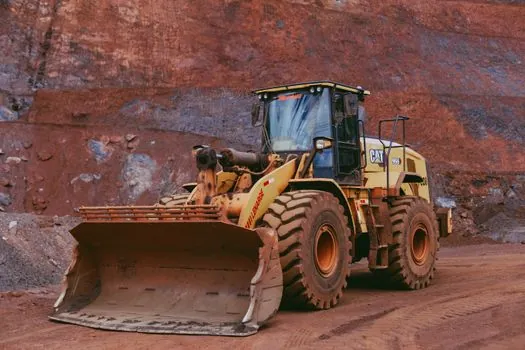
Load, speed, and positioning precision are the first quantitative checks, while dust, moisture, corrosion exposure, and temperature determine the required enclosure and material protection [S2]. The actuator must also fit the mine's available hydraulic power source and support arrangement.
Hydraulic, Electric, and Pneumatic Alternatives
Hydraulic actuators provide the power output needed for heavy mining machinery, whereas electric actuators provide higher precision and energy efficiency for less demanding or accuracy-focused duties [S2]. Pneumatic actuators are economical options for lighter loads, while mechanical actuators suit straightforward linear or rotary motion [S2].
For a high-torque drill positioning or excavator attachment function, hydraulic power is normally the better fit. For a low-load valve-positioning duty with modest electric infrastructure, an electric actuator may simplify the system. For a moderate-force, short-stroke function with clean compressed air, a pneumatic diaphragm actuator can be appropriate.
The comparison must include installed cost rather than actuator purchase price alone. Hydraulic systems require a pump, valves, reservoir, fluid transport, cooling provisions, and maintenance attention for leakage and contamination [S4]. Electric systems reduce fluid-related maintenance but have lower power output for mining-scale loads [S2].
Mining Environment and Protection
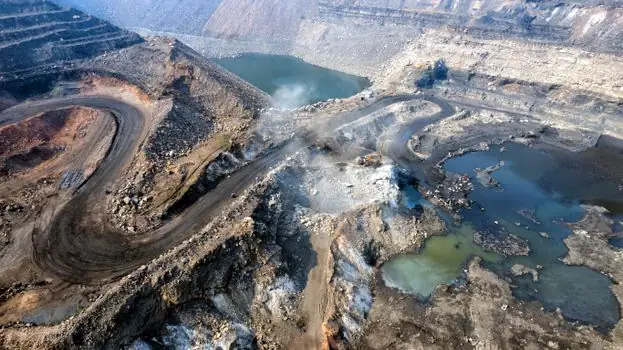
Mining hydraulic systems operate in harsh, abrasive environments exposed to shock, vibration, debris, dust, moisture, and extreme temperatures, so components must be selected to prevent premature wear and minimize maintenance requirements [S3].
Do not select a generic hydraulic actuator and leave protection undefined. Establish the required ingress protection, corrosion coating, seal material, temperature rating, fluid compatibility, filtration level, and drainage arrangement before issuing the purchase specification. Published actuator families also differ in the limits imposed by their own design, so the model data sheet remains controlling.
Control, Fail-Safe, and Maintenance Design
This demonstrates a useful principle: hydraulic power should be matched to duty rather than run continuously at maximum capacity.
Single-acting cylinders require a defined return path, such as a spring or external force, while double-acting cylinders need control and load-holding provisions for both directions [S4]. Specify whether the duty needs active braking, pilot-operated check protection, mechanical locking, emergency travel, or controlled load descent. These provisions determine failure behavior and cannot be left to a generic valve order code.
Preventive tasks for hydraulic linear actuators include seal inspection or replacement, fluid-contamination checks, moving-part lubrication, and inspection for unusual noise or misalignment [S4]. A mine-specific maintenance plan should also set filter service intervals and fluid-replacement limits from the actual system supplier, because filtration and contamination-control performance determine actuator life [S4][S5].
Who Should Not Select Hydraulics
Do not select hydraulics for a low-force, low-duty positioner when electrical power is already available, because the additional pump, reservoir, fluid circuit, leakage exposure, and contamination controls can outweigh the benefit of hydraulic power [S2][S4].
Do not use pneumatic actuation for a mining duty requiring very high force, and do not use an electric actuator where the required continuous torque or peak force exceeds its practical power class [S2]. A hydraulic actuator is also a poor shortcut for an application lacking filtration, cooling, isolation, or emergency-load control.
The mining hydraulic valve actuator category should be reserved for actual valve actuation, not general equipment positioning. In choke-control applications, the actuator package must coordinate with the process valve, fluid medium, required stroke, and fail-safe movement rather than being selected as a stand-alone cylinder [S7].
Sourcing and Procurement Shortlist
The procurement specification should state required torque or force, stroke or rotation angle, operating pressure, maximum speed, duty cycle, temperature range, fluid, environment, mount, control method, and required safety function. Documented model families for mining include the Hayward HRS/ECP Series and AVCO P Series, but those names require verification against the exact duty and current manufacturer documentation [S9].
For rotary positioning, shortlist an enclosed rotary actuator when the duty needs up to 360° indexing and high torque; verify whether 220°, 360°, or a custom 720° rotation matches the mechanism. For linear lifting, pushing, or clamping, shortlist single-acting or double-acting cylinders according to the load path and return method [S3][S4].
Where valve-positioning performance affects a mining control loop, the related decision guide on valve positioners for mining operations is useful for separating actuator movement from instrument positioning. Final approval should require manufacturer data covering pressure, torque or force, speed, temperature, materials, seals, mounting, and service intervals.