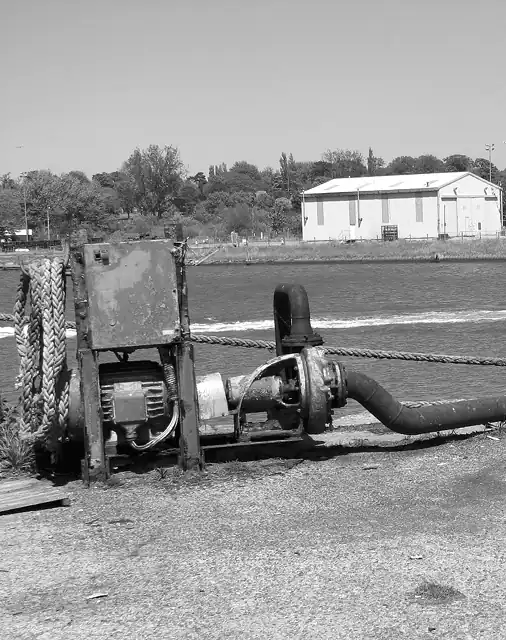
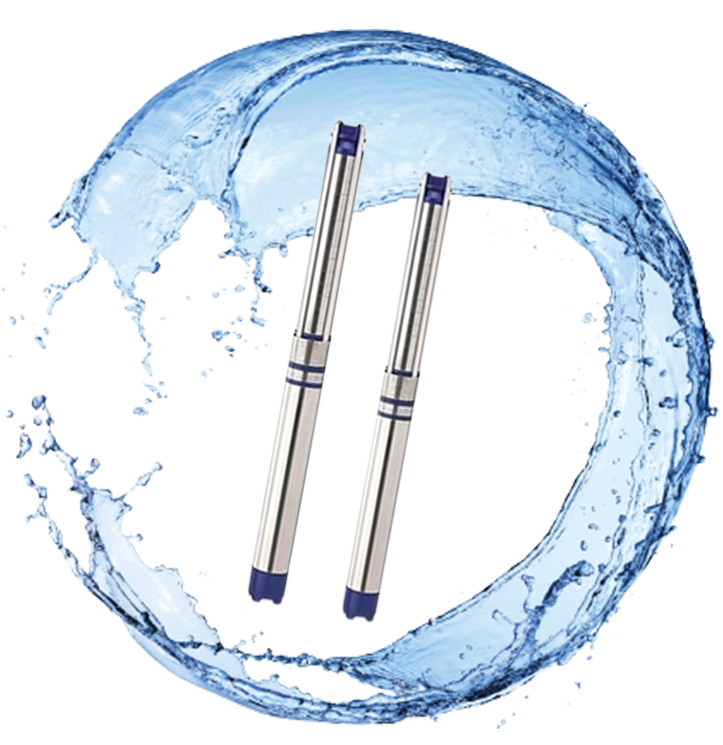
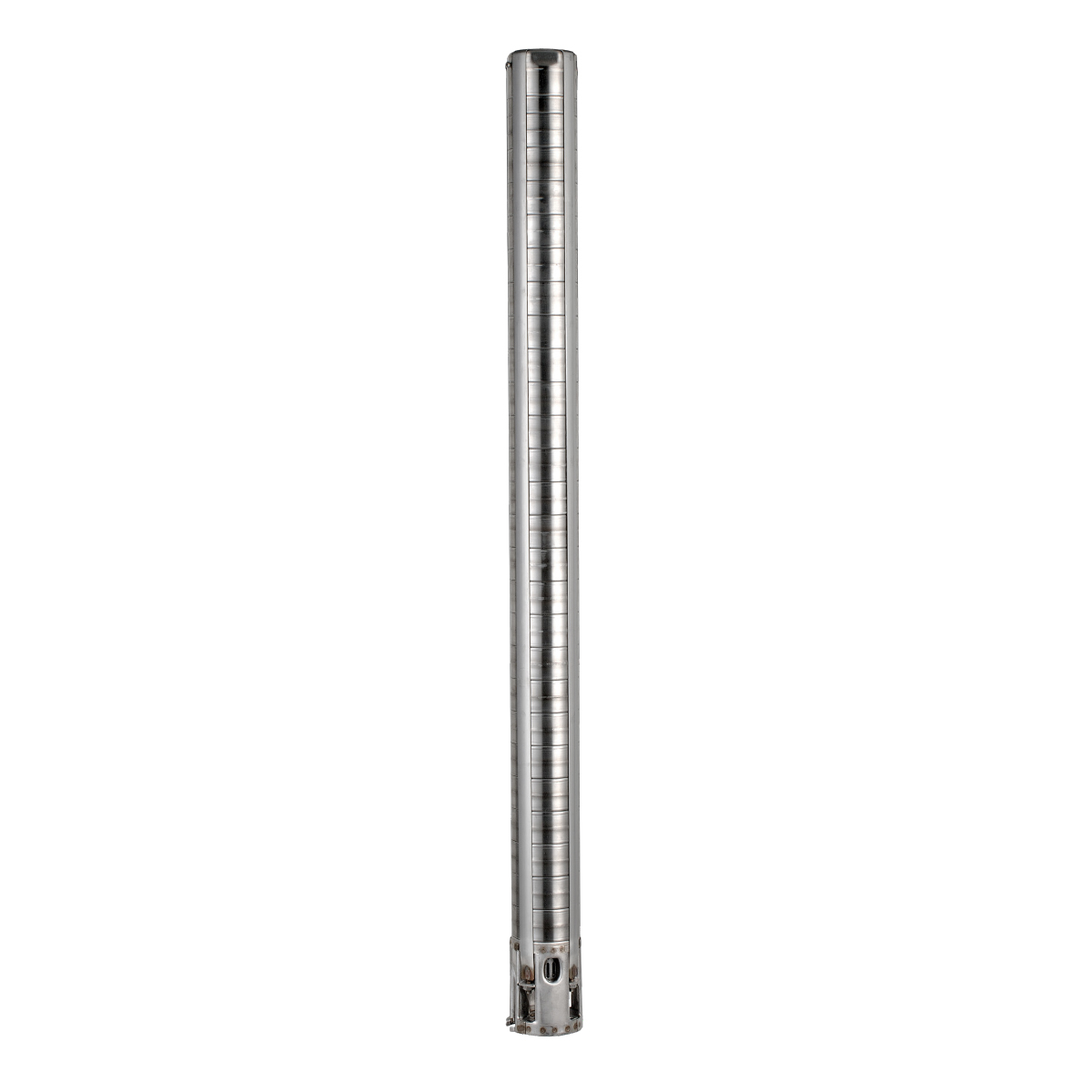
Marine pumps appear in freshwater distribution, livewell circulation, bilge management, deck washdown, ballast transfer, sanitation, and higher-capacity commercial duties. The cataloged equipment in the supplied sources uses electric motors, centrifugal pump stages, direct-current systems, and single-phase power. Construction options include bronze, cast iron, and stainless steel, while inlet and outlet arrangements range from fractional-inch connections to 2-inch female NPT connections.
The term marine pump does not identify one universal product type. Selection depends on the liquid, required flow, discharge pressure, suction arrangement, available electrical supply, wetted materials, installation orientation, and classification or approval requirements applicable to the vessel. The source material identifies two principal electric centrifugal styles in one catalog, straight centrifugal and self-priming, and also shows a broader marine portfolio organized into residential, commercial, and water-disposal applications.
A marine pump is a pumping unit used to move seawater, fresh water, contaminated water, or other liquids in and around vessels and related marine installations. The supplied sources identify centrifugal, self-priming, straight centrifugal, washdown, livewell, bilge, ballast, macerator, and general-service equipment, with commercial systems selected for bilge, ballast, washdown, auxiliary fire, and water-transfer duties.
Chapter 1 / 06
Fundamentals and Working Principle
A marine pump transfers liquid by generating velocity and pressure within a rotating hydraulic system. The supplied product listings describe the units as electric centrifugal pumps. In a centrifugal arrangement, a motor rotates an impeller within a casing. The impeller accelerates liquid outward, creating reduced pressure at the inlet and a measurable discharge flow and pressure. The sources do not provide a detailed impeller geometry, efficiency curve, or construction drawing, so those details must be established from manufacturer documentation for a selected model.
The cataloged straight centrifugal pumps require a flooded suction. Absolute Water Pumps identifies these products as having “No, Flooded Suction Only” self-priming capability. A flooded suction means the pump inlet must be supplied with liquid and remain primed under operating conditions. This arrangement suits installations where the liquid source is above the pump or where a separate arrangement keeps the suction line full. It should not be confused with a self-priming unit that can establish its own prime from an initially unprimed line.
Self-priming pumps are listed separately. Absolute Water Pumps identifies three wet-primed self-priming products among its seven marine pump listings, while West Marine describes self-priming marine water pumps as compact designs. Pacer model SE2CB DCV1.0C-24 and model SE2CB DCV1.0C-12 are self-priming centrifugal electric water pumps. In service, these units are relevant where the source is below the pump, the line cannot remain continuously flooded, or startup after draining is required. Self-priming capability does not by itself establish suitability for a particular lift or duty point.
Electrical supply is a major operating parameter. The source catalog includes 12 Volt DC, 24 Volt DC, and 115 Volt single-phase products. AMT model 4851-97 is identified as a 1/8 HP, 12.8 Volt DC unit, and the washdown pumps AMT 12DC-95 and AMT 12DC-98 are identified as 12 Volt DC models. DC operation is common where vessel electrical systems are battery-based, while the listed 115 Volt unit requires an appropriate single-phase supply. Motor protection, wiring, grounding or bonding arrangements, and control requirements should be verified for the vessel rather than inferred from the nominal voltage alone.
The physical installation and hydraulic result must be considered together. Inlet and outlet diameters influence available flow and pressure, and the source warns that maximum GPM figures are associated with pump-curve duty-point estimates rather than guaranteed output at every operating condition. A marine system should therefore be evaluated from the required duty point, with suction and discharge losses, static head, fluid properties, and system restrictions accounted for. This is especially important for washdown, ballast, bilge, and high-capacity transfer applications listed by the commercial supplier.
Determine whether the installation requires flooded suction or self-priming operation.
Match electrical voltage, phase, and motor power to the vessel electrical system.
Evaluate the required duty point against the manufacturer pump curve.
Identify the pumped liquid and the compatible wetted materials.
Account for suction conditions, static head, and discharge restrictions.
Chapter 2 / 06
Specifications and Key Parameters
The most useful performance comparison is the required operating point: flow at the pressure or head needed by the installation. The Absolute Water Pumps catalog identifies maximum gallons per minute and notes that the values should be treated as estimates for the duty point by reference to the pump curve. It also provides maximum-pressure filters with available entries of 3 PSI, 5 PSI, 6 PSI, and 14 PSI. These values belong to the referenced catalog and are not a general performance range for all marine pumps.
Electrical characteristics must also be recorded without converting the source values into assumptions. The listings cover 12 Volt DC, 24 Volt DC, 115 Volt single-phase, and one model specified at 12.8 Volt DC. Horsepower is explicitly shown for selected AMT models, while other products do not state motor horsepower in the supplied listing. Inlet and outlet sizes are stated in inches and, for the two Pacer models, as 2-inch female NPT connections. Pump construction is stated as bronze, cast iron, or stainless steel.
The specification table below reproduces only values present in the supplied sources. Each row identifies the source catalog and vendor so that the listed examples are not mistaken for category-wide limits. Where a value is not stated, the table uses the required phrase “varies by model” rather than inferring it from a related product or from general pump data.
Procurement records should preserve the model and SKU separately. For example, AMT model 4851-97 is listed with SKU 4851-97, while the Pacer SE2CB DCV1.0C-12 listing has a model shown as SE2CBDCV1.0C-12 and a SKU containing spaces. The source also lists list prices and sale prices, but those are commercial observations from one retailer and are not technical specifications. They should therefore be recorded as dated source observations, if used at all, rather than treated as stable category values.
Use model and SKU together when issuing a requisition.
Retain the pump curve with the selected performance data.
Record fluid compatibility separately from housing material.
Do not treat listed maximum flow as the guaranteed duty-point output.
Vendor and model
Pump configuration
Power
Flow and pressure
Connection and material
Source attribution
AMT by Gorman-Rupp 4861-97
Straight centrifugal
12 Volt DC
17 GPM; maximum pressure varies by model
3/4" inlet; 3/4" outlet; bronze
Absolute Water Pumps marine-pump catalog, AMT 4861-97 listing
AMT by Gorman-Rupp 4851-97
Self-priming centrifugal
12.8 Volt DC, 1/8 HP
17 GPM; maximum pressure varies by model
3/4" inlet; 3/4" outlet; bronze
Absolute Water Pumps marine-pump catalog, AMT 4851-97 listing
AMT by Gorman-Rupp 3670-97
Straight centrifugal
115 Volt, single-phase; horsepower varies by model
10 GPM; maximum pressure varies by model
3/4" x 1/2" inlet and outlet; bronze
Absolute Water Pumps marine-pump catalog, AMT 3670-97 listing
AMT by Gorman-Rupp 12DC-95
High-head straight centrifugal washdown
12 Volt DC, 7/8 HP
52 Max GPM; maximum pressure varies by model
1.25" x 1" inlet and outlet; cast iron
Absolute Water Pumps marine-pump catalog, AMT 12DC-95 listing
Pacer SE2CB DCV1.0C-24
Self-priming centrifugal electric water pump
24 Volt DC; horsepower varies by model
120 GPM; maximum pressure varies by model
2" female NPT inlet and outlet; material varies by model
Absolute Water Pumps marine-pump catalog, Pacer SE2CB DCV1.0C-24 listing
AMT by Gorman-Rupp 12DC-98
High-head straight centrifugal washdown
12 Volt DC, 7/8 HP
52 Max GPM; maximum pressure varies by model
1.25" x 1" inlet and outlet; stainless steel
Absolute Water Pumps marine-pump catalog, AMT 12DC-98 listing
Pacer SE2CB DCV1.0C-12
Self-priming centrifugal electric water pump
12 Volt DC; horsepower varies by model
120 GPM; maximum pressure varies by model
2" female NPT inlet and outlet; material varies by model
Absolute Water Pumps marine-pump catalog, Pacer SE2CB DCV1.0C-12 listing
Defender boat water pump
Inline marine fresh-water pump
Electrical specification varies by model
Up to 11 gallons per hour; pressure varies by model
Connection size varies by model; material varies by model
Defender fresh-water system pumps page
MPP commercial marine pump family
Self-priming centrifugal
Power and motor details vary by model
Flow and pressure vary by model; selected for bilge, ballast, washdown, auxiliary fire, and water-transfer duties
Connection size and material vary by model
MPP commercial marine pumps page
Chapter 3 / 06
Types and Configurations
The first principal configuration in the supplied catalog is the straight centrifugal marine pump. AMT model 4861-97 and model 3670-97 are explicitly identified as straight centrifugal products and are filtered as flooded-suction-only pumps. Their listings also provide a third high-head straight centrifugal washdown design, represented by models 12DC-95 and 12DC-98. This family spans small fractional-connection units for listed capacities of 17 GPM and 10 GPM, as well as washdown pumps listed at 52 Max GPM.
The second principal configuration is the self-priming centrifugal pump. Absolute Water Pumps identifies AMT model 4851-97 as self-priming and wet primed. The two Pacer products are also self-priming centrifugal electric water pumps, with 2-inch female NPT connections and listed flows of 120 GPM. West Marine describes self-priming marine water pumps as compact, while the commercial supplier identifies self-priming centrifugal pumps for high-capacity marine transfer duties. These statements describe configuration and intended use, not universal capability limits.
Function-based categories are also visible in the Pentair product structure. Residential marine pumps are organized into engine cooling, livewell, bilge, washdown, and other marine pumps. Commercial marine products include marine water delivery pumps and marine ballast pumps. The commercial disposal branch includes marine macerator pumps and self-priming pumps. This structure shows that a procurement inquiry should identify the service function as well as the mechanical pump style, because pumps serving different functions may share a centrifugal principle while differing in installation and system requirements.
The available material configurations include bronze, cast iron, and stainless steel. Bronze appears on the AMT 4861-97, 4851-97, and 3670-97 listings. Cast iron appears on the high-head washdown model 12DC-95, while stainless steel appears on model 12DC-98. The comparable high-head washdown listings therefore expose a material difference within one configuration and provide a direct basis for assessing corrosion and fluid-compatibility requirements without assuming that either material is universally superior.
A submersible motor arrangement must not be inferred from the broader category title used for this page. The supplied sources identify electric centrifugal products and list marine application categories, but the available product text does not expressly describe an operating submerged motor, stated submergence depth, or a sealed submersible motor construction. Accordingly, a product selected for a submerged position requires separate confirmation of its motor arrangement, allowable immersion, and installation instructions.
Straight centrifugal pumps: flooded suction only in the cited catalog.
Self-priming pumps: wet-primed or self-priming configurations identified by product.
Washdown pumps: straight centrifugal and high-head examples in the cited listing.
Livewell and engine-cooling pumps: residential marine application categories.
Bilge and ballast pumps: residential and commercial marine application categories.
Marine macerator pumps: water-disposal category within the commercial portfolio.
Chapter 4 / 06
Selection Criteria for Procurement
Begin procurement with the service requirement. A freshwater system pump moves potable or service water to fixtures or storage, while a livewell pump supports aquarium circulation, a washdown pump handles deck cleaning, a bilge pump removes accumulated water, a ballast pump transfers water for vessel stability, and a macerator pump handles waste through a macerating mechanism. MPP additionally lists auxiliary fire and demanding water-transfer applications among commercial self-priming centrifugal pump uses. Each service has different fluid, pressure, intermittent-duty, and system-integration requirements.
Next define the hydraulic duty. Record required flow, required discharge pressure or head, suction lift or static elevation, fluid density and temperature, and the amount of solids or contamination expected. The source catalog’s 17 GPM, 10 GPM, 52 Max GPM, and 120 GPM listings illustrate a range of named products, not recommended flows for a vessel. The final selection should use the manufacturer’s pump curve for the operating point and include piping, fittings, valves, and losses. The source expressly directs buyers to use the pump curve for duty-point estimates.
Electrical compatibility follows the duty and installation architecture. Confirm nominal voltage, DC versus AC, phase, horsepower or motor output, starting current, duty cycle, and available vessel power. Single-phase operation is identified for all seven products in one retailer’s marine-pump filter, with 12 Volt DC accounting for five products, 24 Volt DC for one, and 115 Volt single-phase for one. The individual 12.8 Volt DC specification on AMT model 4851-97 should be retained exactly where it applies rather than generalized to all 12 Volt DC pumps.
Material selection requires knowledge of the pumped liquid and environment. Bronze, cast iron, and stainless steel appear in the cited listings, but each material must be checked against seawater, fresh water, cleaning chemicals, waste liquids, temperature, and corrosion exposure. The sources do not provide detailed alloy grades, elastomer information, or chemical-compatibility schedules. Those values must be obtained from the manufacturer for the selected model. Connections also require attention: the supplied listings include 3/4-inch, 1/2-inch, 1-inch, 1.25-inch, and 2-inch arrangements, with the Pacer products identified as female NPT.
Installation conditions complete the selection. Straight centrifugal models require a flooded suction, while self-priming models address installations that cannot remain continuously flooded. Confirm available space, orientation, service access, hose or hard-pipe connections, ventilation or motor cooling, and isolation provisions. West Marine’s compact-design description may be relevant where space is constrained, but it is not a dimensional specification. For any equipment intended to operate submerged, obtain explicit submergence and motor-enclosure information before purchase.
Define the service category and intended liquid.
Obtain flow and pressure requirements at the design duty point.
Verify suction arrangement and installation elevation.
Match voltage, phase, power, and duty cycle to vessel systems.
Check wetted materials, seals, and chemical compatibility.
Confirm connection standards, dimensions, orientation, and service clearances.
Request the applicable manufacturer curve and installation manual.
Chapter 5 / 06
Standards, Compliance, and Testing
The supplied sources provide product-family, configuration, material, electrical, and connection information, but they do not identify a specific marine-pump certification standard, compliance marking, test protocol, or approval authority. No standard designation should therefore be added to a purchase specification from these sources alone. Compliance requirements depend on the vessel, service, installation jurisdiction, and contract. The appropriate governing organization and classification society, if applicable, must be identified during project review rather than inferred from the word “marine.”
Functional verification should at minimum be tied to the manufacturer’s published curve and installation instructions. For a centrifugal pump, performance is not adequately represented by a single maximum-flow value. The selected model should be checked at the specified operating flow and discharge condition, including head or pressure. The Absolute Water Pumps catalog itself states that maximum-gallon-per-minute entries should be treated as duty-point estimates by reference to the pump curve. This makes curve review a necessary part of technical acceptance rather than an optional document request.
Electrical performance should be checked against the model-specific nameplate data. The source identifies 12 Volt DC, 12.8 Volt DC, 24 Volt DC, and 115 Volt single-phase configurations. Tests or inspections should therefore verify that the installed supply, motor, controls, and protection correspond to those requirements. The sources do not state insulation resistance, dielectric test values, IP rating, service-factor requirements, or allowable ambient temperature. No such values should be entered into an acceptance schedule unless supported by the selected manufacturer’s documentation.
Mechanical acceptance should include inlet and outlet size, construction material, suction condition, and orientation. The listed catalog uses fractional-inch dimensions and 2-inch female NPT connections, while distinguishing bronze, cast iron, and stainless constructions. Inspection records should confirm that the delivered model matches the specified material and connection arrangement. Where self-priming operation is specified, functional testing should establish that the unit can prime and operate under the intended suction arrangement without relying on a continuously flooded line.
Installation-specific verification remains necessary for livewell, bilge, ballast, washdown, freshwater, sanitation, auxiliary fire, and transfer systems. The commercial source identifies these duties but does not state their test durations, acceptance tolerances, or required certification. Such criteria must be defined by the applicable design authority, class rules, owner requirements, or installation specification. Record actual test conditions, measured values, instrument identification, and acceptance limits for each commissioned installation.
Require model-specific manufacturer literature and the applicable pump curve.
Verify electrical data against the delivered nameplate.
Confirm suction, priming, connections, material, and orientation.
Do not claim unlisted certifications or standards.
Define project-specific test limits with the approving authority.
Document commissioning conditions and measured results.
Chapter 6 / 06
Market Landscape and Buying Process
The supplied sources show marine pumps distributed through specialist product catalogs and broad marine-equipment retail platforms. Absolute Water Pumps presents a seven-item electric marine-pump category with AMT by Gorman-Rupp and Pacer Pumps represented. Its filters divide the offering into electric centrifugal, self-priming, and straight centrifugal styles, along with power, inlet and outlet diameter, voltage, phase, and self-priming attributes. This structure indicates that the category is sold by both technical attributes and named manufacturers rather than by a single product specification.
West Marine presents marine pumps within a broad marine marketplace whose navigation includes electronics, communications, anchoring, docking, safety, cabin systems, and other vessel equipment. The supplied excerpt does not expose the detailed marine-pump product list, so no specific West Marine models or technical values are stated here. Its presence indicates an additional route for comparing marine equipment and accessories, not a verifiable alternative pump range.
Pentair organizes marine pumping into a wider flow portfolio. Residential marine products are separated into engine cooling, livewell, bilge, washdown, and other marine pumps, while the commercial branch includes marine water delivery and marine ballast pumps. The disposal branch includes marine macerator pumps and self-priming pumps. Multiple operating brands are shown in the corporate portfolio, but the source does not assign individual listed products to those brands in the supplied excerpt. They should not be represented as the manufacturers of a specific pump without model-level evidence.
MPP describes a dedicated commercial marine range centered on self-priming centrifugal pumps for bilge, ballast, washdown, auxiliary fire, and demanding water-transfer applications. This illustrates the high-capacity commercial segment and provides an alternative source for project inquiries. Defender addresses freshwater system pumps with inline strainers, quiet operation, and a stated capacity of up to 11 gallons per hour. Marine Pump Direct offers pumps, repair kits, and pump impellers, including genuine parts, which is relevant to maintenance planning and replacement compatibility.
A controlled buying process begins with a technical specification and model comparison, followed by commercial review and authorized supply. The technical package should define duty, liquid, electrical supply, suction arrangement, materials, connections, dimensions, orientation, required approvals, documentation, and commissioning conditions. The commercial package should identify the exact model and SKU, quantity, delivery terms, warranty, spare parts, and support. Repair and replacement purchasing should use compatible references for the installed model, but the source does not establish interchangeability across brands or model families.
Shortlist by service category and mechanical configuration.
Compare documented duty points using manufacturer curves.
Obtain current model sheets, installation instructions, and maintenance information.
Confirm local availability through an authorized or technically qualified supplier.
Include compatible repair kits and impellers in lifecycle planning.
Revalidate electrical and hydraulic requirements before ordering.
Retain the selected model, SKU, price observation, and source documents.
FAQ
What is a marine pump?
A marine pump is a pump intended to move liquids in a marine vessel or related installation. The supplied sources cover freshwater, livewell, bilge, washdown, ballast, macerator, general-service, and high-capacity marine transfer applications.
What is the difference between a straight centrifugal and a self-priming marine pump?
A straight centrifugal pump requires flooded suction, meaning its inlet must remain supplied with liquid. A self-priming pump is configured to establish prime from an initially unprimed arrangement, which can suit installations where the source lies below the pump or the suction line cannot remain flooded.
Can any listed marine pump be assumed to be submersible?
No. The supplied product text identifies electric centrifugal pumps and marine application categories, but it does not expressly state a submerged motor arrangement, allowable submergence depth, or sealed motor construction for the listed products. Those attributes must be confirmed from documentation for the selected model.
Is the listed maximum GPM the pump’s guaranteed delivery rate?
No. Absolute Water Pumps states that maximum-gallon-per-minute figures are associated with duty-point estimates by reference to the pump curve. Actual performance must be evaluated at the required flow and discharge pressure using the selected model’s curve.
Which electrical supplies are represented in the cited marine-pump listings?
The Absolute Water Pumps listings include 12 Volt DC, 24 Volt DC, and 115 Volt single-phase products, and they identify one model specifically as 12.8 Volt DC. All seven products in that catalog are filtered as single-phase, but the relevant voltage and power must be verified for the exact model.
What materials are identified for the cataloged AMT marine pumps?
Bronze is identified for models 4861-97, 4851-97, and 3670-97. Cast iron is identified for high-head washdown model 12DC-95, and stainless steel is identified for model 12DC-98. These examples do not establish the material range of the entire marine-pump category.
What should be included when purchasing a marine pump?
The purchase file should identify the service, liquid, duty-point flow and pressure, suction arrangement, electrical supply, materials, connection sizes, dimensions, orientation, required approvals, test criteria, documentation, and maintenance parts. The exact model and SKU should then be used for the commercial order and price comparison.
EBARA Pumps Americas Corporation (EPAC) strives to deploy the best water pumps, wastewater pumps, pump systems, and technologies to meet the needs of our growing communities.
Flowserve's Flow Control Division designs, manufactures and distributes engineered-to-order and configured-to-order isolation valves, control valves, valve automation products and related services.