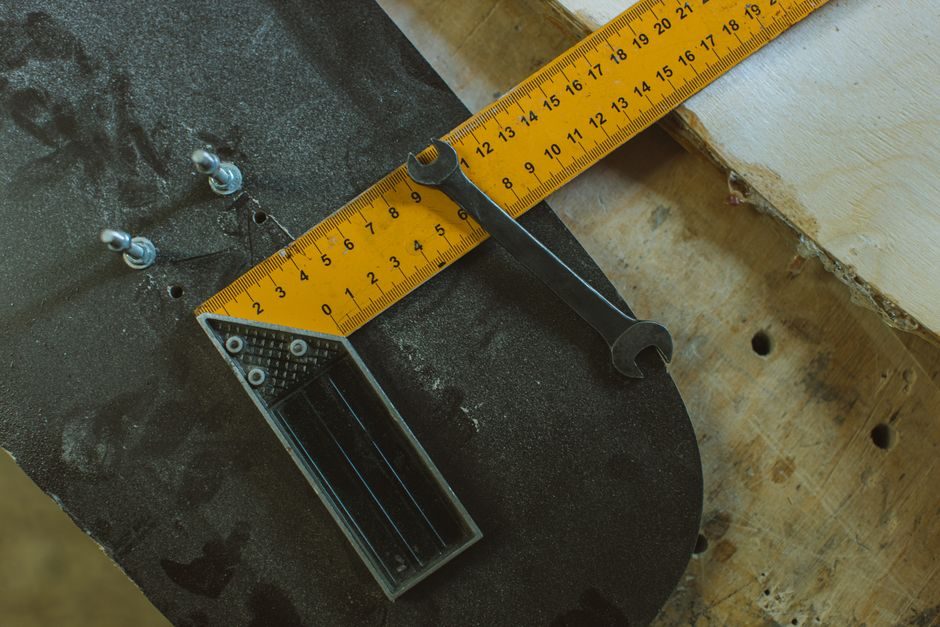
A self-aligning bearing compensates for initial angular misalignment between the shaft and housing bore using a spherical outer raceway with two rows of balls, and current OEM catalogues (UCPE208, FAG 1205TV) continue to ship that geometry in 25–160 mm bores with double seals and a pin-locked inner ring [S1][S2][S6].
Install quality — not the bearing itself — is the leading cause of early failure; field data from the same OEM listings tie premature failures to four controllable variables: shaft finish, lock-pin engagement, seal seating, and lubricant volume [S1][S2].
Shaft and Housing Prep: Tolerances That Decide Bearing Life
Spec a shaft seat to h6/h7 for rotating inner rings and H7/H8 for stationary inner rings; deviations beyond roughly +0.025 mm on a 25 mm bore will preload the two-row ball path and lock out the very misalignment the design absorbs [S1][S2]. Flatness and roundness on the seat must stay under 0.005 mm, and the shoulder fillet radius must clear the bearing's internal abutment to seat the inner ring square — measurable with a dial bore gauge before mounting [S2].
Housing bores for pressed-steel or cast-iron pillow blocks should be checked with a slip gauge set at four points (top/bottom/left/right); readings spread more than 0.03 mm on a 50 mm bore indicate a distorted seat that will clamp the spherical outer race asymmetrically and defeat the self-aligning function [S1].
Mounting the Unit: Pillow Block, Flange, and Take-Up Sequences
For pillow-block units such as the UCPE208 family, the bearing drops into the housing bore, the locking collar setscrew (or eccentric cam) drives against the shaft, and the internal locking pin engages the shaft slot to prevent inner-ring creep on the journal — the pin is the single feature that distinguishes long-life units from short-life look-alikes [S1]. Torque the set-screws in opposing pairs to the OEM value (typically 8–12 N·m for a 40 mm-bore UCPE208-class unit) and re-torque after the first 50 hours of running-in [S1][S2].
Flange-mounted self-aligning units use two or four through-bolts; tighten them in a cross pattern to 60–70 % of final torque, then to 100 %, to prevent the spherical outer race from binding in the housing. Take-up frames must be aligned to the driven coupling before the take-up nut is tensioned — adjusting alignment through the take-up nut is a common error that loads the bearing radially rather than correcting the line [S2].
Aligning Within the Allowed Misalignment Envelope
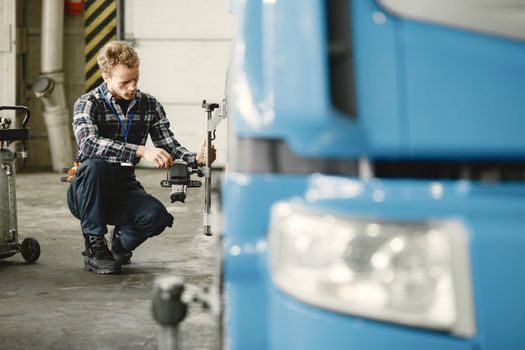
Standard self-aligning ball bearings accept 1.5°–3° of static angular misalignment depending on series and internal clearance; double-row spherical-roller variants can absorb more, but every degree of misalignment costs load capacity — roughly 6 % per degree of additional angular error in many catalogue curves [S2]. The shaft is aligned to the driven equipment with a dial indicator or laser system; the bearing's self-aligning capability is a safety margin, not a substitute for line-shaft alignment [S2].
Final alignment should be confirmed with a feeler gauge or laser at the coupling, with both parallel and angular offsets recorded. Acceptance is typically 0.05 mm parallel offset and 0.05 mm/100 mm angular offset for general industrial service; closer tolerances (0.02 mm) apply to high-speed fans and precision spindles [S2].
Lubrication, Sealing, and Polymer Variants
Grease fill for pressed-steel pillow blocks runs 30–50 % of the internal free volume; over-greasing is the most frequent cause of seal blow-out and temperature rise in the first hour of running [S1][S2]. Grease nipples must be re-lubricated at OEM intervals, with the old grease allowed to purge at the seal before re-shutoff — a step often skipped in field installs [S1].
Where corrosion, chemical exposure, or electrical isolation rules out steel, polymer spherical inserts such as the igubal H3 series run dry with belt speeds up to 200 rpm, low moisture absorption, and PFAS-tested / PTFE-free options; these drop into standard metal housings but require their own torque and shaft-hardness limits, which differ from steel-unit values [S4]. Sealed-for-life 2RS variants ship pre-greased and must not be re-lubricated through a standard grease nipple — forcing grease through a 2RS seal ruptures the seal lip [S1][S2].
Common Failure Modes and When to Replace, Not Repair
Symptom → root cause → corrective action mapping matters more than hand-tools in the field: a hot outer race (over 90 °C steady-state in a 25 °C ambient) usually signals over-greasing or a pinched spherical seat, not bearing fatigue [S1].
Vibration at running speed combined with inner-ring rotation on the shaft is the signature of an unengaged locking pin or a missed set-screw torque; re-setting per the cross-pattern sequence usually recovers the unit without replacement [S1].
Brinelling, spalling, or discolouration of the outer race, or noise that does not disappear after 10 minutes of running-in, indicates a bent shaft, a distorted housing, or contaminated grease — the unit should be replaced and the drive line re-checked before the new bearing is fitted [S2]. For a wider comparison of mounting options on linear shafts, see this linear bearing advantages and disadvantages spec map.
Sourcing, Standards, and Final Acceptance
OEM catalogues from European (Melucci/Asahi-sourced UCPE208), US (CMW), and Chinese (Weihai Shenglei) makers converge on the same envelope: ball-bearing rolling element, double-row spherical outer race, double-sealed, in bore sizes from 10 mm to 160 mm, OD 30–240 mm, width 15–73 mm [S1][S2][S5]. FAG/Schaeffler references (1205TV, polyamide cage, C3 clearance, 25×52×15 mm) and INA listings confirm metric ISO 15 dimensions are the global interchange baseline, with stainless and zinc-alloy housings available for wash-down or food-grade lines [S6][S8].
Acceptance gate at commissioning: re-torque all set-screws and housing bolts to spec, verify alignment readings are within 0.05 mm, confirm grease has purged and seals are intact, log running temperature for the first 4 hours, and re-check bolt torque at the 50-hour mark — a discipline that historically distinguishes a 40,000-hour bearing life from a 4,000-hour one [S1][S2]. For buyers cross-shopping pillow-block categories, a useful spec map on linear-guide selection sits alongside the same engineering rules on seat geometry and preload.