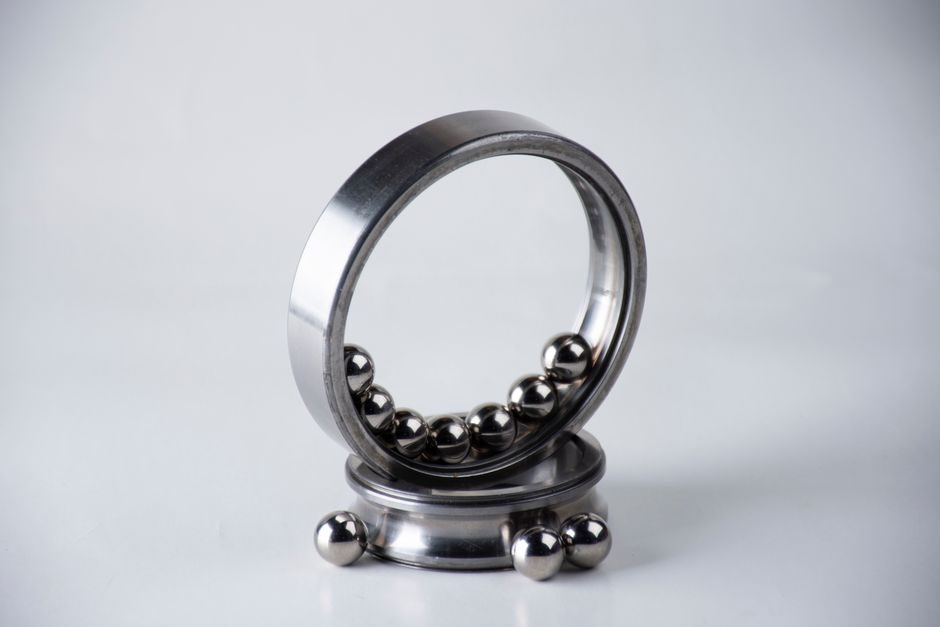
Industrial buyers sourcing self-aligning bearings in 2026 face a supplier base of at least 25 catalogued manufacturers and 46+ active product lines on DirectIndustry, with a parallel wholesale ecosystem of 456 China-based roller bearing suppliers on Alibaba and 78+ audited ISO 9001 ball bearing factories on Made-in-China.com [S2].
The category splits cleanly into two engineering families: self-aligning ball bearings (two-row, common bore range 10–100 mm) and spherical roller bearings (heavier load class, 20–500+ mm bores), each with distinct misalignment tolerances, load envelopes and housing formats. A pragmatic sourcing decision starts with the application's misalignment angle, radial load, speed and corrosion exposure, not with the brand label on the box.
Supplier Landscape by Region and Channel
The DirectIndustry self-aligning bearing index lists 25 manufacturers with 46 active product lines, concentrated in European OEM brands (AETNA, AKT GmbH, CMW, Evolmec, Findling Wälzlager, Nadella, NACHI Europe) and Asian production hubs (KML, KINEX-KLF, Kashima Bearings, LYC, MinebeaMitsumi, Ningbo Demy) [S2]. This index is dominated by spherical roller and mounted bearing units, not commodity ball inserts.
China's wholesale channel is structurally separate and significantly deeper: Made-in-China.com returns 78+ Diamond/Audited suppliers in the self-aligning ball bearing category, and Alibaba's roller segment lists 456 supplier matches with top markets split across Southeast Asia (~15%), South America (~12%) and the Middle East (~11%) [S6]. For procurement teams that need price-per-piece visibility and FOB quotes, these B2B portals are the primary shortlist generators before a vendor audit. For the engineering spec of the bearing itself, the self-aligning bearing selection guide maps bore, misalignment and material gates to the right unit type.
Spec Bands, Materials and Misalignment Limits
Self-aligning ball bearings typically accept 1.5–3° static misalignment, with double-row constructions reaching the upper end; spherical roller bearings extend to 0.5–2° depending on series, but carry radial loads 2–4× higher at equivalent bore [S1][S2]. The Shandong Xingchi 2203-series wholesale entry shows a factory-direct price band of US$0.20–50.00 per piece at 1-piece MOQ, with ISO 9001:2015, ISO 14001 and ISO 45001:2018 triple certification — a baseline that most China-tier-1 factories now hold [S6].
Material selection tracks the operating environment. GCr15 (Chinese designation equivalent to AISI 52100 chrome steel) is the default rolling element material in the Shandong Xunnai 2200-series listing, used for unseparated single-row radial load up to ambient temperature in dry, non-corrosive service [S5]. For washdown, chemical or food-zone service, NGB's thermoplastic-housed spherical roller unit is purpose-built: the polymer housing replaces cast iron or pressed steel to remove paint and corrosion failure modes in caustic, agricultural or marine washdown [S1]. Related ball-bearing product types in the catalog include the standard ball bearing family, which lacks the self-aligning geometry but shares the same material and tolerance stack.
Manufacturer Profiles and Production Footprints
Linqing Hongbang Bearing Co. (Liaocheng, Shandong) registers on Made-in-China.com as a manufacturer of self-aligning roller bearings and tapered roller bearings, with the account created in 2024 and a business range spanning industrial bearings — a typical entry in the Shandong production cluster [S4]. Shanghai Yinin Bearing & Transmission operates from 9F05, No. 2123 Pudong Ave, Shanghai, listing self-aligning ball bearings alongside deep groove and thrust ball bearings — a Shanghai-based trading-and-distribution profile rather than a primary steel mill.
For mounted bearing units specifically (insert + housing assemblies), the DirectIndustry metal bearing-unit index lists 43 manufacturers and 118 products, with FYH holding the deepest single-vendor footprint at 18 catalogued lines, followed by CMW at 6 and KML at 3 [S3]. NGB's spherical-roller thermoplastic unit, as profiled in its product exhibit, targets corrosion-protection applications where the housing material — not the rolling element — is the limiting wear part [S1]. Where linear motion interfaces with the rotating assembly, a linear bearing is the sliding counterpart, and the selection logic for the two product families is independent.
Certifications, MOQs and Trade Compliance Signals
Audited-supplier badges on Made-in-China.com now map to three certifications in the self-aligning ball bearing category: ISO 9001:2015 (quality), ISO 14001 (environmental) and ISO 45001:2018 (occupational health and safety) [S6]. For buyers routing through European or North American end-customers, the absence of any one of these is a frequent rejection trigger at the second-tier supplier audit, even when the bearing itself meets dimensional specs.
MOQ economics are split: Alibaba's wholesale channel accepts 1-piece sampling on standard 2200/2300-series self-aligning ball bearings, while the Made-in-China.com wholesale listings move into 10-piece MOQ for the same series, with FOB price increments at 100/500/1000-piece breaks [S5][S6]. For OEM contracts in the EU chemical or food processing space, ATEX 2014/34/EU category conformity for housed units in zone 1/21 and FDA/EC1935 food-grade lubricant compatibility for washdown bearings are the two compliance gates that most often remove a low-cost Chinese vendor from contention — these certifications are not visible on the B2B portal listings and must be requested per shipment.
Comparison: Self-Aligning Ball vs Spherical Roller vs Mounted Unit
For a given bore, self-aligning ball bearings carry lower radial load (typically 15–25% of a same-bore spherical roller) but run at higher limiting speeds (up to 2× the roller variant in grease lubrication) and tolerate more static misalignment [S1][S2]. Spherical roller bearings are the correct choice where radial load dominates and the housing can be rigid — conveyors, gearboxes, heavy industrial fans — while self-aligning ball bearings suit textile machinery, agricultural equipment and light conveyor idlers where speed and misalignment are the binding constraints. Mounted units (insert + housing) bundle the bearing into a pillow block, 2-bolt flange or 4-bolt flange and dominate the agricultural and bulk-handling OEM segment, with FYH and CMW as the most catalogued European/Asian options [S3]. Buyers building a vendor shortlist should weigh four decision criteria: (1) radial load kN at the application bore, (2) misalignment angle in degrees, (3) corrosion environment dictating housing material, and (4) speed in rpm with the chosen lubrication regime. Where the application also needs solid-handling or self-cleaning filtration upstream of the bearing, the self-cleaning filter choice for the lube or process fluid feeds back into the bearing's ISO 4406 cleanliness target.
Selection Workflow and Sourcing Risks
The most common sourcing failure is buying a GCr15 2200-series ball insert for a washdown application where the standard nitrile seal fails within 6 months — the unit is correct, the seal material is not. [S1]
For pump and fluid-handling OEMs integrating self-aligning bearings into pump bearing frames, the self-priming pump bearing-frame geometry usually drives a 2-bolt or 4-bolt mounted unit choice rather than a loose insert. Cross-reference the supplier's stated radial load rating against ISO 15:2017 dynamic load rating definitions before signing a frame-design contract.
Trackable signals to watch over the next two quarters: (1) movement among the 25 DirectIndustry-listed manufacturers toward higher ISO 4406-bearing cleanliness certifications; (2) FYH and CMW catalog updates for high-misalignment 3°+ spherical roller series aimed at the conveyor OEM segment; (3) any new Shandong or Zhejiang province entries appearing on Alibaba with full ISO 9001/14001/45001 triple certification as the floor standard tightens.
For related coverage, see Industrial Flooring 2026 Price & Cost Guide: System Bands, Prep Levers and Sourcing.