
Several large analog, power and embedded semiconductor suppliers carried more than 150 days of inventory in 2026, yet channel inventory was lean at some vendors and factory lead times were extending in selected product groups.
The supply position varies by company, component and inventory layer: Analog Devices ended fiscal Q3 with 156 inventory days while its channel inventory fell below its normal six-to-seven-week target.
Inventory Days Measure Factory Stock, Not Immediate Availability
Inventory days are calculated from inventory and cost-of-sales or related revenue data, so the result depends on the reporting period and company accounting. They remain useful for comparing a supplier's stock position with its sales rate, but they do not establish that equivalent quantities are available to buyers [S1][S2].
Large analog, power and embedded manufacturers carried more than 150 days of balance-sheet inventory as of September 2026. At the same time, some distributors held lean stock, selected factory lead times extended, and customers began reserving future capacity [S1].
That split explains why a broad inventory headline is weak evidence for an individual part. The procurement decision depends on the supplier, package, die size, production node, product lifecycle and whether the material is raw stock, die bank, work in process, finished goods or channel inventory [S1].
Renesas Sets a 150-Day Internal Buffer
Renesas raised its internal inventory target from 120 to 150 days in February 2026 to address demand and production risk, with its plan calling for additional die-bank inventory [S1].
The company separates internal inventory management from sales-channel inventory, which it tracks in weeks. A 150-day internal target therefore cannot be read as a promise that distributors hold four months of sellable stock or that every Renesas order can ship immediately [S1].
Renesas raised its internal days-of-inventory target from 120 to 150 days to address demand and production risks, with a plan for more die-bank inventory and production aligned with demand while sales-channel inventory remained a separate management metric.
Analog Devices and onsemi Show Opposite Availability Signals

Analog Devices ended fiscal Q3 with record balance-sheet inventory but 156 inventory days, while channel inventory fell below its normal six-to-seven-week range [S1].
The figures demonstrate that elevated manufacturer stock can coexist with tighter distribution and longer product lead times.
The comparison exposes a measurement trap because 156 inventory days and a six-to-seven-week channel-inventory target measure different layers of the supply chain and should not be treated as one purchasing metric.
Inventory Composition Identifies the Bottleneck
Raw materials support future production but cannot satisfy a current shipment. Work in process has entered manufacturing but is not yet a finished device. Finished goods can support near-term delivery, while die-bank inventory can protect specific products against demand swings, wafer constraints or production interruptions [S1].
The inventory layers therefore answer different supply questions. A finished-goods reduction points to immediate fulfillment pressure, extra die bank points to deliberate supply protection, and rising work in process can indicate that assemblies are moving through a constrained production sequence [S1].
Memory and Advanced Packaging Tightened Alongside Elevated Stock

By mid-2026, the mature-node correction had largely resolved, but the imbalance reappeared in memory.
Gartner forecast 64% global semiconductor revenue growth for 2026, while AI's growth pushed memory and advanced packaging into shortages.
This cycle is not uniform across components or end markets. AI-linked technologies attracted exceptional investment, whereas consumer and mature-node categories recovered on separate schedules, making a single company-average inventory figure insufficient for sourcing decisions [S3].
Who Should Use These Figures and How
Inventory-day data is appropriate for procurement managers evaluating whether a supplier has stock depth, financial teams comparing balance-sheet working capital, and analysts testing whether supply conditions are diverging across the industry [S1][S2].
The metric is not appropriate as a sole basis for purchase-order timing, a universal component availability guarantee, or a claim that all supplier inventories are high. Buyers also need part-level lead times, channel weeks, package allocation, approved-source status and forecast commitments for the exact device [S1].
For semiconductors used in industrial controls, automotive systems or embedded equipment, the same conclusion applies: manufacturer inventory supports continuity, but it does not guarantee the specific package, grade or lifecycle status required by the product. Demand planning should include the supplier's production commitments and the location of the stock [S1][S4].
Equipment Spending Signals Continued Capacity Expansion
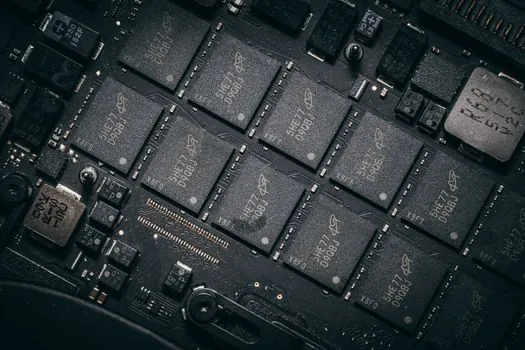
SEMI forecast global semiconductor manufacturing-equipment sales to rise 23.2% in 2026 to a record $165.9 billion, reflecting continued investment in production capacity [S4].
Component lead times were extending as inventories fell in the 2026 market covered by the component-supply analysis, while manufacturers still carried elevated internal stock in several categories [S1][S4]. Capacity expansion can ease selected constraints, but the equipment-sales forecast alone does not identify when specific analog, embedded or power devices will clear.
AI demand and advanced packaging remain material allocation variables, while mature-node supply follows a different recovery path. Procurement teams tracking the cycle can also use Leading Indicators for the Semiconductor Cycle in 2026 to connect inventory data with order rates, lead-time changes and supplier capital spending.
The next verifiable procurement signal is not another industry-average inventory total. It is the combination of finished-goods stock, channel weeks, product-specific lead times and supplier capacity commitments for the parts on an active bill of material [S1][S4].