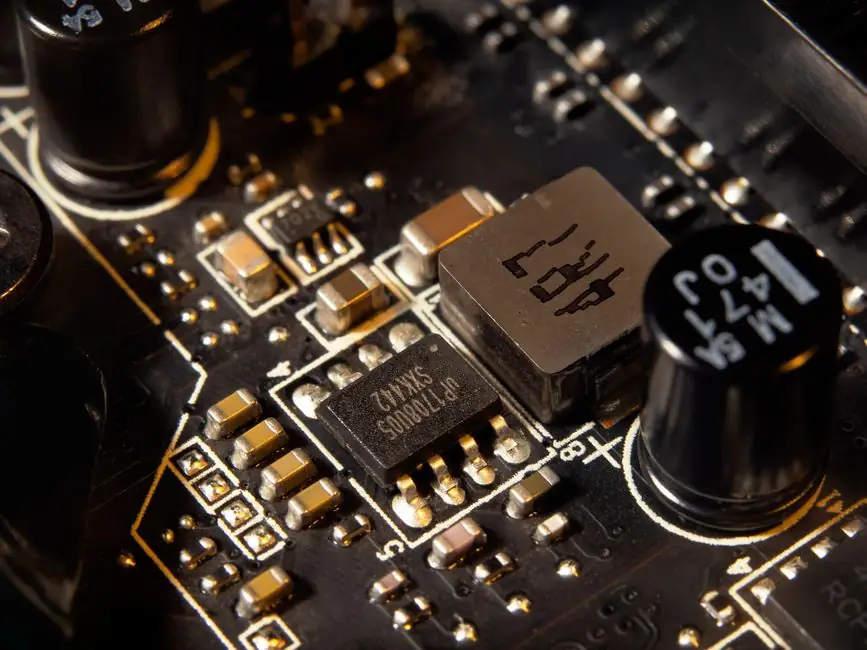
A working 2026 semiconductor procurement strategy treats the bill of materials as a living risk register, ranking each line by wafer lead-time, single-source exposure, and lifecycle status before price is even negotiated.
For embedded builds, the practical scope covers MCUs, MPUs, DSPs, analog ICs, FPGAs, and power discretes, the families where allocation events and PCN/PDN notices still drive schedule loss more than any other commodity class [S1].
Frame the strategy around four control variables, not unit price
Unit price is one of four decision variables a senior buyer should weight: total cost of ownership (including rework, field returns, and qualification), supply risk (single vs dual source, foundry concentration), lead-time variance (wafer-out weeks plus assembly/test), and lifecycle state (active, NRND, last-time-buy, obsolete) [S1].
For each line on the AVL, capture the manufacturer, the fab process node where known, the package, the operating temperature grade, and the distributor tier authorised to quote the part; without these five fields, alternates cannot be screened in a controlled way [S2].
Build alternates before you need them
The first deliverable of any semiconductor procurement plan is a second source for every pin-critical device, qualified to the same functional block diagram, the same IO voltage, and the same peripheral set as the primary [S1].
Two common pitfalls: treating "pin-compatible" as "drop-in" without re-running EMC and inrush characterisation, and qualifying a second source on the same wafer foundry as the primary, which leaves the dual-source claim hollow against a regional fab disruption [S1].
Decide who runs the program: in-house, hybrid, or distributor-managed

In-house sourcing gives the tightest cost visibility but demands a full-time commodity engineer per major IC family; a hybrid model keeps strategic suppliers in-house and routes tail-spend through a franchised distributor; a fully outsourced model works only when the EMS partner publishes a per-line cost breakdown and an obsolescence report cadence the OEM can audit [S2].
For low-volume, high-mix industrial product lines, a hybrid model with one franchised distributor for tail-spend and direct manufacturer agreements for allocation-prone parts tends to outperform both extremes on total landed cost.
Comparison of the three operating models on four decision criteria
In-house only: lowest direct material cost on top-spend lines, highest staffing overhead, weakest response to allocation events, and the longest time to qualify a new alternate. Hybrid: moderate direct cost, moderate overhead, the strongest allocation response because the distributor holds bonded inventory, and a 4 to 8 week typical alternate qualification cycle. Outsourced to EMS: the highest per-unit cost in absolute terms, the lowest overhead burden, allocation response depends entirely on the contract, and qualification is typically 8 to 16 weeks because it runs through the partner's change-control board [S2].
For high-reliability industrial programs, the deciding factor is rarely price; it is documented traceability of the silicon lot, the wafer fab, and the assembly site, and that traceability is hardest to enforce through an outsourced model.
Tie buffer sizing to wafer lead-time, not purchase frequency

Buffers should be sized in weeks of demand covered, with the target set by wafer-out lead-time plus 4 to 8 weeks of safety for fab events; for long-lead parts (FPGAs, advanced MCUs, complex PMICs) this routinely lands at 26 to 39 weeks of cover, not the 4 to 8 weeks typical of passives [S1].
For background reading on inventory and handling practice in adjacent process equipment, see this crucible furnace selection for hardware manufacturing spec map, which covers thermal and material handling risks that mirror semiconductor fab uptime concerns.
Use the lifecycle signal feed as a first-class input
Every qualified part on the AVL should be tagged with its PCN/PDN status, last-time-buy date, and projected EOL, sourced from manufacturer lifecycle feeds and franchised distributor notifications; a part flagged NRND should trigger a re-qualification project, not a price negotiation [S1].
For embedded processors specifically, business factors (segment demand, customer concentration, roadmap commitment) make or break the device's longevity at least as much as the silicon itself, which is why a marketing-aware analyst view of the vendor's roadmap is part of the procurement file, not a separate exercise [S1].
Who this framework is for, and who it is not for
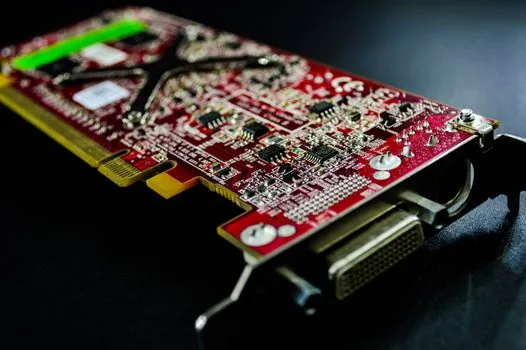
This is built for OEM and Tier 1 buyers running industrial, medical, or instrumentation product lines with 5 to 15 year field-life obligations and 50 to 5,000 unit annual volumes. It is not aimed at high-volume consumer electronics, where the cost model is dominated by yield and package pricing, nor at one-off R&D prototyping, where allocation is rarely the binding constraint. [S1]
For pure prototyping, see this load cell selection guide as an example of a short-cycle spec workflow that does not need a four-variable risk model.
Trackable signals to watch in the next planning cycle
Watch the PCN/PDN cadence from the top three MCU vendors on your AVL, the bonded-inventory programmes your franchised distributor extends for 2027, and any 200 mm vs 300 mm wafer capacity shift that would reset your buffer-size model; any one of these can move a line from "managed" to "allocation" inside a quarter. [S1]
Spec-level background on the components involved: linear guide, crossed roller guide, and pressure transmitter.
