
An edge computing gateway is a hardened on-site device that integrates network, computing, storage, and application capabilities at the network edge close to a data source, then forwards processed payloads to a cloud or control center for heavier analytics [S1][S3]. PUSR's M100 series, for example, supports multi-vendor PLC protocol parsing, which is the baseline function engineers expect when they evaluate a gateway against a protocol gateway reference design [S1].
Three forces shape the 2026 specification picture: a global installed base of connected terminals forecast to exceed 50 billion devices with over 50% of data analyzed, processed, and stored at the network edge, a 50% reduction in O&M cost when cloud management of gateways is applied, and the steady migration of fieldbus gateway workloads onto Linux-based edge nodes [S3].
What an edge computing gateway actually is, in spec terms
The gateway is a programmable intermediate node that moves the traditional centralized computing process closer to users and the largest bandwidth pipe, sitting between PLCs, sensors, cameras, and the upper SCADA/MES/cloud stack [S1]. Huawei's EC-IoT definition is the cleanest engineering reference: an AR500 series router that combines a terminal communication module, an edge computing engine, and an Agile Controller with open APIs and eSDKs for partner application integration [S3].
Typical functional blocks documented by PUSR include data collection and on-device processing, bandwidth reduction by serving content at the edge, latency reduction versus centralized data centers, distributed storage with load balancing for security, and local intelligence that improves acquisition and analytics without saturating the backhaul link [S1]. Azure's edge definition adds the latency frame: millisecond responses, distributed operations, and cost reduction by avoiding round-trips to distant datacenters [S6].
Upstream supply: silicon, modules, OS, and platform vendors
Upstream of the gateway assembler sits four supply layers. First, industrial SoC and MCU vendors (ARM Cortex-A/M class, x86 industrial PC CPUs) feed the main compute board. Second, 5G, LTE Cat-1/Cat-M, Wi-Fi 6, and NB-IoT module makers supply the radio; the 5G industrial module shortage 2026 risk map for buyers details how constrained module supply is forcing gateway OEMs to qualify second sources this year. [S3]
Third, the operating system and orchestration layer: Red Hat Enterprise Linux with Image Builder for edge-optimized OS images, Red Hat Device Edge or Red Hat OpenShift for container orchestration, and Red Hat Ansible Automation Platform for fleet management across hundreds of thousands of nodes [S5]. Red Hat's challenge page lists scalability (oil rigs, high-speed trains, airplanes, ATMs, retail POS), interoperability across multi-vendor hardware and software, consistency, and defense-in-depth security as the four engineering problems the OS stack must solve [S5].
Fourth, the cloud and management plane: AWS, Microsoft Azure, and Huawei Cloud each publish an edge-to-cloud reference, with Azure explicitly marketing millisecond response workloads and AWS positioning reduced latency as the primary benefit versus centralized cloud [S2][S6]. Huawei's EC-IoT targets management of tens of millions of terminals from one Agile Controller and claims 50% O&M cost reduction versus un-managed fleets [S3].
Downstream demand: which industries actually buy edge gateways
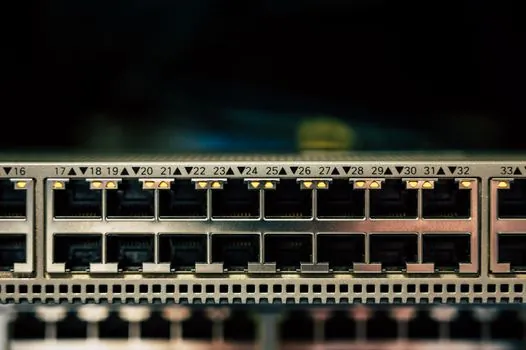
Downstream, four verticals absorb the bulk of 2026 shipments. Discrete manufacturing buys gateways for pressure transmitter, flow meter, and industrial valve data aggregation on the line, with sub-100 ms closed-loop control on vision reject and robotic weld correction. Energy and utilities deploy them at wellheads, pipeline block-valve stations, and distributed PV/wind sites where backhaul is satellite or private LTE. [S5]
Logistics and cold-chain operators run gateways inside containers, trucks, and bonded warehouses for reefer set-point, shock, and door-state telemetry. Transportation authorities use them at signal cabinets, toll gantries, and rail crossings. PUSR's own application page lists finance, logistics, and transportation among the most common deployment sectors, alongside factory and energy use cases [S1]. Red Hat's edge references add oil rigs, high-speed trains, airplanes, ATMs, and retail point-of-sale terminals to the same list [S5].
Selection criteria: cut the spec sheet down to four gates
Process engineers consistently filter candidates on four gates. (1) Protocol coverage: native parsing of Siemens S7, Modbus TCP/RTU, EtherNet/IP, PROFINET, OPC UA, and at least one of BACnet, DNP3, or IEC 60870-5-104 for energy sites; this is exactly the role a fieldbus gateway is documented to play. (2) Compute budget: ARM Cortex-A55 quad-core or x86 dual-core at 1.5-2.0 GHz with 4-8 GB RAM and 32-128 GB eMMC or SSD is the 2026 mid-range band for containerized workloads. [S1]
(3) Environmental rating: -25 to +70 °C operating range, IP30 or IP40 housing for cabinet mount, and CE/FCC/UL/IEC 61850-3 or IEC 60079 conformance for hazardous areas when the gateway sits inside a lighting equipment and electric lamps yard or refinery. (4) Management plane: support for centralized OTA, fleet-wide image updates, role-based access, and TPM 2.0 secure boot, which is the Red Hat Device Edge / Ansible pattern [S5]. PUSR's M100 explicitly targets multi-PLC protocol parsing and customization, and Huawei's AR500 series combines a terminal communication module, edge compute, and an Agile Controller in one product line [S1][S3].
Comparison: edge gateway class by deployment pattern

Three classes dominate 2026 bid lists, each mapped to a different operational profile. Class A, the cabinet-grade protocol gateway, is essentially a protocol gateway with a Linux upgrade path: low power (5-15 W), 2-4 Ethernet ports, 1-2 serial ports, and protocol translation only, with no container runtime. Best fit: brownfield PLC and SCADA retrofits where the goal is to get data off Modbus serial and into MQTT or OPC UA without changing the line. [S1]
Class B, the industrial edge server, is an x86 or ARM box-PC with 32-128 GB RAM, GPU or NPU option, and Red Hat Enterprise Linux, OpenShift, or Azure Arc onboarding [S5][S6]. Power draw is 30-150 W, with a fanless or short-cabinet chassis rated -25 to +60 °C. Best fit: factory AI vision, predictive maintenance on mining equipment manufacturing assets, and port-terminal tower crane selection data aggregation.
Class C, the 5G/AI edge appliance, adds a 5G modem, TSN Ethernet, and on-device inference accelerators (10-40 TOPS), and targets drone demand 2026-2030 ground stations, autonomous truck logistics, and remote wellhead control where backhaul is private 5G. Each class is unsuitable for the others: Class A cannot host AI inference, Class B cannot tolerate vehicular shock and vibration, and Class C is over-spec and over-priced for a 50-point Modbus poll.
Limits, failure modes, and what the spec sheet hides
Three engineering limits consistently bite 2025-2026 deployments. First, the device is subject to a certain degree of delay limitation when transmitting data, and that delay multiplies when the backhaul is cellular or satellite, which is why the 5G industrial module shortage 2026 risk map for buyers is a real procurement risk, not a marketing story. [S1]
Second, edge sites are commonly managed in locations with limited or no IT staff, so a gateway that does not support centralized image-based updates and Ansible-driven configuration will quietly rot in the field [S5]. Third, edge deployments require both physical and digital security: defense-in-depth from hardware tamper switch through TPM 2.0 secure boot to signed container images, because a compromised retail POS or ATM gateway is a direct intrusion path into the corporate network [S5].
Standards and sourcing watchlist for the next 6 months

Three signals are worth tracking from 2026-08-13 forward. (a) Red Hat's edge channel continues to push Image Mode for Red Hat Enterprise Linux as the recommended pattern for image-based OS updates, which is a procurement cue for any new Class B gateway tender [S5]. (b) Azure and AWS continue to publish edge reference architectures emphasizing millisecond response and reduced bandwidth cost, which is the language buyers should expect to see in vendor pitches through Q4 2026 [S2][S6]. (c) Huawei's EC-IoT public materials still cite the 50 billion terminal / 50% data-at-edge projection, and the 50% O&M cost reduction claim for cloud-managed gateways, both of which remain the headline numbers in vendor literature [S3].
For sourcing, the most material near-term change is module allocation, not gateway architecture: specifiers who have not already qualified a second 5G module vendor against Class C designs will see lead times stretch, which is the same constraint the 5G module risk map documents [S3]. Gateway OEMs and platform vendors will keep shipping, but the radio upstream remains the bottleneck.
