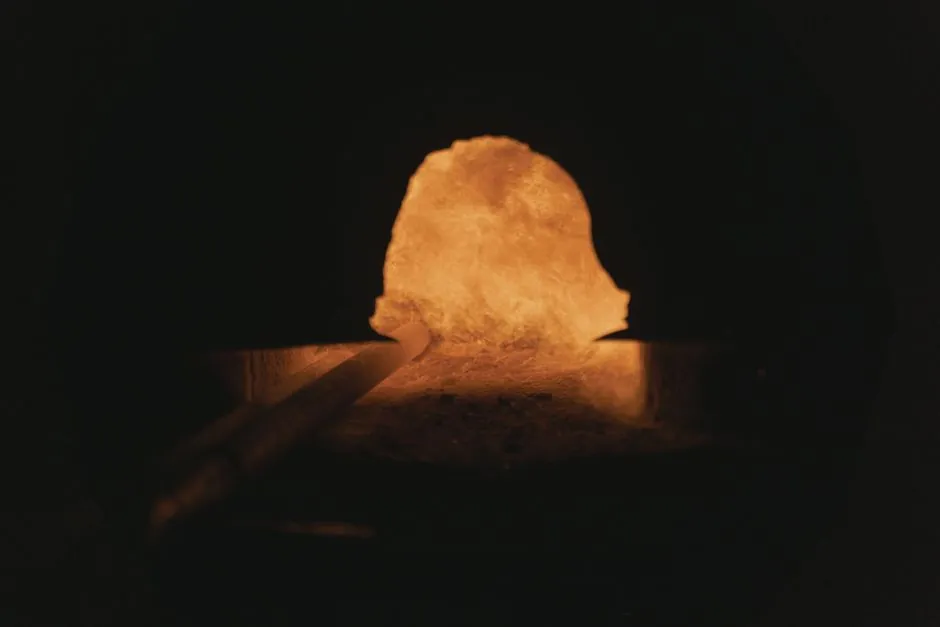
An induction crucible furnace fitted with a prefabricated, pre-sintered crucible and a granular back-fill can be relined in a single shift, replacing the multi-day ramming-and-sinter cycle that older in-situ lining methods require [S3].
For hardware makers deciding between crucible furnace configurations, the realistic decision tree starts with the alloy family (non-ferrous vs iron/steel), the pour weight per shift, and the cleanliness spec on the melt, not the kW rating on the nameplate [S3].
Induction vs gas vs resistance: which crucible furnace fits which job
Induction crucible furnaces dominate small-to-medium ferrous and non-ferrous melts in hardware plants because the induction coil sits outside the crucible, so heat is generated in the metal itself and melt rates track coil kW and crucible capacity rather than burner sizing [S3]. Gas- and oil-fired crucible furnaces remain common where the shop already has a gas train and the alloy is aluminium, zinc, or lead, with melt rates tied to burner input in kW per kilogram of charge. Resistance-heated crucible furnaces (top-heated or bottom-pour resistance elements) are the slower option, typically reserved for precious metals, magnesium, or for holding baths where temperature uniformity matters more than throughput.
For most hardware plants melting brass, bronze, or grey iron in batches under 500 kg, a medium-frequency induction crucible furnace with a preformed clay-bonded graphite or silicon-carbide crucible is the workhorse. Plants pouring stainless or tool steel in 1–5 t batches more often stack a network-frequency holding furnace downstream of a larger induction melt unit to decouple melting from pouring, since pouring rarely keeps pace with melt rate [S3].
Prefabricated crucibles vs in-situ rammed linings
The classic in-situ lining process fills a dry quartz or quartzite ramming mix around a mandrel inside the furnace cage, then sinters the mass in place by bringing the furnace up to sintering temperature, with full sintering of quartz taking hours and exposing crew to respirable silica dust during the ramming step [S3]. Once the lining wears, the broken-out mass has to be chiselled out by hand with real risk of damaging the induction coil windings, and the furnace must cool to a tolerable working temperature before the reline can start [S3].
Prefabricated crucibles, sintered off-line in a controlled furnace and dropped into the cage with a peripheral clearance back-filled with a non-sintering granular material (typically dry alumina or magnesia beads) and sealed on top with a patching mix, are the modern alternative, and the patent disclosure for this layout explicitly cites the saving in preparation time as the principal advantage [S3]. The catch: clay-bonded graphite prefabricated crucibles are metallurgically restricted to non-ferrous service in induction units, so iron and steel melts still need the rammed silica or alumina lining route, or a magnesia-graphite preform rated for ferrous contact [S3].
Spec gates that decide the build
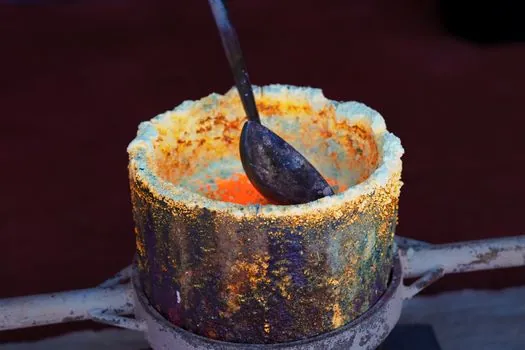
Four hard numbers drive the spec sheet before brand selection: maximum melt temperature, melt rate in kg/h, charge weight per cycle, and target lining life in heats. Maximum melt temperature is the first gate, because clay-bonded graphite is generally limited to roughly 1200 °C in continuous service, silicon-carbide crucibles push that to 1500–1600 °C, and fused-quartz or alumina linings are the only realistic option above 1600 °C for iron and steel. [S3]
Melt rate is set by coil kW at the operating frequency, and the rule of thumb is that medium-frequency (≥ 1 kHz) units deliver 2–3× the melt rate of a mains-frequency coil of the same nominal kW on copper and aluminium charges, because electromagnetic stirring is stronger at higher frequency. Lining life is the cost driver: a rammed quartz lining in an iron-melting induction furnace typically survives 100–300 heats, a magnesia-based lining 300–800 heats, and the granular back-fill behind a preformed crucible is the consumable that absorbs the thermal-cycle damage and is replaced on each reline [S3].
Selection criteria for hardware plant buyers
For a hardware plant melting non-ferrous alloys, the practical shortlist is a medium-frequency induction crucible furnace with a silicon-carbide or clay-bonded graphite preformed crucible, sized so that the rated melt rate covers the busiest shift in 70–80 % of available time, with a spare crucible on the floor to cut reline downtime from a day to a crane swap. For ferrous service the same induction topology stays in play, but the consumable story shifts to a rammed or preformed magnesia/alumina lining, and a cupola furnace becomes the cheaper answer above roughly 5 t/h of continuous iron throughput, where induction kWh cost outweighs coke-bed capital cost. [S3]
For plants that only need to hold alloy at temperature between a central melter and a casting cell, a holding furnace is the right answer, not a crucible melter, and the energy math flips: holding furnaces are sized in kW of losses compensated, not in melt rate. Across all three choices, the most common spec mistake is buying by nameplate kW instead of by kW per kilogram of charge at the operating temperature, which is the only number that ties the equipment to the actual shift production target.
Failure modes and operating constraints
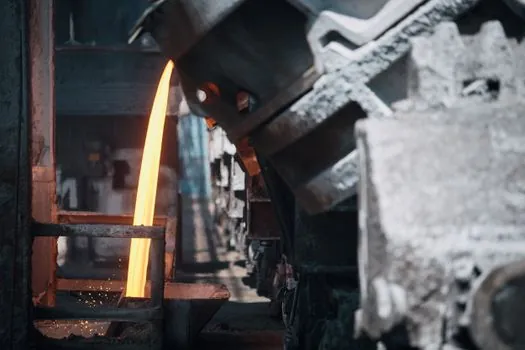
The three failure modes that kill crucible furnace uptime are crucible cracking from cold-charge thermal shock, lining erosion from slag attack, and coil failure from a steel or molten-metal breach through a worn lining. Cold-charge shock is mitigated by a preheated charge (typically 200–400 °C) and by avoiding fresh crucibles on a damp foundry floor, since any moisture in the lining back-fill can flash to steam and crack a preformed crucible on first heat-up [S3]. Slag attack is controlled by matching the lining chemistry to the alloy (acidic silica for steel, basic magnesia for high-manganese iron) and by skimming dross before each pour, not by throwing more refractory at the problem. Coil breach is the catastrophic one, and the granular back-fill design described in [S3] specifically exists to make a breach detectable and contained rather than to let molten metal reach the coil directly.
Sourcing and standards context
For hardware plants sourcing crucible furnaces, the public spec literature clusters around three document types: equipment patents that disclose the lining and crucible geometry (the relevant example here is US4351058A on induction crucible furnace construction with a prefabricated crucible and granular back-fill [S3]), general metallurgy dictionaries that anchor the term "crucible furnace" to the chemical-engineering and process-engineering vocabularies [S1][S2], and the broader hardware-manufacturing guide ecosystem covering process flow from prototype to production [S4]. PCB and small-batch hardware makers doing low-volume metal hardware prototypes tend to use PCB-assembly and small-batch services for enclosures and architectural hardware rather than running a crucible furnace in-house, since the regulatory and dust-collection load of even a 50 kg induction unit is non-trivial [S5].
Buyers comparing crucible furnace quotes should pin the quote to four numbers: rated melt rate in kg/h at the operating temperature, crucible/ lining life in heats at the same duty, installed kW and specific energy in kWh/t, and the documented reline procedure including the consumable mass per reline. Anything that quotes only nameplate kW and a brochure photo is not a spec, it is marketing.
Trackable signals worth watching: a public revision of any major crucible-furnace safety standard covering induction coil protection and refractory back-fill practice, and any disclosed shift of hardware makers from in-house crucible furnaces to subcontracted building pipe hardware melt capacity as energy and dust-collection costs rise.
For related coverage, see Desalination OEM vs ODM Manufacturing: Decision Map for Plant Builders.