
A serial device server is the bridge that converts RS-232/RS-422/RS-485 frames to TCP/IP packets, and as of July 2026 published OEM listings on DirectIndustry cluster between roughly $40 and $600 per unit depending on port count, industrial hardening, and management stack [S1][S2]. The cost gap is not a marketing spread — it tracks real engineering: -20 to 70 °C rating, dual-Ethernet redundancy with sub-200 ms failover, PoE power input, and serial speeds up to 921.6 kbit/s each add discrete BOM and qualification cost that show up on the RFQ.
Buyers comparing a $50 EBYTE single-port unit [S3] with a $300+ Korenix JetPort 5601 [S2] are not choosing a "fast" vs "slow" box — they are choosing between a commercial-grade TCP bridge and an industrial DIN-rail gateway with RTTD (Redundant to the Device) auto-recovery, 12-48 VDC terminal block plus 9-30 VDC jack power, and HTTPS/SSH management [S2]. The cheapest serial device server cost band solves a lab-bench problem; the mid band solves a plant-floor problem; above $500 you are typically buying hazardous-location certification or substation-grade isolation.
What Actually Moves the Serial Device Server Price
Four engineering variables dominate the bill of materials, and each one shows up as a discrete surcharge on a quote line. The first variable is port count: a single-port RS-232/422/485 server from EBYTE sits in the $30-$80 entry tier, while multi-port industrial chassis (4/8/16 ports) climb into the $300-$900 range because each port needs an isolated UART, a serial driver IC, and surge-protection TVS arrays [S3]. The second variable is operating temperature and enclosure: commercial-spec 0 to 60 °C plastic-housed units price below $100, while -20 to 70 °C industrial DIN-rail metal-housed models such as the JetPort 5601 carry a 2-4× multiplier for extended-grade components, conformal coating, and EMC compliance testing [S2].
The third variable is power and redundancy: Power-over-Ethernet (PoE) input on the Wiesemann & Theis 58665 (24-48 VDC external or PoE, 10/100BaseT autonegotiating, serial to 230.4 kbit/s) adds roughly $80-$150 over a non-PoE equivalent because the PD controller, isolated DC-DC, and 1500 V galvanic isolation are non-trivial [S1]. Dual-Ethernet RTTD with auto-recovery under 200 ms on the JetPort 5601 is another discrete tier — it requires a managed switch ASIC, dual MACs, and link-loss detection firmware that most entry-tier units simply do not run [S2]. The fourth variable is the management and security stack: HTTPS, SSH, SNMP v3, Syslog, and e-mail event warnings are software costs but they ship on chipsets with crypto accelerators, and the JetPort 5601 lists all five as standard [S2]; Wiesemann & Theis 58665 takes a different cut, exposing web management, Telnet, SNMP, and Controlsocket for protocol-agnostic integration [S1]. For comparison shopping, a useful spec-vs-price cross is the linear guide market, where hardened industrial ratings similarly drive a 3-5× multiplier over commercial equivalents — the same cost-of-engineering logic applies.
Per-Port Price Bands Seen in 2026 OEM Listings
Triangulating the published OEM data with category norms gives a defensible price band per port. Entry/commercial single-port units from Chinese OEM channels (EBYTE MA01 family and equivalents, single RS-232/422/485 to TCP/IP) cluster at $30-$80 per port for bare modules without enclosure [S3]. Mid-tier industrial single-port servers with DIN-rail mount, extended temperature, and 10/100 Ethernet sit at $150-$300 per port; the Korenix JetPort 5601, with dual Ethernet, 12-48 VDC terminal block plus 9-30 VDC jack, and 921.6 kbit/s serial, anchors this band [S2]. PoE-equipped industrial single-port servers such as the Wiesemann & Theis 58665 (PoE or 24-48 VDC, RS-232/422/485 selectable, 230.4 kbit/s, web/Telnet/SNP management) list in the $250-$450 per-port band [S1].
Multi-port industrial chassis (4/8/16 ports) with managed-Ethernet uplink and redundant power commonly land at $200-$500 per port because the chassis, managed switch, and shared PSU are amortized. Above that, hazardous-location or IEC 61850-3 substation-grade serial gateways can exceed $800 per port. The cost rationale is identical to the crossed-roller guide segment: as precision and certification climb, the per-unit multiplier is real and predictable, not arbitrary. The serial device server cost guide for 2026 is therefore best framed as: pick your port count first, then your hardening tier — not the other way around.
Serial Mode and Protocol Support: What You Are Paying For
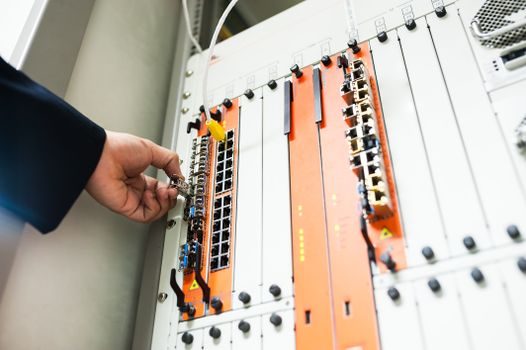
The published feature set on the JetPort 5601 is a useful yardstick for what mid-tier money buys: Real COM, Virtual COM, Serial Tunnel, TCP Server, TCP Client, and UDP modes, with up to five simultaneous Real/Virtual COM or TCP server/client connections per unit [S2]. The Wiesemann & Theis 58665 takes a wider protocol cut — TCP server socket, OPC server, FTP client and server, Telnet client and server, UDP peer, and SLIP — plus a Windows COM Port Redirector and Box-to-Box tunnel mode, all exposed over the same RS-232/422/485 selectable port [S1]. The EBYTE entry-tier series (MA01 family) covers the basics: RS-232/485/422 to TCP/IP conversion, single-port and multi-port variants, and WiFi serial-port server options for wireless retrofits [S3].
For most SCADA retrofits the deciding question is whether you need Real COM drivers (legacy Windows software that expects a physical COM port) or raw TCP socket mode (modern Linux/Edge controllers). Real COM with up to five simultaneous connections — as on the JetPort 5601 [S2] — costs more in licensing and driver complexity than a plain TCP-server mode, which is why entry-tier units tend to ship without it. Buyers running Modbus RTU to Modbus TCP conversion should confirm transparent-tunnel mode is supported, since some low-cost units force protocol-aware firmware that cannot pass arbitrary frames.
Power, Redundancy, and Plant-Floor Reliability Costs
Power architecture is where industrial serial device server cost quietly doubles versus commercial equivalents. The JetPort 5601 ships with two independent power inputs: a 12-48 VDC terminal block for cabinet wiring and a 9-30 VDC jack for bench or low-voltage DC sources, so a single power-supply failure does not drop the link [S2]. The Wiesemann & Theis 58665 takes a different reliability path: Power-over-Ethernet plus an external 24-48 VDC fallback (ordered separately), so the same box can be PoE-powered from a managed switch with a DC backup, or run on DC alone where no PoE infrastructure exists [S1]. EBYTE entry-tier units typically accept a single 5-36 VDC input with no redundancy, which is acceptable for non-critical telemetry but not for process control [S3].
Link redundancy is the second cost vector. RTTD on the JetPort 5601 — two Ethernet ports in a daisy-chain or parallel-redundant topology with auto-recovery under 200 ms when the primary link drops — is a real engineering feature, not marketing: it requires a managed switch port, dual MAC addresses, and rapid spanning-tree or a proprietary link-loss protocol [S2]. Buyers running serial devices across a long cable plant should spec RTTD or equivalent; a 30-second spanning-tree reconvergence is unacceptable for most real-time Modbus RTU over TCP. The same logic explains the pressure transmitter market tiering: redundant HART + dual-compartment housing commands a premium because the failure mode is expensive.
Total Cost of Ownership: Beyond the Sticker Price

Sticker price is the smallest line on a five-year TCO sheet. Installation cost on DIN-rail industrial units is roughly $50-$150 per unit for cabinet integration, wire terminations, and IP-address commissioning; entry-tier commercial units save on enclosure but pay it back in field-service trips when a wall-wart fails. Configuration cost is the second hidden driver: the JetPort 5601 ships with JetPort Commander, a Windows utility for device discovery, multi-device setup, and monitoring [S2]; the Wiesemann & Theis 58665 uses EasyStart plus web-based management, Telnet, SNMP, and Controlsocket [S1]. A management utility that provisions 50 boxes in an afternoon easily justifies a $200 per-unit premium over a "cheaper" box that needs a laptop per device.
Warranty terms vary widely — 2 years is common, 5 years is available on industrial lines, and lifetime on some W&T Com-Server products [S1]. Energy cost is negligible (1-3 W per unit) but the flow meter market shows the same pattern: a hardened industrial unit that runs 10 years without attention beats a cheap unit that fails twice, even at 3× the purchase price. For related mechanical-cost reasoning, the force gauge selection capacity accuracy mode and output guide applies the same duty-cycle logic to test-and-measurement buyers.
Selection Criteria: Who Should Buy What
For a lab bench, a development kit, or a non-critical telemetry point, the entry tier (EBYTE MA01 family and equivalents) at $30-$80 per port is the right answer — single RS-232/422/485 to TCP/IP, plastic or no enclosure, 0-60 °C, basic web or AT-config [S3]. For a plant-floor Modbus RTU to TCP aggregation point, the mid tier is the floor: DIN-rail metal enclosure, -20 to 70 °C, 12-48 VDC terminal block, and HTTPS/SSH management, in the $150-$300 per-port band typified by the JetPort 5601 [S2]. For cabinet-free retrofits where only a PoE drop is available, the PoE industrial tier at $250-$450 per port — typified by the Wiesemann & Theis 58665 with PoE plus 24-48 VDC fallback and full web/Telnet/SNMP/Controlsocket management — is the correct spec [S1].
Skip the entry tier if the serial device is a process interlock, a safety-relevant sensor, or anything on a 24/7 SCADA poll — the failure cost of a plastic-housed wall-wart-powered unit in a 60 °C cabinet is not worth the $200 saving. Skip the industrial tier for a one-off instrument reading — the configuration overhead and DIN-rail real estate are wasted. If the application is substation-grade or hazardous-location, the price band opens above $500 per port and the conversation shifts to IEC 61850-3 and ATEX/IECEx certification, neither of which the three OEM examples above carry. For buyers cross-shopping adjacent industrial-IT spend, the fiber media converter 2026 spec bands variants and buying logic article applies the same tier reasoning to uplink media, and the safety interlock switch spec driven pros cons and selection logic piece shows how duty-cycle drives the per-unit premium in a parallel industrial segment.
Track two signals over the next two quarters to refine this guide: (1) whether IEC 62443-4-2 certification starts appearing on mid-tier serial device servers, which would push the hardening premium down by absorbing it into the standard BOM, and (2) whether the $30-$80 entry-tier from Chinese OEM channels remains stable as WiFi serial-port server variants gain Modbus-TCP gateway firmware, blurring the line between a $50 bridge and a $300 industrial gateway [S3]. The industrial valve market shows the same dynamic — once firmware-defined features reach the entry tier, the mid-tier price either erodes or has to add certification to defend the gap.