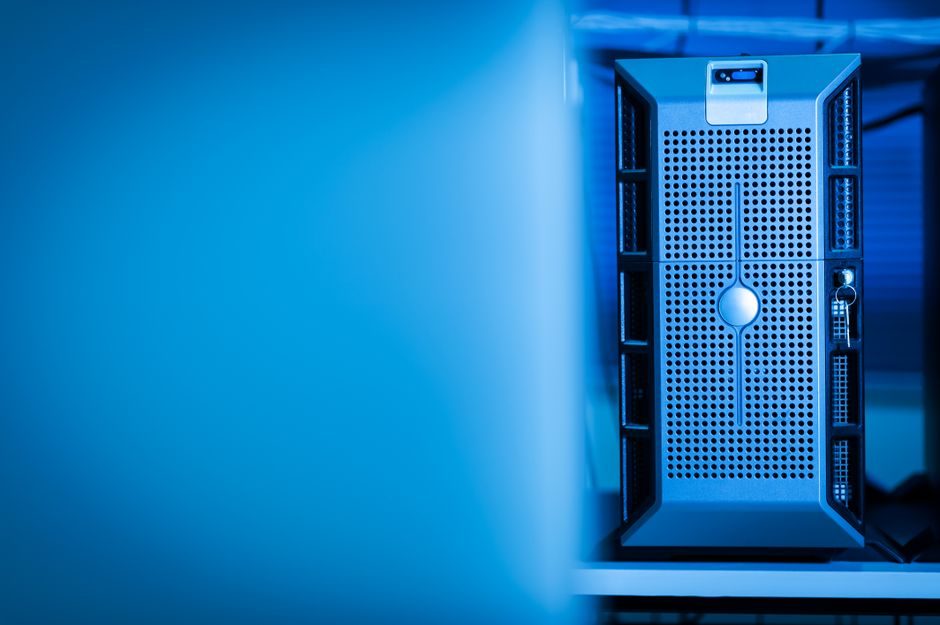
Taiwan-headquartered ODMs and US-OEM assemblers hold the dominant share of x86 and hyperscale rack server motherboards, chassis integration and final-rack build, while Mainland China supplies the majority of bare PCBs, server-grade connectors and sheet-metal chassis components feeding those lines [S1][S2].
Production splits cleanly by form factor — rack servers lead in hyperscale/AI deployments, tower servers in SME on-prem, and blade servers in legacy enterprise and HPC clusters — and the geographic capacity map is set by EMS partners, not by the brand on the front bezel [S2].
Form-Factor Segmentation Drives the Country Mix
Server hardware categories resolve into three physical classes — rack, tower and blade — and each class is dominated by different end-use loads, which in turn drives which country holds which slice of capacity [S2]. Rack servers, in 1U–4U heights, lead in hyperscale cloud and AI training fabrics, and they are the largest unit class globally; tower servers lead in small-business on-prem and branch-office deployments; blade servers, while a shrinking share, remain entrenched in enterprise HPC and telecom core networks [S2]. Inside the rack class, the AI server sub-segment is a distinct capacity pool, requiring 700 W–1200 W class CPUs, 700 W class GPUs, liquid-cooling manifolds and 80 Plus Titanium PSUs, and is built by a narrower set of Tier-1 ODMs [S2].
Hardware Direct lists Dell, HPE, Lenovo, Cisco, Supermicro and Inspur as the OEM brands most frequently shipped into North American and EMEA enterprise channels, with rack and tower as the bulk SKUs and blade as the specialised enterprise class [S2]. The server-for-AI category is listed as a distinct application line, separate from general-purpose compute, and AI server SKUs typically carry higher unit ASP and longer lead times than equivalent 1U general-purpose servers [S2].
Country-by-Country Production Map
Taiwan holds the densest ODM/EMS cluster for x86 motherboards, backplanes and full-rack integration — Quanta, Wistron, Foxconn, Inventec and Compal operate megafactories in Taiwan and Mainland China for board and chassis build, with TDP-licensed server platforms for Dell PowerEdge, HPE ProLiant and Lenovo ThinkSystem SKUs flowing through these lines [S2]. Mainland China is the dominant source for bare PCBs, server-grade high-speed connectors, DDR4/DDR5 DIMM sockets, sheet-metal chassis components and rack rails, and is also a fast-growing end-product assembly base, with Inspur, H3C, Sugon and Huawei building both commercial and hyperscale SKUs inside China and for export [S2].
The United States retains high-value system integration for hyperscale and defence SKUs, plus final-rack build, burn-in and shipping from Texas, Tennessee and California sites operated by Dell, HPE and Supermicro, while server-class CPUs, GPUs, memory and storage silicon come from US-headquartered fabs in Arizona, Texas and Israel [S1][S2]. Japan contributes specialty enterprise capacity — including IBM Z-series mainframe lines at IBM Japan and Hitachi — and holds a strong base in enterprise storage controllers and high-reliability ECC memory modules [S1]. South Korea supplies a major share of server-grade DRAM and NAND (Samsung, SK hynix) feeding global ODM lines, with packaging and module burn-in done at Korean and Vietnamese sites [S2]. Southeast Asia — Vietnam, Thailand, Malaysia, Singapore — has absorbed a growing slice of final assembly and rack integration as Tier-1 ODMs diversify away from single-country concentration, with Foxconn, Quanta and Wistron operating multi-site capacity [S2].
Component and Subsystem Sourcing Reality
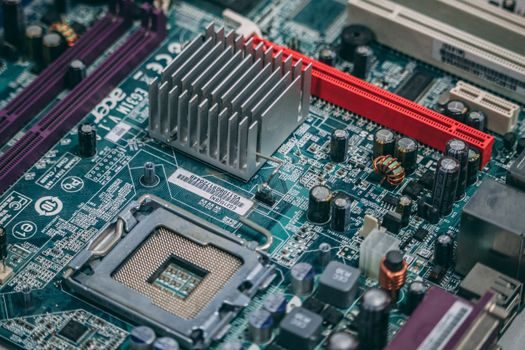
Server-class CPUs and the surrounding chipset remain an oligopoly: Intel Xeon Scalable, AMD EPYC, and IBM POWER / z-series for mainframe-class systems, with IBM z13 as the long-running mainframe platform that still ships for constrained-relief and cryptographic-hardware-feature use cases [S1]. Memory and storage silicon — server DDR4/DDR5 ECC RDIMMs, NVMe SSDs and SAS HDDs — is dominated by Samsung, SK hynix, Micron, Kioxia and Western Digital, with module assembly in Korea, Taiwan, Mainland China and Malaysia [S2].
Power, cooling and chassis subsystems show a wider geographic spread: 80 Plus Platinum/Titanium PSUs and CRPS form-factor supplies are largely built in Taiwan and Mainland China; rack-level PDUs and busbars come from US, German and Taiwanese vendors; and air-versus-liquid cooling decisions are tied to TDP, with single-phase cold-plate loops and direct-to-chip cold plates increasingly specified above 350 W CPU TDP and 700 W GPU TDP [S2]. The server-hardware.com aftermarket channel — chassis, fans, riser cards, backplanes, hot-swap cages, rails — is dominated by Taiwan and Mainland China OEMs, with US and EU distributors handling warranty and refurb flows [S5].
Comparison: Country Capacity by Server Class
Side-by-side, the build map is unambiguous. For rack servers, Taiwan and Mainland China dominate ODM/EMS capacity, the US handles high-value hyperscale and defence final-rack build, and Korea supplies the memory and storage silicon feeding all of them [S1][S2]. For tower servers, Mainland China and Mexico carry the largest assembly share for SME on-prem SKUs, with US and EU distribution channels handling end delivery [S2]. For blade servers, US and Japan hold the largest enterprise share via HPE, Cisco UCS and Hitachi, with blade chassis and midplane build concentrated in Taiwan and Mexico [S2].
For AI server SKUs specifically, the build is concentrated: Taiwan ODMs (Quanta, Foxconn, Wistron) plus US-OEM final integration (Dell PowerEdge XE, HPE Cray, Supermicro) carry the majority of the global capacity, with Mainland China (Inspur, H3C) handling the China-domestic portion [S2]. Component gating is real — advanced-node GPU and HBM supply, plus 800 Gbps/1.6 Tbps NIC and switch silicon, is the throughput ceiling for any country trying to scale AI rack output [S2].
Selection Criteria and Procurement Reality
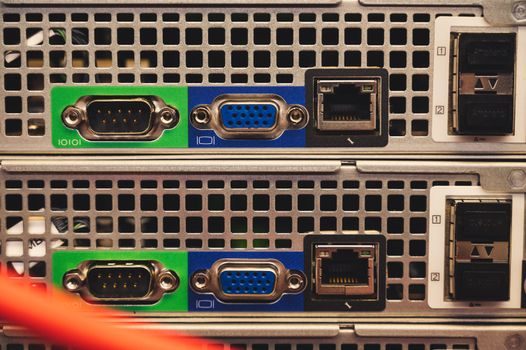
For a buyer evaluating where to source, four criteria carry the most weight. Lead time: Taiwan ODM plus Mainland China component sourcing is the fastest path to 1U/2U general-purpose SKUs; AI server SKUs run longer due to GPU/HBM allocation, typically 16–32 weeks versus 6–12 weeks for general-purpose rack [S2]. Standards and compliance: UL, CE, FCC, RoHS, REACH and Energy Star 80 Plus ratings are baseline for any cross-border shipment, with NEBS Level 3 required for telecom SKUs and TAA compliance required for US federal SKUs [S2]. Support and warranty: US and EU distribution channels carry the strongest next-business-day and 4-hour response coverage, with Taiwan and Mainland China channels stronger on price and weaker on same-day RMA in some regions [S2][S5].
Trade-off framing: the lowest unit cost comes from Mainland China ODM/EMS, the highest configurability from Taiwan ODM, the strongest warranty and shortest domestic US RMA from US-OEM final integration, and the strongest TAA / federal compliance from US-built SKUs only [S2][S5]. For industrial buyers scaling up discrete-component handling and assembly, the diaphragm pump selection gate is a useful parallel — capacity by country only matters once the spec gates are met. The same logic applies in adjacent process lines: the roller conveyor 2026 sourcing map shows how country capacity only resolves into a real procurement decision after drive type, roller spec and load band are fixed.
Limitations, Constraints and Failure Modes
Capacity by country is a snapshot, not a guarantee. US export-control rules on advanced-node GPUs and HBM limit which country can physically build certain AI server SKUs, regardless of brand on the front bezel [S2]. Single-country concentration in PCB, connector or memory supply creates a bottleneck — a Taiwan strait disruption or a Mainland China cluster lockdown moves lead times from weeks to quarters across all ODMs simultaneously [S2]. Standards coverage is uneven: NEBS-3 and TAA compliance are reachable only via a subset of OEM and ODM flows, and the same SKU shipped US-built versus China-built can carry different compliance paperwork [S2].
Aftermarket channel risk is also real. The server-hardware.com channel lists bulk-order discounts and same-day shipping on chassis, fans, backplanes and rails, but warranty support is OEM- or distributor-dependent and is not interchangeable across regions [S5]. For buyers running mission-critical rack fleets, a documented hardware-management-console workflow (IBM HMC-style) is the safer path for firmware, LPAR and cryptographic-feature handling on enterprise SKUs [S1][S6]. The forklift suppliers 2026 sourcing map shows the same concentration risk: when one country carries 60–80% of a category, geopolitical events move the price.
Trackable next nodes: (1) Tier-1 ODM capex announcements out of Vietnam and Thailand through Q3 2026, which will shift final-assembly share away from Mainland China; (2) any change to US advanced-node export controls covering AI server GPU and HBM allocation, which gates how much AI rack capacity any non-US country can absorb; (3) IBM z-series roadmap refresh, since the z13 platform remains the long-running mainframe reference for cryptographic-hardware-feature deployments and any successor platform reshapes the enterprise-capacity map [S1].
For component-level specifications, see architectural hardware, serial server, and pressure transmitter.