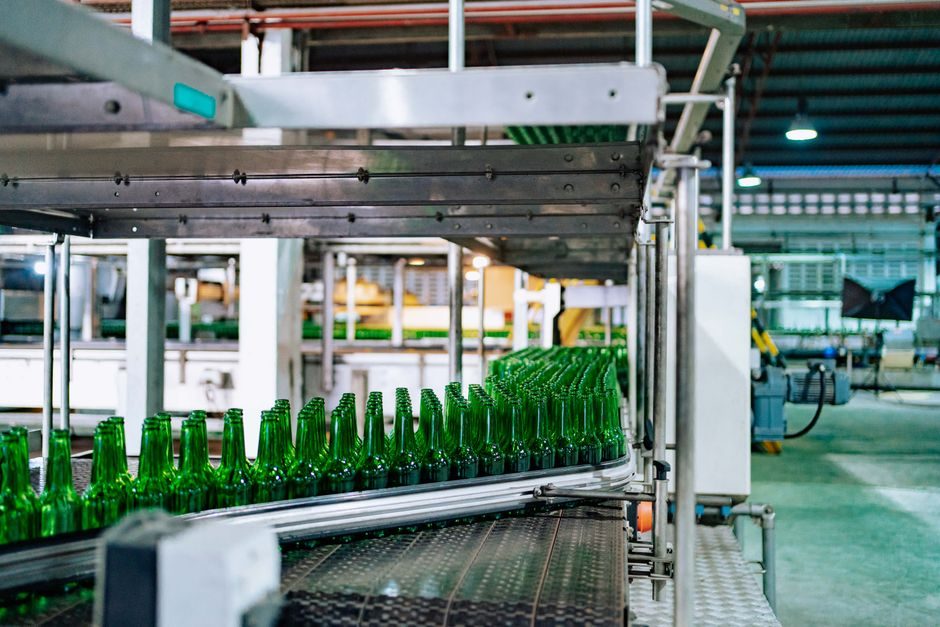
Roller conveyors are motorised, chain-driven, line-shaft or gravity idler sets whose selection is dictated by unit load, accumulation behaviour, and zone voltage; DirectIndustry lists 225 manufacturers and 581 products under the "roller conveyor / roller rail conveyor" family as of the May 2026 catalogue refresh [S1].
The supplier base in 2026 is heavily concentrated in India's Gujarat/Maharashtra corridor and China's Zhejiang/Jiangsu hub, with active OEM lines from SVT Engineering (India), Huzhou De-Nen (Zhejiang), Paradise Industries (Ahmedabad), and Youngsun Packing (China) all posting updated 2026 product and contact pages [S2][S4][S6]. For buyers, the first decision is drive family — gravity vs MDR (motorised driven roller) vs line-shaft/chain — because that choice sets roller diameter, tube material, and the control architecture downstream.
Gravity, Line-Shaft, and MDR — Drive Family Comparison
Youngsun's 2026 S-type flexible roller line, with 8 rollers per unit and 180° reorientation, is a representative gravity/light-driven SKU priced for small-footprint packaging cells [S6].
Line-shaft still wins where a single motor feeds 20–40 rollers in a low-curve, carton-handling line; MDR wins where zero-pressure accumulation and clean zone logic are required. A practical 2026 rule of thumb: above 100 kg/m dynamic load, the build shifts to chain-driven live roller (CDLR) with #40 or #50 chain and 1.9–2.5" (50–60 mm) diameter steel rollers per OEM case studies.
Roller Tube Materials, Diameters, and Load Bands
Roller diameter and tube material scale with unit load: 19–25 mm OD light-duty steel or PVC rollers handle parcels up to ~5 kg/roller; 50 mm (1.9") steel is the bulk-material-handling workhorse; 60–89 mm (2.5–3.5") galvanised or stainless rollers carry unit loads of 100–300 kg/roller on heavy pallet or drum lines [S1]. Tube options are mild steel (zinc-plated or painted), galvanised steel for humid/cold-store duty, stainless 304/316 for food/pharma washdown, and PVC or HDPE sleeves where carton scuff must be eliminated.
SVT Engineering's 2026 product line lists belt conveyors, roller conveyors and heavy-duty roller units for material-handling plants, signalling that Indian suppliers are still pairing roller with belt in a single contract — useful for tenders where a brown-field line needs matched equipment from one vendor [S2]. Rollcon Conveyors in India similarly bundles roller with slat, screw and bucket-elevator units, a common 2026 EPC pattern in sugar, cement and bag-handling plants.
Zero-Pressure Accumulation, 24V DC Zones, and Controls
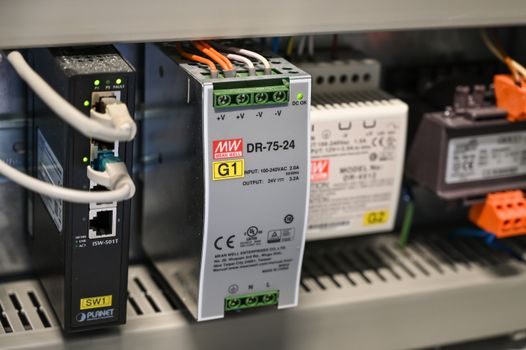
Zero-pressure accumulation (ZPA) is the default control logic in 2026 MDR conveyor tenders: each zone holds a carton until the downstream zone signals clear, then releases it, with 24V DC roller motors (typically 30–50 W) wired back to a PLC or zone controller over a single bus cable [S1][S5]. Roller centres of 75 mm, 100 mm and 150 mm cover 90% of carton/parcel lines; 50–60 mm centres appear on small-parcel e-commerce sorter infeeds.
For heavy pallet handling, the architecture reverts to chain-driven live roller (CDLR) with a single 0.37–1.5 kW gearmotor per section, often paired with VFD control rather than a zone bus. SVT's 2026 listing positions heavy-duty roller conveyors in this category, sized for industrial material-handling plants rather than parcel DC use [S2].
Bearings, Seals, and Maintenance Intervals
Roller bearings are typically 6202 / 6203 deep-groove ball bearings, pressed into a stamped end-cap; labyrinth or nitrile rubber seals separate the bearing from the process environment, and the roller bearing choice defines the roller's published L10 life (commonly 10,000–30,000 h in OEM catalogues) [S1]. Stainless 304 end caps and 440C bearing balls are the standard upgrade for washdown, while zinc-plated mild steel suffices for dry ambient duty.
Preventive replacement is normally scheduled on hours-run rather than failures, because a seized roller in a ZPA line silently collapses throughput. For curved sections — 30°, 45°, 60°, 90° — tapered rollers (typically 1.9"/50 mm at the inside of the curve and 2.5"/60 mm at the outside) maintain a constant carton speed across the arc and prevent skew [S1][S3].
Supplier Geography, MOQ, and 2026 Sourcing Levers
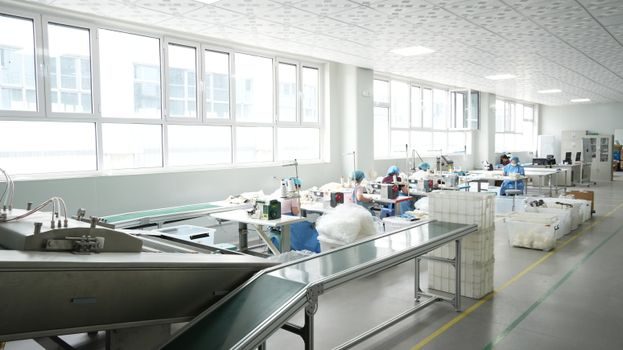
The 2026 sourcing map is bimodal: India's Gujarat (Ahmedabad — Paradise Industries) and Maharashtra (Mumbai, Pune — Rollcon, SVT) supply brown-field industrial and bag-handling lines, while China's Zhejiang (Huzhou De-Nen) and Jiangsu supply high-volume OEM rollers and flexible conveyors at aggressive MOQ tiers [S2][S4]. Youngsun's 2026 plastic-chain and flexible roller SKUs target small-footprint packaging cells with single-unit MOQs, in contrast to project-tender pricing from Indian EPC suppliers [S6].
Lead time in 2026 is the dominant cost lever after unit price: catalogue rollers from Chinese OEMs ship in 2–4 weeks, while engineered CDLR sections with gearmotors, guards and VFD panels routinely run 6–10 weeks ex-India. For a deeper dive on the chain-driven and pneumatic options that sit next to roller in a typical bulk-solids tender, the Pneumatic Conveying vs Chain Conveyor spec-driven selection guide lays out the engineering trade-offs, and the Vibrating Conveyor vs Mesh-Belt Conveyor comparison is a useful counterpoint where the line cannot tolerate rolling-element bearings. For engineered heavy-duty roller conveyor applications in oil & gas — including hazardous-area zone ratings and material upgrades — the oil & gas roller conveyor spec cut consolidates the material, drive and zone rules in one reference.
Selection Criteria and Common Spec Pitfalls
A spec-first 2026 checklist, drawn from active OEM listings, reads: (1) unit load per roller and total line load, (2) roller diameter, tube material and end-cap spec, (3) drive family — gravity / line-shaft / CDLR / MDR — with motor voltage and zone count, (4) curve angles and tapered-roller requirement, (5) environment — ambient, cold-store, washdown, hazardous-area — and matching roller / bearing material, (6) control interface — ZPA bus, PLC I/O, or VFD [S1][S3].
The three most common spec failures are: (a) under-specifying roller diameter for heavy drums or pallet loads, leading to shell deformation inside L10 life; (b) pairing a 24V DC MDR architecture with a 480V three-phase supply and no transformer/ZPA controller, which is an integration gap, not a roller defect; and (c) ignoring curve geometry on long runs, which forces operators to slow the line below the rated throughput. A road roller or compaction-roller comparison is sometimes confused in search, but compaction-roller OEMs do not overlap with conveyor-roller catalogues — the roller conveyor and roller chain families are the only relevant intersections.
2026 Verifiable Signals to Track

Three concrete signals to watch over the next two quarters: (1) the 2026 DirectIndustry catalogue update (last refresh 23 May 2026, 225 manufacturers / 581 products [S1]) is the cleanest public proxy for supplier count; (2) the 2026 listing cycle of Huzhou De-Nen and Youngsun in Zhejiang indicates the China flexible/light-duty roller supply remains active and updated in 2026 [S4][S6]; (3) Indian EPC suppliers SVT, Paradise Industries and Rollcon are still posting 2026 product pages with email-direct sales contacts, which is consistent with a project-tender sales model rather than an e-commerce pivot [S2].