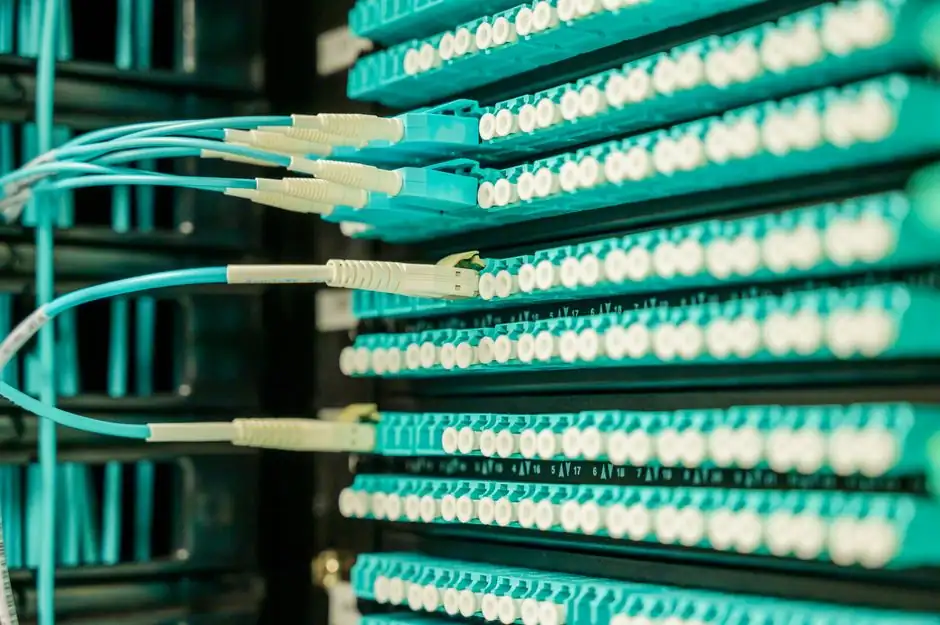
Chinese ODM and OEM server lines from vendors such as Inspur, Sugon, H3C, Lenovo (Beijing/Hefei lines) and Huawei TaiShan cover roughly the entire x86 and ARM rack-mount spectrum, with stock 1U/2U/4U SKUs typically quoted at 30-60 day lead times for export buyers [S1]. The dominant export port is Shenzhen for Pearl River Delta integrators, with Shanghai and Qingdao as secondary gateways; air-freight to Frankfurt or LAX runs 4-7 days, sea-freight 25-35 days for a 40 ft HQ container [S1].
Spec discipline matters more than brand recognition on this category: a 1U dual-socket E5-2680 v4 chassis, a 2U single-socket Ampere Altra Q80-30 build, and a 4U dual-socket SP5 EPYC 9554P node carry wildly different BOM weight, cooling envelope, and PSU derating curves, and a buyer who treats them as interchangeable will get a wrong quote on the first round. This guide walks through the engineering criteria that actually separate a workable China-sourced server quote from a junk one, drawing on the public server-hardware sizing references used by Oracle for Sun Management Center 3.5 and OpenStack Neutron deployments [S3][S4].
Define the Workload Before the SKU
The first filter on any China server quote is workload class, not chassis form factor. Oracle's Sun Management Center 3.5 sizing reference groups target platforms into four tiers: small (one UltraSPARC IIe class CPU, 1 GB RAM, 1 GB swap), medium (two UltraSPARC II class CPUs, 1 GB RAM, 1 GB swap), large (two UltraSPARC III class CPUs, 1 GB RAM, 1 GB swap), and extra-large (four UltraSPARC III class CPUs, 2 GB RAM, 1 GB swap) [S3]. The 4-class split is exactly the frame to keep in 2026: entry edge nodes, mid-range virtualization, dense compute, and AI/EDA heavy nodes.
For virtualised compute, the OpenStack Neutron ML2 reference specifies a minimum of two Oracle servers with identical compute-node configuration, a 4 GB RAM floor per instance VM plus a 4 GB overhead reserve, which means a 16 GB node supports three 4 GB VMs before any hypervisor overhead [S4]. The same 4 GB-per-VM + 4 GB-overhead rule of thumb scales linearly to 64 GB, 128 GB, and 256 GB DDR5 nodes that dominate current China ODM quotes; verify the supplier states a per-channel DIMM count, not just a total GB figure, because population rules decide whether the rated 4800 MT/s speed is actually achieved.
Form-Factor Decision: 1U vs 2U vs 4U vs Multi-Node
Four physical templates cover 90% of China-sourced server asks, and the decision should be locked before RFQ: 1U single/dual socket for general compute, 2U dual socket for storage-rich or GPU-light nodes, 4U dual socket for 4-8 GPU Direct-Attach or high-wattage CPU SKUs (SP5, SP6), and multi-node (2U4N or 4U8N) for hyperscale ARM (Ampere Altra, Huawei Kunpeng 920) [S1].
Key specification contrasts: a 1U chassis typically supports 8-10x 2.5" hot-swap bays and a single 800-1100 W redundant PSU pair; a 2U raises that to 12-24x 3.5" or 24-25x 2.5" with 1300-1600 W redundant; a 4U reaches 36-60x bays and 2000-2400 W redundant 80 PLUS Titanium PSUs [S1]. Multi-node chassis sacrifice per-node expansion (usually 2x 2.5" + 1x PCIe slot per sled) for density (typically 4 or 8 nodes per 2U or 4U frame). Match the chassis to rack PDU capacity early: a fully populated 4U 8-GPU node can draw 3.5-4.5 kW, which dictates 30 A C13/C15 or 60 A C19 PDU provisioning at the rack end.
CPU and Memory Platform Choices
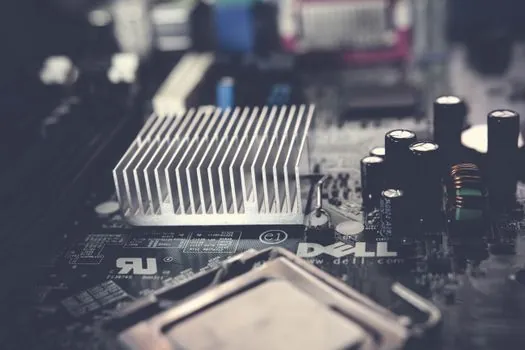
Three CPU platforms cover the export-shipping China server market: Intel Xeon Scalable (4th and 5th Gen, LGA 4677 and LGA 4710-2), AMD EPYC 9004/9005 (SP5 and SP6), and ARM (Ampere Altra/Altra Max, Huawei Kunpeng 920/930) [S1]. Xeon wins on single-thread IPC and software ecosystem, EPYC wins on core count and memory bandwidth (12-channel DDR5 on SP5), ARM wins on core-per-watt for hyperscale workloads.
Memory selection must follow platform rules: SP5 is 12-channel DDR5 with one DIMM per channel (1DPC) being optimal, 2DPC dropping speed from 4800 to 4400 MT/s on most SKUs; LGA 4710-2 Xeon supports 8-channel DDR5 with 1DPC at 5600 MT/s and 2DPC at 4400 MT/s. ECC RDIMM is the China default; ask explicitly for the part number, since some integrators substitute LRDIMM or even non-ECC UDIMM on entry SKUs to hit a price point. Cooling envelope: a 350 W SP5 CPU needs a 2U or taller chassis with direct-attach heat-pipe cooling; do not accept a 1U bid for sustained 350 W parts.
Storage, NIC, and PCIe Generation
Storage backplane is a frequent surprise in China quotes: a '24-bay 2.5"' SKU can mean either a direct-attach SAS/SATA backplane, an NVMe-only backplane, or a tri-mode (NVMe/SAS/SATA) backplane, and the price delta is meaningful. Tri-mode backplanes (Broadcom SAS4116 retimer based) add roughly 15-25% to chassis cost but remove the need to lock the drive type at RFQ time. For NVMe-only AI workloads, verify PCIe generation: Gen4 x4 drives cap at about 7 GB/s sequential, Gen5 x4 at about 14 GB/s; the backplane and retimer must be Gen5 rated to realise Gen5 drive throughput. [S1]
On the network side, specify OCP 3.0 slot count and PCIe generation rather than vendor name. Common ODM slot patterns: 1x OCP 3.0 + 2-3x standard PCIe 5.0 x16 in 1U, 1-2x OCP 3.0 + 4-6x PCIe 5.0 in 2U, 1-2x OCP 3.0 + 6-8x PCIe 5.0 in 4U [S1]. For 25 GbE or 100 GbE NICs, confirm the OCP slot is PCIe 5.0 x16, not PCIe 4.0, since a Gen4 slot bottlenecks a 100 GbE NIC at multi-queue workloads.
Compliance, Standards, and Acceptance Testing
For EU and US-bound shipments, the relevant compliance stack is: CE-EMC (EN 55032/55035), CE-LVD (EN 62368-1), FCC Part 15 Class A, and for data centres, RoHS 3 (EU 2015/863) and REACH SVHC declaration [S1]. China-ODM servers from tier-1 vendors ship with these by default; tier-2/3 OEMs often require a paid pre-shipment audit. Ask for the test report numbers and the issuing lab, and verify the lab is CNAS- or A2LA-accredited; self-declared CE without a Technical File is a red flag.
Acceptance testing at the integrator site or at the destination dock is where many China server deals go wrong. A workable burn-in plan is 48-72 hours of memtest86+ on every DIMM slot, 24 hours of prime95 small-FFT on every core to flag thermal throttling, and a sequential read/write sweep on every storage bay. Pre-shipment inspection (PSI) by a third party such as SGS, Bureau Veritas, or a buyer-engaged QC firm costs 0.8-1.5% of the order value and catches roughly 6-8% defect rate that a sample-only inspection misses. For AI workloads, also request a 24-hour GPU-to-GPU NCCL all-reduce test on every GPU sled.
Common Pitfalls and How to Avoid Them
Pitfall 1: quoting by chassis only. Always bind the CPU SKU, RAM density and rank, backplane type, NIC slot count, and PSU wattage and efficiency tier in the RFQ. Pitfall 2: accepting 'compatible' drive bays. SAS-only, SATA-only, NVMe-only, and tri-mode backplanes are not interchangeable; the wrong choice voids drive warranty. Pitfall 3: ignoring BMC and IPMI firmware source. Ask whether the BMC is OpenBMC, a vendor proprietary stack, or Redfish-compliant; lock the firmware version in the contract, since field updates can change thermal tables. [S1]
Pitfall 4: under-specifying the PSU. A 4U 8-GPU node with 700 W H100-class parts draws 6-8 kW at full load, which requires 2x 240 V 3200 W Titanium PSUs in 2+2 redundant mode, not 2x 2000 W. Pitfall 5: skipping the ECC and memory-rank audit. China integrators sometimes ship 2Rx4 RDIMMs where 4Rx4 LRDIMMs were ordered to save cost; check the SPD table on every unit. For buyers mapping out the broader data-centre build, the Data Center Procurement Strategy: Spec-First Sourcing for AI-Era Builds companion piece lays out the same RFQ discipline for switches, UPS, and rack PDUs.
Trackable signals: monitor the next 90 days for revised China-export CCC lists (server chassis typically fall under CNCA-C09-01), any change in 80 PLUS Titanium certification backlog (currently 6-10 weeks for the 2400 W SKU), and the Ampere Altra Max Q128-30 availability window. For buyers layering switches and out-of-band management on top of the server shortlist, the Data Center Sourcing from China: Spec-First Buyer Map for 2026 Builds guide carries the matching RFQ template for OCP 3.0 NICs and 100 GbE ToR switches, while the server hardware procurement strategy: a spec-first 2026 buying guide article extends the same chassis-vs-workload framing to GPU-dense AI nodes and edge appliances.
For component-level specifications, see serial server, architectural hardware, and linear guide.