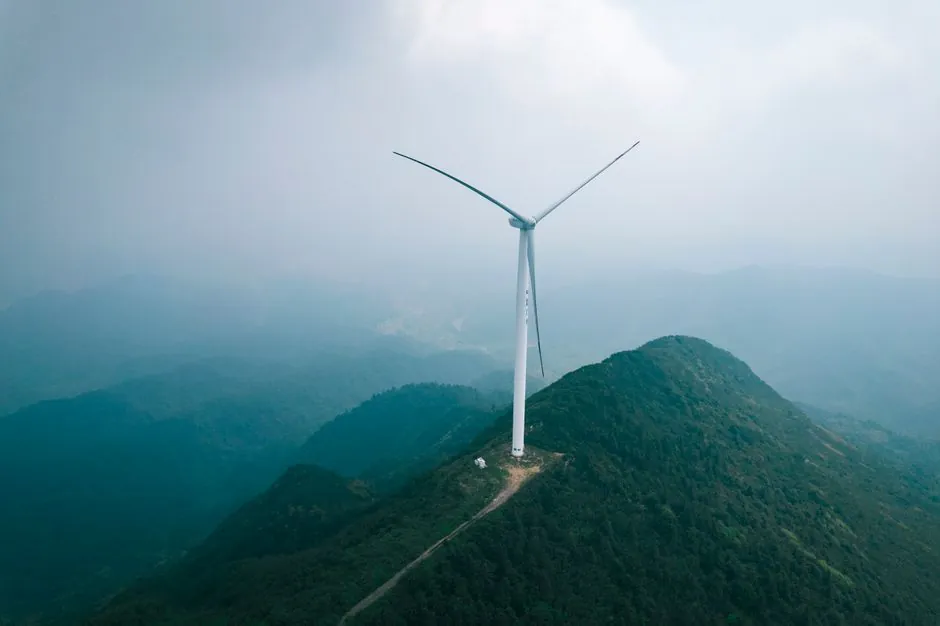
Senwei Energy Technologies Inc, set up in 1996, lists a small-wind product range that starts at the SWT 1 kW mini series and steps up through 3 kW, 5 kW, 10 kW, 20 kW, 30 kW, 50 kW and 60 kW horizontal-axis units, all positioned as a dedicated European-grade export line from a Chinese OEM base [S1].
The same OEM site documents a 2026 export cadence of small and medium turbines into Europe, Pakistan, Iceland, Afghanistan and Africa, with shipping formats already proven as full 40' HQ container loads of 20 kW units, which is the practical upper bound a single ocean container can carry for a turbine + tower + inverter kit [S1].
Certification Pack Buyers Should Demand Before Any Deposit
The Chinese small-wind export base published by Senwei explicitly states MCS, UL, CE and RoHS certification coverage on the small-wind product family, with a stated compliance posture against the IEC 61400 series for small wind turbines [S1]. That pack matters because utility-scale buyers in the EU, Australia and North America will reject paperwork that only shows CE, since MCS (UK Microgeneration Certification Scheme) and UL 6141 / UL 6142 are the actual feed-in-tariff and grid-interconnect tickets in those markets.
For a 5 kW to 20 kW pitch-regulated machine heading to a grid-tied site, the spec sheet must reference the design standard (IEC 61400-2 for small wind), the safety standard (IEC 61400-1 or its national equivalent), the EMC standard for the grid-tie inverter, and the blade integrity test method; absence of even one is a deal-stopper. Sourcing agents that treat certifications as a checkbox (a CE sticker on a nameplate) are the single most common failure mode this editor has seen in failed 10 kW shipments to Europe [S1].
Power Class Selection: 1 kW to 10 kW Off-Grid, 10 kW to 60 kW Grid-Tied
The Senwei catalog splits cleanly into two operating regimes: 1 kW to 10 kW units are typically sold with off-grid controllers for battery charging at 48 VDC or 240 VDC battery banks, while 10 kW to 60 kW units are sold with grid-tie inverters and hybrid controllers for behind-the-meter or remote-village microgrid use [S1]. A direct example on the OEM news feed: the SWT-5kW variable-pitch turbine was configured to charge 240 VDC lithium battery banks in an Iceland export, while the SW-20kW was shipped as a full grid-connected system to a European distributor [S1].
For telecom, rural water pumping and off-grid homes the 1 kW to 5 kW class is the sweet spot, with 3 kW variable-pitch off-grid charging systems already shipping to sites like Afghanistan where grid access is non-existent [S1]. For agricultural processing, cold storage and small commercial loads the 10 kW to 30 kW hybrid class dominates, and 50 kW to 60 kW units typically feed small industrial parks or community microgrids where three-phase grid interconnect is feasible.
Comparison of Main Options a Chinese Small-Wind Buyer Will See

Three structural choices drive total cost of ownership and they should be lined up against the buyer's site profile before any RFQ is sent. First, horizontal-axis three-blade upwind (HAWT) versus vertical-axis (VAWT): the 2026 Senwei news feed shows both topologies in active export, including 20 kW vertical-axis grid-connected systems shipped to Pakistan alongside the standard horizontal-axis SWT line [S1]. VAWTs accept wind from any direction and tolerate turbulent rooftop and canyon sites, but have lower aerodynamic efficiency per swept area than a well-designed HAWT of the same nameplate rating.
Second, fixed-pitch stall-controlled versus variable-pitch aerodynamic control: the 5 kW and 10 kW Senwei units exported in 2026 are explicitly variable-pitch machines, which gives better storm survival and a smoother power curve in gusty mountain sites compared to fixed-pitch passive stall [S1]. Third, grid-tie inverter topology: pure sine wave grid-tied inverters (the "completely sine wave inverter and controller" Senwei lists as a companion product) are the only acceptable choice for feeding a utility-grade AC bus, while modified sine wave units are limited to resistive off-grid loads. Across these three axes, the typical decision matrix a process engineer should walk through is: site wind regime (mean speed and turbulence intensity), grid presence (yes / no / weak), certification demand (MCS / UL / CE only), and maintenance access (annual climb versus quarterly truck-roll).
What a Chinese Small-Wind Sourcing RFQ Must Contain
A complete RFQ package from a Chinese small-wind OEM in 2026 typically contains the power curve (kW versus m/s at standard air density), annual energy production (AEP) at the buyer's site mean wind speed, cut-in / rated / cut-out wind speeds in m/s, rotor diameter in meters, tower height options (typically 9 m, 12 m, 18 m, 24 m for the 5 kW to 30 kW class), blade material (typically glass-fiber reinforced composite for the Senwei line), generator type (permanent-magnet generator or PMG is the standard small-wind architecture), controller topology and grid-tie inverter model with its own certification pack [S1]. Without the power curve, AEP and cut-out figures a quote is not comparable to a competing quote, because nameplate kW alone hides a 2x difference in real energy yield between a well-designed and a poorly designed 10 kW machine.
Third-party logistics is the second piece most first-time importers miss. The OEM confirmed a 40' HQ container can fit 2 sets of the 20 kW turbine with associated tower, inverter and controller hardware, which sets a benchmark container density for that power class; oversizing a single container shipment is a common mistake that triples inland freight cost per kilowatt delivered [S1].
Service, Spares and the Resale Market Reality
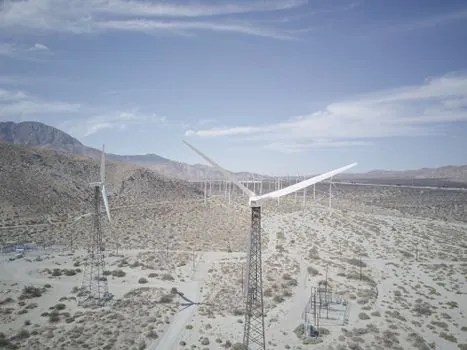
For larger utility-scale machines (1 MW to 2 MW class) the secondary market is mature: the Dutch broker Wind Turbine Service B.V. lists fully overhauled Nordex N90, Micon 750-400/100, Vestas V90-2MW and Vestas V80-2MW units with 5 to 10-year warranties as of 2026, which sets a hard price floor on what a comparable used Chinese utility-scale unit would need to beat in Europe [S2]. For small and medium turbines in the 1 kW to 60 kW class, the Chinese OEM base handles warranty and spares direct, since no independent secondary market exists at that scale, so the buyer's risk is concentrated in the OEM's solvency and parts inventory, not in equipment availability.
Annual maintenance for a properly installed 10 kW to 20 kW small wind turbine consists of blade inspection, tower bolt torque check, yaw bearing grease, controller firmware update and inverter filter service, all of which can be done by a two-person crew with rope access rather than a crane, which is one of the structural cost advantages of the sub-100 kW class over utility-scale machines that require 80 m hub-height specialist crews [S2].
Adjacent Equipment a Sourcing Spec Should Not Skip
A wind turbine is only as good as the balance-of-system around it, and a spec that omits the inverter, controller, tower, foundation and grid-interconnect protection will fail at commissioning. The industrial valve chain on the hydraulic pitch drive, the pressure transmitter on the hydraulic accumulator, and the flow meter on the cooling loop of the larger 50 kW to 60 kW class units are all real sub-assemblies in a modern small-wind drivetrain, not optional accessories, and they should be specified with their own IEC/ATEX/IECEx compliance where the turbine is installed in a hazardous or coastal site. [S1]
For pure mechanical balance the linear guide inside the yaw system and the crossed roller guide in the nacelle yaw bearing preload are the two motion-control components that determine whether a small-wind machine will yaw smoothly for 20 years or fail its bearing in year 5, so a buyer who pushes the OEM on the make and model of these two components will usually see a step-change in the quality of quotes received.
Trackable Signals to Watch Between Now and the Next Sourcing Cycle
Three signals will tell a 2026-Q4 sourcing decision whether to pull the trigger. First, the Chinese OEM's own 2026 export cadence: Senwei has shipped 20 kW grid-connected kits to Europe on 2026-08-03 and 10 kW hybrid kits to Poland on 2026-07-09, which is a measurable confirmation that the small-wind export pipeline out of China is still flowing in mid-2026 despite broader wind-sector headwinds [S1]. Second, the turbine flowmeter and inverter sub-supply chain: if lead times on the grid-tie inverter extend past 12 weeks, the whole 10 kW to 30 kW small-wind kit will slip, since the inverter is the longest-tail sub-assembly. Third, the used utility-scale resale market in Europe: any sustained downward pressure on prices for overhauled Vestas V80-2MW and V90-2MW units will eventually drag small-wind pricing down with it as commercial-scale buyers reallocate capex toward small-wind microgrids [S2].
For cross-industry procurement signal context, a recent read on overhead bridge crane selection for quarrying shows the same spec-first discipline (rated load, duty cycle, certification pack) that applies when sizing tower erection cranes for 30 kW to 60 kW small-wind projects, and the same lesson holds for pillow block bearing selection for mining, where sealing and insert spec dominate total cost of ownership, just as the inverter and controller spec dominate small-wind total energy yield.