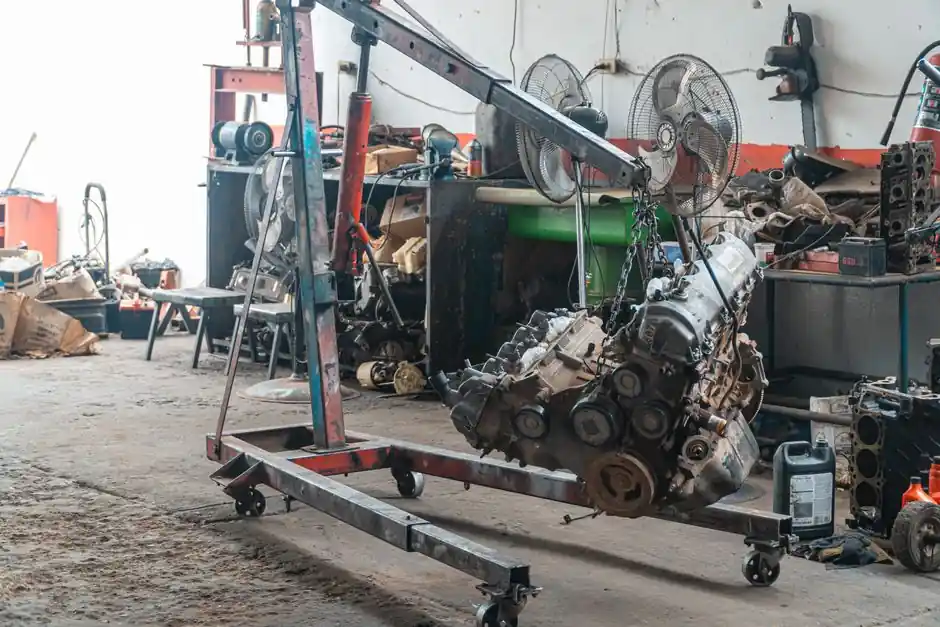
A servo motor hydraulic system can improve die casting energy efficiency compared with a traditional induction-motor and PQ-valve arrangement [S1][S8].
The comparison applies to the hydraulic power unit of a die casting machine, with savings driven by pump speed, idle time, injection demand, and cycle time [S1][S4].
Servo Pump and Fixed Pump Energy Difference
A fixed-speed pump motor runs continuously, while the PQ valve controls the system's hydraulic pressure and oil volume [S1].
A servo system can switch the hydraulic pump motor on and off and differs from a traditional arrangement using an induction motor and PQ-valve control [S1].
For procurement, require the supplier to demonstrate savings against the baseline machine, including the measured cycle, die, product, and operating schedule.
Decision Criteria for Hydraulic Pump Selection
Compare the two options on four criteria: idle energy, control response, conversion effort, and operating exposure. The servo-pump arrangement normally wins on energy and pressure control, while a retained fixed pump can have lower conversion work for a machine with compatible controls and a favorable duty cycle. [S1]
On idle energy, a continuously running induction-motor pump consumes power even when the hydraulic circuit is not delivering full flow [S1]. A servo system can switch the motor off and use closed-loop feedback to supply pressure only when required [S1].
The traditional arrangement relies on a PQ valve to control hydraulic pressure and oil volume [S1]. An adjustable-frequency drive can also vary pump motor speed to follow cycle demand and reduce wasted energy [S4].
On conversion effort, a new machine can integrate the servo architecture before commissioning, whereas retrofitting an operating cell requires electrical, hydraulic, control, and safety work. The available research does not provide a universal retrofit cost, so a site quotation is more useful than an assumed percentage saving.
Where Servo Pumps Fit Best
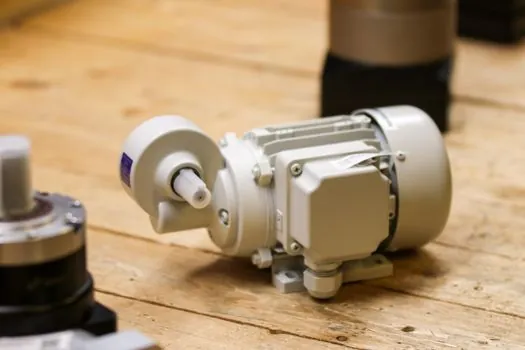
Servo hydraulics fit machines with substantial idle periods, frequent pressure changes, or energy targets linked to production data.
Three die casting machines and six product types were used to validate an energy-consumption prediction approach based on product, die, equipment, and process parameters. That level of model accuracy supports comparative engineering studies, but a plant acceptance test remains necessary because the model does not replace metering on the installed machine [S3].
For production planning, dry-cycle time is a useful baseline, but pump energy must still be checked against actual hydraulic demand and idle intervals. The guidance on using die casting dry cycle time for output estimation can support load calculations without proving a particular pump will meet an energy target.
When a Fixed Pump Remains Acceptable
A fixed-speed hydraulic pump remains acceptable when the existing machine is mechanically sound, its hydraulic controls meet process requirements, and the measured operating schedule leaves limited scope for demand-based control. The key decision is not pump age alone; it is the difference between actual energy use and the energy required by the process. [S1]
Troubleshooting and maintaining hydraulic components are important to the successful daily operation of die casting equipment [S5]. The material addresses contamination control, fluid flow, hydraulic pressure, and the importance of hydraulic systems to part quality [S5].
Frequency conversion provides an intermediate control option. A KE300A application description identifies high-pressure cut-off as a waste of energy consumption by the oil pump motor [S6]. Separately, a 2024 simulation and experimental study found that a systematic energy-management and control method reduced energy consumption by about 20% versus conventional valve control [S7].
Control Architectures and Energy Outcomes

An adjustable-frequency drive can vary pump-motor speed to change pump output to suit cycle demands and minimize wasted energy, while a servo-driven pump motor can be switched on and off [S1][S4].
Do not treat these figures as additive. They describe different machines, implementations, and baselines, so combining 20%, 40%, and 60% would produce an invalid specification.
Measurement, Commissioning, and Maintenance
Measure electrical input power at the pump motor, hydraulic pressure, flow, cycle time, idle time, and casting output over representative production. A savings claim should state the baseline pump arrangement, the test period, the product and die, the number of machines, and whether auxiliary heaters, the furnace, and the die-lube unit were excluded. [S1]
Commission the servo system against real machine functions rather than only a no-load bench test. Record injection pressure, holding pressure, shot velocity, fill behavior, and repeatability. The cold chamber machine architecture may be relevant to the hydraulic baseline because the power unit supports injection, holding, and clamping functions, while the hot chamber machine arrangement has a different hydraulic load profile and should not inherit the same savings assumption.
Maintenance planning must include the servo motor and drive, pump, pressure and flow feedback devices, hydraulic fluid condition, filtration, cooling, and contamination control. Hydraulic-system training explicitly addresses NPT, NPTF, SAE and JIC fittings, quick connects, pump cavitation, erosion, and filtration as part of die casting maintenance practice [S5].
Procurement and Acceptance Requirements

Specify the acceptance baseline, permitted operating envelope, and fallback behavior in the purchase package. Request measured kWh per shot and kWh per accepted casting, together with power demand at standby, clamping, injection, holding, and die-cooling stages. [S1]
For a supplier claim of 40–60% saving, require a controlled comparison at equal output and comparable product quality. Confirm whether the result applies to all tonnages or only the tested machine, and whether the calculation includes idle time, standby heat, drive losses, and hydraulic recovery [S8].
Use the energy model developed by Chen and colleagues as a screening tool for product and process comparisons. Its 85.55% energy-prediction accuracy was demonstrated across three machines and six product types, while production-time prediction reached 91.64% [S3]. Validate any business case with physical metering, because oil temperature, hydraulic condition, and production mix can change the duty imposed on the pump.
Specify servo-pump hydraulics when measured fixed-pump losses justify the conversion and the cell has qualified electrical, hydraulic, and control support. Retain a fixed pump when replacement cost dominates the verified benefit; in that case, evaluate frequency control or operating controls as the intermediate path. Track two acceptance signals: kWh per accepted casting and the percentage of pump-motor operating time at excessive hydraulic output.