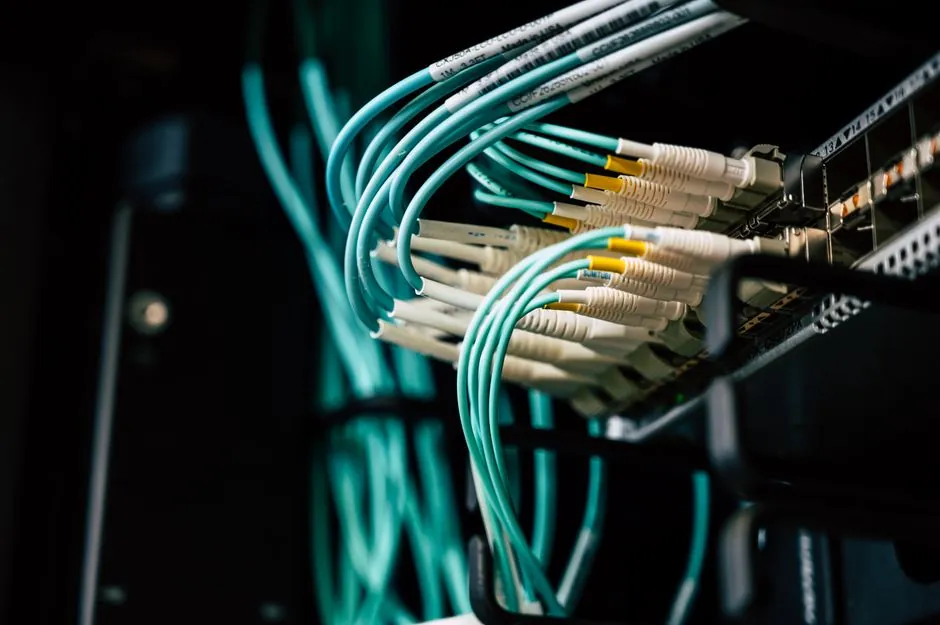
Wired networks retain the speed and diagnostic-data advantage for permanent installations, while wireless nodes cut cable, conduit and installation disruption at remote or temporary detection points [S6].
The decision covers permanently mounted combustible or toxic-gas detectors, not portable instruments carried by personnel, and must account for safety rating, alarm integrity, communications, power and lifecycle cost.
Architecture and Safety Function
A fixed gas detection system may contain one detector or hundreds of detectors hardwired to a wall-mounted controller, while wireless systems place fixed monitoring points without a cable run to the control system [S5]. Both architectures support continuous area monitoring, but they are not equivalent in the safety functions they can credibly perform.
Battery-powered wireless detection is intended to extend coverage where wiring is uneconomic, not to replace a permanent hardwired system that must carry a SIL rating and initiate a shutdown [S1]. Dräger states that smart wireless gas detection solutions can support monitoring and maintenance in tank farms and other difficult-to-access areas of the chemical, oil and gas, and process industries [S4].
Specify wired detection when the detector output participates in an automatic shutdown, alarm interlock or other safety instrumented function requiring predictable availability and a controlled failure strategy. Specify wireless where the practical alternative is no fixed coverage, including remote wellheads, unmanned assets, temporary turnarounds, construction commissioning and hazards identified after plant construction [S1].
Selection Criteria That Change the Decision
Installation route is the first decision criterion because cable can cost several times the detector price when routed through a live plant, around structures or across yards [S1]. Wireless nodes eliminate the cable and conduit run, while fieldbus-connected wired devices can carry substantial diagnostic data [S6]. That makes the economic case strongest where long cable routes, difficult access or operational disruption dominate the installed cost.
The second criterion is required safety performance. A fixed network with a documented SIL assignment is generally the cleaner choice for shutdown service, subject to the selected detector, logic solver, proof testing and final SIL calculation. Wireless products require an equally rigorous assessment of radio failure, battery condition, interference, message loss, coverage and fail-safe behavior.
Power and serviceability determine the third criterion. Wireless deployment avoids arranging a fixed power supply at every point, and the MeshGuard detector uses battery power with field-replaceable precision sensors [S1]. Wired installations avoid routine battery replacement at the detector but require cable, power and grounding infrastructure.
The fourth criterion is system integration. Wireless systems can log data onboard and provide RTU communication to PLC or DCS systems, with remote relay modules for audible and visual alarms or emergency shutdowns [S2]. Confirm the actual protocol, register map, fail-state behavior and interface responsibilities during design rather than treating wireless as a drop-in replacement for a wired loop.
Wired and Wireless Compared by Decision Criterion
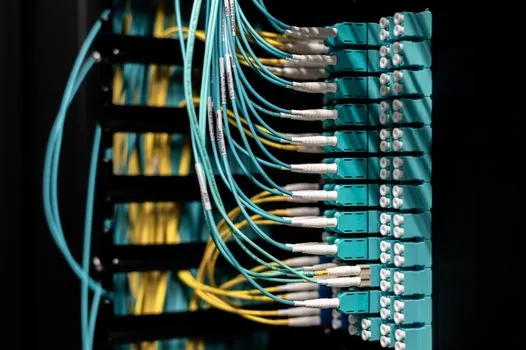
<strong>Installed cost:</strong> Wired detection carries higher civil and electrical cost where each point requires armoured cable, conduit and field power. Wireless has the stronger case for remote, temporary, post-hazard or brownfield locations where cable routes are disproportionate to the detector cost [S1].
<strong>Response and diagnostics:</strong> Wired systems retain an edge on speed and can deliver richer fieldbus diagnostic data [S6]. Wireless mesh networks can reroute around a failed node and extend coverage beyond a single radio link, but radio quality, battery state and message integrity must be validated [S1].
<strong>Expansion:</strong> Both can expand, but wireless nodes can be added to an existing network with limited disruption to operations [S2]. Wired expansion requires route design, cable pulling, termination, testing and plant-access planning.
<strong>Safety-rated duty:</strong> Wired is the default selection for a permanent SIL shutdown function; wireless can be used where an engineered wireless product has the required rating and the complete safety architecture has been assessed [S1][S4].
<strong>Maintenance:</strong> Wired systems remove cable faults from the troubleshooting path but expose cable and lightning-related damage risks [S2]. Wireless systems remove much of that cable infrastructure while adding battery, radio and node-availability checks to maintenance tasks.
Applications Where Wireless Nodes Fit
Wireless fixed detection fits sites where detection points are physically separated from a practical cable route. Gastech identifies remote wellheads, unmanned assets, temporary shutdown and turnaround monitoring, construction and commissioning before the permanent system exists, and hazards that appear after construction [S1]. These are fixed monitoring points deployed without cable, not portable detectors carried by workers.
Large or awkward industrial areas are another appropriate application. The MeshGuard architecture lets each monitor relay for other monitors, extends coverage beyond one radio link and reroutes if one node drops out [S1]. RC Systems describes wireless gas detectors and monitors for continuous monitoring of toxic and combustible gases in industrial environments [S2].
Wireless systems can also support temporary or expanding coverage. Dräger identifies tank farms and difficult-to-access chemical, oil and gas areas as suitable applications, including short-term projects and incident response [S4]. A portable detector remains the appropriate answer where continuous fixed coverage at that exact location is unnecessary and personnel will carry the instrument into the hazard, a distinction covered in the fixed versus portable gas detector comparison.
Constraints, Failure Modes and Sourcing
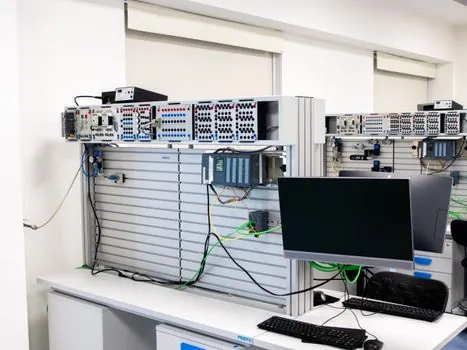
Wireless selection must address radio propagation, interference, network congestion, battery depletion, node loss and the consequences of a missed alarm. A mesh network can reroute around a failed node, but that feature does not establish SIL suitability or prove uninterrupted delivery under every plant condition [S1]. Site surveys, network design, configuration control and documented response testing are mandatory engineering activities.
Cybersecurity also affects architecture. Connecting a detector to enterprise Wi-Fi can expose an industrial control network if the device or its update path is compromised [S3]. A dedicated, controlled wireless network, strict device onboarding, patch management and network segmentation are preferable to casually attaching safety devices to general-purpose IT infrastructure.
For wired systems, verification should cover cable type, routing, shielding or grounding where required, loop resistance, continuity, power distribution, controller input compatibility and end-to-end alarm tests. For wireless systems, add radio coverage, interference, backup-power or battery-discharge tests, message-loss behavior and controller outage response.
Every fixed detector also requires the correct gas, range, alarm setpoints, enclosure, hazardous-area protection and calibration strategy. Catalytic-bead sensors can be less reliable in oxygen-deficient atmospheres, while infrared sensors suit oxygen-deficient applications and resistance to poisoning but have higher power requirements [S5]. These constraints can outweigh the installation-cost advantage of wireless.
Practical Selection Workflow
First map every required detection point, hazard, alarm action and SIL demand. Separate points that must initiate an automatic shutdown from points that only need continuous warning, then identify locations where a permanent cable route is unavailable or uneconomic. That partition defines whether the project is genuinely mixed architecture rather than a wholesale wired-versus-wireless debate. [S1]
Next compare total installed and lifecycle cost. Include detector price, cable and conduit, power, radio infrastructure, controller capacity, commissioning labor, battery replacement, calibration, radio-site surveys, cybersecurity controls and proof testing. Wireless is usually strongest where multiple long routes are required, while wired can be economical where cable trenches or existing infrastructure already reach the area [S1][S2].
Finally require a proposal to state detector model, target gas, measurement range, alarm thresholds, enclosure and protection concept, communication protocol, controller capacity, power arrangement, available diagnostics, battery interval where applicable, data integration and the basis for any safety rating. A generic statement such as “wireless” or “SIL capable” is not a procurement specification.
The trackable decision signals are the number and length of inaccessible cable routes, the number of points assigned to automatic shutdown, and the controller and battery maintenance capacity; these determine whether the project should use wired, wireless or a documented hybrid design.