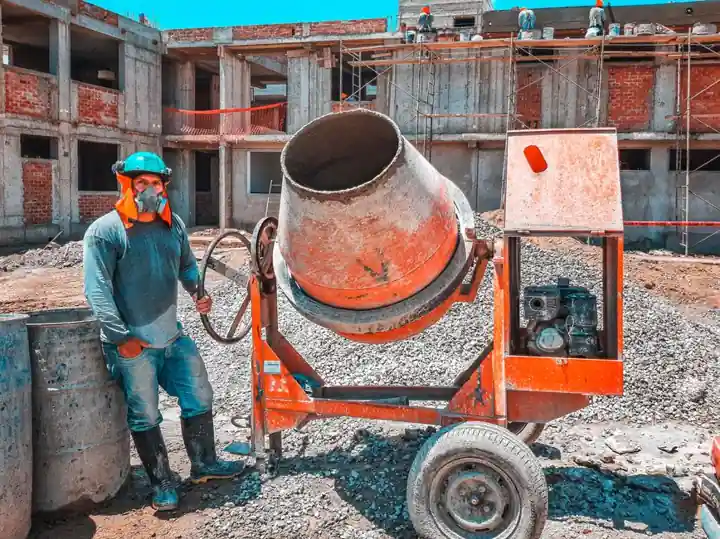
A concrete groove cutter may exceed 100 dBA, but assigning that figure to a highway machine requires a specified model, operating condition and measurement distance [S8].
FHWA inventories cover multiple noise descriptors, including LAeq, Lmax and L10, so a contractor cannot combine a machine’s nameplate value with another source’s reference distance and call it a site rating [S2].
Separate the Noise Metric Before Comparing Equipment
These quantities are not interchangeable: LAeq represents an equivalent continuous level over a defined period, Lmax represents a maximum level, L10 identifies a statistical exceedance level, and sound power describes the source rather than the sound measured at one location.
For a procurement file, the minimum defensible package is therefore the equipment model, blade or cutter configuration, operating speed, concrete or joint condition, measurement duration, microphone height and distance. An unqualified 105 dBA label lacks the context needed for a work-zone noise prediction or hearing-control plan [S2].
Use Measurement Distance and Time as Rated Conditions
A sound level without a distance is not a usable equipment rating because the observed level depends on both source output and the measurement position. Construction-equipment inventories commonly normalize measurements to a reference distance, with examples using 50 ft, while the FHWA handbook warns that inventories are not uniformly structured [S2][S7].
The measurement period matters just as much as the distance. A cutter idling at one location, cutting continuously for 15 minutes and cutting a transverse joint for 20 seconds can produce three different LAeq or Lmax profiles even when the machine and blade are unchanged [S2].
Impact noise is especially difficult to generalize. A cutter specification should identify which event is being rated and should not substitute an operating-equivalent value for the peak event relevant to the work zone.
Compare Wet-Cutting and Engine-Loading Duties
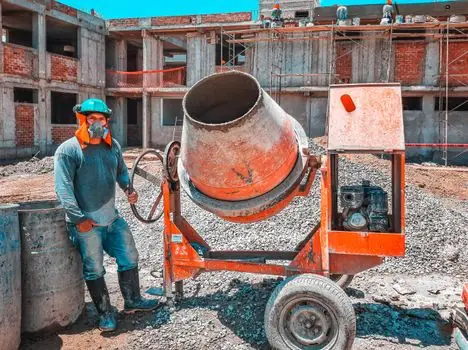
Concrete groove cutters combine at least 3 identifiable noise sources: the cutting assembly, the prime mover and any auxiliary water supply. The FHWA classification separates steady operation from sporadic impact sources, so procurement comparisons should separate continuous engine load from cutting transients rather than report one composite score [S2].
The sound-control calculation for a highway work zone must also preserve distance assumptions. For example, a reference at 50 ft, equivalent to 15.24 m, can be converted only when the geometry is known and the source is treated as a point source for the intended screening calculation. Converting a fixed-position or line-source result requires different assumptions, so copying a generic logarithmic adjustment from one machine to another can misrepresent the result [S2][S7].
Water supply offers noise reduction only where it is compatible with the cutter and does not create new exposure. A water-fed blade can suppress dust, but the research supplied here does not establish a fixed decibel reduction for a specific highway groove cutter. No such reduction should be entered into a specification unless measured on the selected machine under the stated cutting duty [S8].
Match the Rating to Worker and Community Controls
Construction-noise planning must distinguish equipment sound at the operator from sound received at nearby homes or other receptors. The FHWA highway handbook addresses speech interference, activity interference and annoyance, and cites 55 dB as an outdoor day/night sound level associated with annoyance and attitude effects [S3].
A cited construction-noise summary states that OSHA permits work without hearing protection for only 4 hours at 95 decibels and adds that this noise level is not safe [S6]. That duration limit is a worker-protection trigger, not an equipment noise rating and not permission to operate an over-100-dBA cutter beside occupied properties without distance and time controls [S6].
The supplier mitigation guidance identifies more than 100 dBA as a condition at which concrete cutters can create substantial noise [S8]. This supports treating high-noise cutters as source-control and access-control problems, but it does not establish a universal threshold for every concrete cutter. Worker location, receptor distance, cut duration, shielding and the selected descriptor still determine the control package.
Set Procurement Data Instead of a Generic dBA Claim
Ask each bidder for a declared sound level tied to the proposed concrete groove cutter configuration. The response should state LAeq, Lmax or another named descriptor; measurement distance in feet and metres; averaging time; microphone position; operating speed; blade type; concrete condition; and whether the value is measured or calculated [S2].
Reject a submittal that offers only “maximum noise” or “operating noise” without test conditions. Two machines can differ in engine rpm, blade diameter, cutting depth and whether water is used, and none of those variables is captured by an unrated dBA number. The concrete groove cutter blade RPM by diameter setup must also remain consistent between the bid equipment and the equipment proposed for production.
For work-zone planning, place the rated source at the planned operating line, retain the stated measurement distance, and calculate the modeled level at sensitive receptors. Preserve separate limits for continuous exposure and impulsive cutting. If no model-specific measurement is available, request a controlled test rather than borrowing a pavement or construction-equipment value from another source [S2][S3].
Verify Field Exposure with a Measurement Plan
A pre-job noise check should cover the cutter at idle, at operating power before cutting, during steady cutting and during a representative joint or groove pass. Record the model, blade, cut depth, water condition, distance, duration and descriptor on the same worksheet [S2][S7].
At least 3 distinct checks are needed for an engineering judgment: an equipment-only baseline, a representative cutting event and a receptor-position measurement. Calibrate the instrument before the test, use the same microphone orientation and height, and avoid mixing LAeq, Lmax and occupational dose results in one compliance table [S2].
The field record should be compared with the procurement submittal. A large discrepancy points to a different machine, blade, operating condition or measurement geometry rather than a reason to alter the value after the fact. For blade selection, the separate analysis of diamond versus carbide concrete groove-cutter blades can help identify which configuration needs a repeat noise test.
Control Exposure by Distance, Time and Method
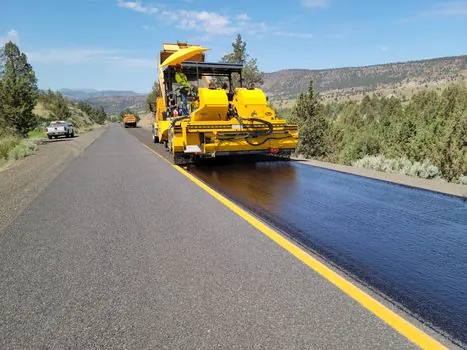
Where the measured cutter output remains high, reduce exposure through controls supported by the work sequence. Increase separation from occupied receptors where the site geometry permits, limit cutting during sensitive periods, use shielding that does not obstruct access or cooling, and provide suitable hearing protection based on a worker exposure assessment [S3][S6].
Do not confuse pavement noise with construction noise. WSDOT measured concrete pavement textures at 104 to 108 dBA using On-Board Sound Intensity, a tire-pavement metric, and attributed the increase largely to wear from studded tires [S4]. Those values cannot be used to rate a groove cutter, even though both involve concrete and measured sound [S4].
The decision threshold is straightforward: require a model-specific, descriptor-specific and distance-specific value before acceptance, verify it on site, and maintain controls through the test. Track the as-tested machine serial number, blade specification, dBA descriptor, reference distance and measured duration as the five items needed to validate each future rating.