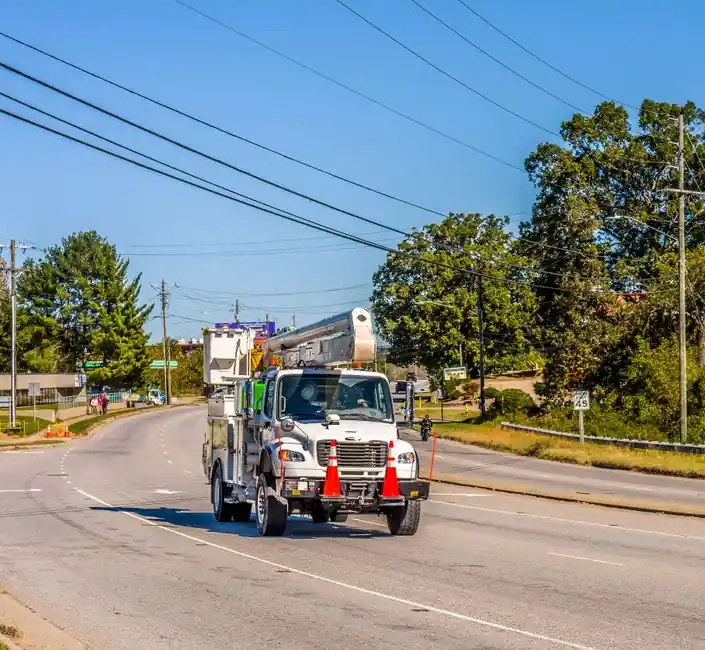
A walk-behind concrete saw is a heavy-duty machine pushed along the ground to make deep cuts in asphalt, reinforced concrete, and similar materials, while a saw body truck is built to support pavement and concrete saw operators on the jobsite [S1][S2].
For highway work, the equipment decision is primarily a trade between cutting capability and transport logistics: the walk-behind saw provides the cutting platform, while the saw body truck provides mobilization and support capacity [S2].
Concrete groove cutter selection by operating task
A walk-behind concrete saw, also called a floor saw or flat saw, is pushed across horizontal concrete, asphalt, and pavement surfaces. It is intended for deep, straight, single-pass cuts rather than localized openings in tight spaces [S1][S3].
Concrete saw power sources include gasoline, diesel, and electric, and the appropriate blade type and power source depend on the task and jobsite [S4]. Adjustable depth controls, heavy-duty wheels, vibration-damping systems, and integrated water delivery are common design features [S1].
Walk-behind saws are used for highway expansion joints, asphalt repair cuts, utility access, trench drains, floor openings, and concrete slab removals. Their larger motors, greater leverage, and straight-line control make them the practical choice for long cuts and thick pavement [S1].
For a broader equipment distinction, compare a concrete groove cutter with a floor grinder before ordering a machine intended primarily for drainage grooves rather than removal or joint cutting.
Walk-behind saw versus saw body truck
The walk-behind saw and truck-mounted body solve different parts of the same highway job. The saw determines blade capacity, cutting depth, control, and production rate; the body determines payload, storage, support equipment, and how quickly the crew reaches and leaves the work zone [S1][S2].
Walk-behind saws offer greater cutting capability than handheld saws and are designed to handle deep, demanding cuts in asphalt, reinforced concrete, and similar materials [S1][S5].
A saw body truck is designed to carry heavy walk-behind saws, diamond blades, fuel, water tanks, and cutting equipment while securing and organizing them. Suitable features include saw compartments, blade racks, hose-accessible water storage, toolboxes, and shelving [S2].
This distinction matters because a truck-mounted configuration does not eliminate the need for a walk-behind cutting machine. For highway operations, it is generally a support and transport architecture, not a different cutting method. The concrete cutting machine remains the active cutting platform.
Decision criteria for highway sawing
Cut geometry should drive the first selection decision. Walk-behind saws are the stronger option for deep and long cuts in road repair, large expansion cuts, and trenching, whereas handheld saws are more practical for small openings and confined areas [S5].
Project scale is the second criterion. Walk-behind saws are self-propelled and reduce operator fatigue over extended work, while handheld units are easier to maneuver but physically demanding and limited in cutting depth [S5].
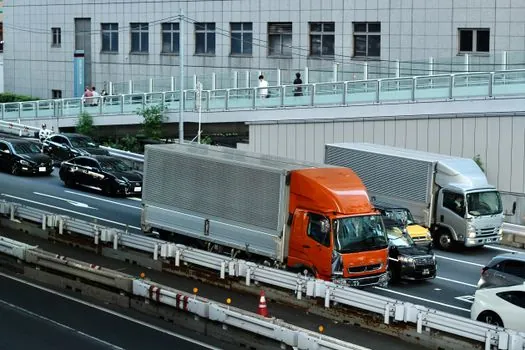
Transport requirements are the third criterion. Highway contractors, municipal public-works crews, utility contractors, and concrete-cutting companies are identified as regular saw-body users because these trucks support roadwork, maintenance, and utility-access operations [S2].
Self-containment is the fourth criterion. Some saw bodies include generators, compressors, or water-delivery systems for remote operation, although added equipment must not interfere with loading or unloading the saw [S2].
Payload is the fifth criterion. The combined weight of the saw, tanks, tools, and materials must remain within the truck chassis and body ratings; the research provides no universal payload figure, so the actual configuration must be weighed rather than selected by rule of thumb [S2].
Recommended highway configurations by use case
For continuous pavement grooving and wet-weather skid-resistance work, a walk-behind saw is identified as an effective choice because the resulting grooves increase pavement friction under wet or icy conditions [S4].
For routine highway repair with several cut locations, a walk-behind saw mounted on a saw body truck is the stronger configuration. It combines deep, accurate cutting with organized transport of the saw, 14-inch-to-over-36-inch blades, fuel, and water, while reducing setup and breakdown time [S1][S2].
For a single short repair or an infrequent cut, a walk-behind saw without a dedicated support truck may be more economical. Walk-behind units have higher purchase and transport costs than handheld tools, while handheld saws remain more accessible for small or irregular jobs [S5].
For confined spaces, wall openings, or small utility penetrations, use a handheld concrete saw instead of forcing a walk-behind unit into the work area. Handheld models are compact and maneuverable, whereas walk-behind saws are less accessible in restricted locations [S3][S5].
For long, uninterrupted highway grooves, the comparison is straightforward: the walk-behind saw offers deeper cutting, less operator fatigue, and better straight-line control than a handheld saw, while the truck-mounted body improves logistics but does not improve the saw’s cutting capability [S1][S5].
Water, blades, and production constraints
Blade cooling is a mandatory operating consideration for long highway cuts. Integrated water systems direct water onto the blade to reduce heat, suppress dust, and extend blade life, while tanks or hose connections support dry concrete and hot-weather cutting [S1].
Diamond blade selection must match the material. Concrete saws can cut tile, brick, asphalt, stone blocks, and metal, but blade type and power source remain project-specific decisions rather than interchangeable specifications [S4].
Concrete and asphalt cuts expose the operator to dust, noise, vibration, and blade fragments. Blade guards, water feed, stable starting position, and controlled travel speed are required controls, but the supplied research does not establish numerical exposure limits or a complete traffic-control standard. The highway traffic-control plan and equipment manual must govern those requirements [S1][S4].
For joint-control work in newly placed concrete, the cited guidance allows trial cutting to begin between 3 and 6 hours after pouring, depending on weather, and identifies overnight waiting as common. Operators should use small trial cuts and begin when raveling stops [S4].
Highway deployment and failure modes
A saw body truck reduces support friction by carrying the walk-behind saw, blades, fuel, water tanks, and tools in organized compartments, but chassis compatibility and payload remain the governing constraints [S2].
Overloading is a preventable failure mode. A configuration that exceeds chassis or body capacity degrades handling, braking, and loading stability, regardless of whether the saw itself is correctly sized [S2].
Insufficient water capacity causes another common operating interruption. A truck may carry the saw and blades but lack enough water for continuous cutting, so tank volume and refill arrangements should be checked before dispatch [S1][S2].
Access and maneuverability form the third failure mode. Walk-behind saws deliver depth and straight-line accuracy but are less maneuverable than handheld saws in tight spaces, making site access a stronger discriminator than engine power [S5].
Before approving a highway fleet, verify five measurable conditions: the required groove depth and width, blade diameter within the saw’s stated capacity, loaded truck weight against chassis limits, water availability for the planned shift, and the number and spacing of cut locations [S1][S2][S5].
The practical selection is walk-behind cutting equipment for every highway groove, paired with a saw body truck when the work volume, remote-site needs, and multi-crew logistics justify the added vehicle capital. Track cut depth, blade wear, water consumption, setup time, and payload during the first shifts before standardizing the fleet configuration.