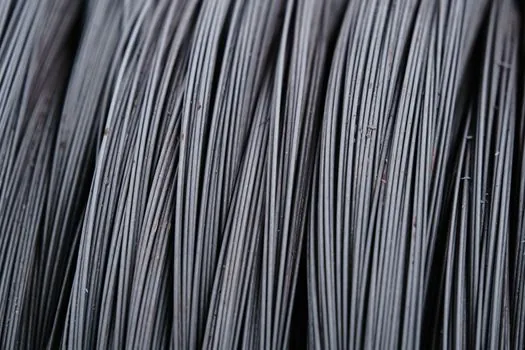
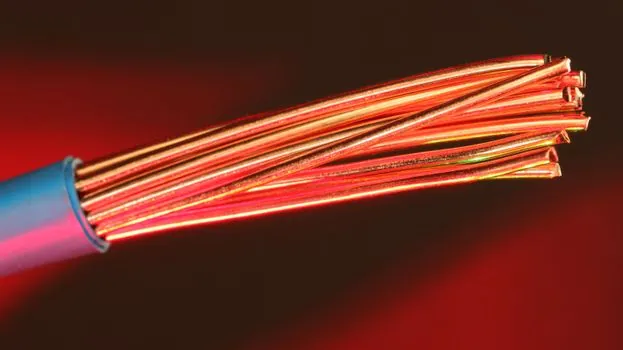
Seven-wire prestressing strand is the workhorse product for both pre-tension and post-tension concrete, with 1x7-12.7 mm and 1x7-15.2 mm constructions dominating precast and cast-in-place work worldwide [S3]. The strand is helically wound from a straight centre wire plus six outer wires, and is supplied in low-relaxation Grade 1860 (270K) per ASTM A416 or equivalents in GB/T 5224, BS 5896, JIS G3536, UNE 36094, and AS/NZS 4672 [S3].
The two methods share the same wire and the same approximate jacking level of about three-quarters of ultimate tensile strength, but they diverge on bond, ductwork, and construction sequence [S1][S4]. Choosing the right configuration is driven by element type, span length, site access, corrosion regime, and whether the structure is precast or cast in place.
Strand geometry, standards, and strength classes
Seven-wire strand is the most popular construction, with 1x7 diameters of 9.53 mm, 11.11 mm, 12.7 mm, 13.2 mm, 14.29 mm, 15.24 mm, and 17.8 mm listed under ASTM A416, and 9.5 mm, 11.1 mm, 12.7 mm, 15.2 mm, 15.7 mm, 17.8 mm, and 21.6 mm under GB/T 5224 [S3]. Tensile strength is 1860 MPa minimum for Grade 1860 / 270K, with a 15.2 mm Brazilian ABNT NBR 7482 example showing 1860 N/mm2, 140 mm2 steel area, 1.099 kg/m, and 260.7 kN breaking load [S3]. Coils are typically supplied at 2.0 to 2.5 tonnes minimum, packed in water-resistant paper plus woven polypropylene outer wrap over two layers [S3].
prestressing strand and steel strand definitions converge here: the seven-wire product is a high-strength wire rod derivative, drawn and stress-relieved for low relaxation, then helically stranded and coiled for shipment. PTI/ TAB.3-13 (2013) defines prestressing steel as high-strength steel used to prestress concrete, consisting of seven-wire strands, bars, wires, or groups of such elements [S2].
Pre-tension: bond by direct embedment, force before the pour
In pre-tensioning the strands are tensioned to roughly three-quarters of ultimate strength and anchored against external abutments or self-stressing steel forms before the concrete is placed, so the bond is mechanical and chemical direct embedment with no duct or grout [S1][S4]. Concrete is cast around the already-stretched strands and reaches sufficient strength in about twelve hours when high-early-strength cement and accelerated curing are used, supporting a 24-hour cycle of setup, casting, curing, and stripping typical of precast yards [S4].
Service life of those abutments and self-stressing forms commonly exceeds 50 years, which is why the same pre-tensioning beds are reused thousands of times in a precast plant [S4]. The force in pre-tension is transferred to the concrete evenly along the strand length through bond, not concentrated at end anchorages, so end-bursting reinforcement and anchorage-zone confinement are not the design drivers they are in post-tension [S4]. This is why pre-tension dominates precast double-tees, bridge girders, hollow-core planks, railway sleepers, and piling.
Post-tension: ducts, anchors, and tendons stressed after the pour
In post-tensioning, corrugated metal or plastic ducts are set in the form with rebar, the concrete is cast and cured, then 1x7 strands are threaded through the duct and tensioned with a hydraulic jack against bearing plates and anchor wedges [S1][S4]. The grouted (bonded) variant injects cementitious grout into the duct after stressing, creating an alkaline environment that protects the steel and locks the tendon to the surrounding concrete; the unbonded variant uses a single greased and extruded plastic-sheathed mono strand that remains free to move locally relative to the member [S1].
Post-tensioning allows the strands to be placed in a parabolic profile so the prestress follows the bending-moment diagram, which gives longer spans, thinner sections, and reduced deflection compared with pre-tension [S1][S4]. A key trade-off: bonded systems carry higher friction losses and so require more PT reinforcement than unbonded systems for the same effective prestress force, but bonded systems offer better corrosion protection and progressive-collapse resistance in aggressive environments [S1]. The strand itself is identical: 12.7 mm or 15.24 mm ASTM A416 Grade 1860 low-relaxation in either 0.5 inch or 0.6 inch diameters is the typical post-tension stock [S3].
Pre-tension vs post-tension: criterion-by-criterion comparison
Use this matrix when deciding between the two methods on a real project; the strand stays the same, the system around it changes. [S1]
Bond mechanism: pre-tension uses direct concrete-to-steel bond along the entire length, transferring force evenly through the section [S4]. Post-tension bonded uses grouted duct bond, post-tension unbonded uses greased sheathing so the strand slips locally inside the duct [S1].
When the force is applied: pre-tension is applied before the concrete is placed and before the member sees service loads, with strand stress held by external abutments during the pour [S4]. Post-tension is applied after the concrete reaches design strength, typically 24 to 72 hours after casting depending on mix and curing [S1][S4].
Tendon profile: pre-tension is essentially straight or gently draped at harping points, limited by the bed geometry [S4]. Post-tension follows a parabolic or harped duct profile to match the bending-moment diagram, which is the main reason longer spans are economical in post-tension [S1][S4].
Strand reinforcement quantity: pre-tension is set by the bed capacity and prestress loss, with the strand fully bonded so losses are mainly relaxation and elastic shortening. Bonded post-tension needs more PT steel than unbonded for the same effective prestress force because of higher friction losses along the duct [S1].
Typical applications: pre-tension for precast double-tees, hollow-core planks, bridge girders, piles, railway sleepers, floor planks [S4]. Post-tension bonded for bridges, transportation structures, large transfer girders, shear walls, and mat foundations; post-tension unbonded for elevated slabs, slabs-on-grade, beams, joists, and commercial building frames [S1].
Corrosion protection: pre-tension relies on concrete cover and crack-width control only. Bonded post-tension adds an alkaline grout barrier plus duct; unbonded post-tension adds grease and a continuous plastic sheath but loses the grout bond [S1].
Selection rules for engineers and procurement
Specify pre-tension when the element is factory-precast, geometry fits a straight or simply draped bed, production volume justifies the abutment investment, and the project tolerates the member sizes that a single bed can produce [S4]. Reusable abutments and self-stressing forms with 50-year service life make this method very efficient for high-run precast items like double-tees, hollow-core, piles, and standard bridge I-girders [S4].
Specify bonded post-tension when the structure is cast in place, the span is long, the tendon profile must be parabolic, and the environment is corrosive or the design needs progressive-collapse resistance [S1]. Specify unbonded post-tension when the slab or beam is cast in place, the tendon layout is relatively simple, speed of installation matters, and the project wants an economical, light, and flexible system for elevated slabs, slabs-on-grade, joists, and transfer girders [S1].
Standard and diameter rules: for North American projects call out ASTM A416 Grade 1860 (270K) low-relaxation 1x7-12.7 mm or 1x7-15.24 mm; for GB-market projects call GB/T 5224 in 12.7 mm, 15.2 mm, or 17.8 mm; for UK / Middle East use BS 5896 in 12.5 mm or 15.2 mm; for Japan use JIS G3536 in 12.7 mm or 15.2 mm; for Australia / New Zealand use AS/NZS 4672 in 9.5 mm, 12.7 mm, or 15.2 mm [S3]. The 0.12% minimum non-PT reinforcement ratio noted for bonded PT systems is a code-mandated floor, not a calculated optimum, and applies regardless of how much bonded PT is provided [S1].
Limits, failure modes, and what to check on arrival
Pre-tension failure modes centre on end-bond slip, bursting at the bed anchorage, and strand relaxation; without a duct, the strand cannot be replaced or re-tensioned, and end zones rely on development length of the helix [S4]. Post-tension failure modes centre on anchorage-zone bursting, duct blockage during grouting, void formation in grout columns, fretting fatigue at deviators, and corrosion of unbonded strand inside the sheath if the grease is lost or the sheath is breached [S1][S4].
Incoming inspection should confirm: coil weight 2.0 to 2.5 tonnes minimum, low-relaxation marking and MTC traceable to ASTM A416 / GB/T 5224 / BS 5896 / JIS G3536 as applicable, diameter within tolerance, 1860 MPa minimum tensile strength, and packaging in water-resistant paper plus woven polypropylene over two layers with two wooden dunnages per coil [S3]. For cable wire supplied as a finished prestressing cable, also confirm left-hand lay, and for stay-cable or mining applications verify the project-specific wire count, with 2-wire, 3-wire, 7-wire, and 19-wire constructions all being produced from the same wire-rod feedstock [S3].
Specification anchors for sourcing
PTI Post-Tensioning Terminology (TAB.3-13, November 2013) is the consensus definitions reference for tendon, anchorage, bearing plate, and duct terms and should be cited on any post-tension submittal package [S2]. Acceptance criteria for post-tensioning systems are codified in PTI Acceptance Standards for Post-Tensioning Systems, which governs the basic versus special bearing-plate classification referenced throughout the PTT document [S2].
For procurement, request the mill test certificate, relaxation class (typically low-relaxation, Grade 1860 / 270K), nominal diameter, cross-sectional area, minimum breaking load, and standard reference; a typical 15.2 mm ASTM A416 1x7 strand shows 140 mm2 area and 260.7 kN minimum breaking load, while 12.7 mm and 9.53 mm constructions scale down accordingly [S3]. For related spec-driven selection in other building and plant disciplines, see this expansion anchor substrate and load guide and this mold base steel spec map for the same decision-matrix style applied to anchors and tool steel.
Track for 2026-09-20 onwards: any new revision of ASTM A416 or GB/T 5224 affecting 1x7 diameter tolerances, and any update to PTI/ TAB.3-13 post-tensioning terminology, both of which directly govern how the same seven-wire strand is called out on drawings for pre-tension versus post-tension work.