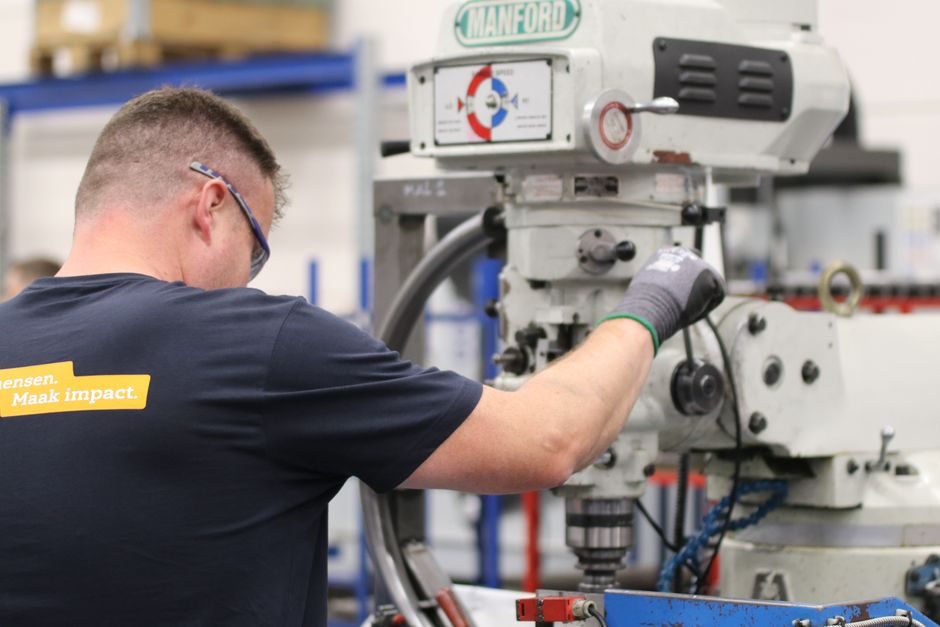
A shaft collar is a mechanical stop or position-holding ring mounted on a shaft, and the right pick depends on four variables: shaft diameter, surface finish (turned, ground, or as-machined), required holding torque, and whether the assembly is serviced frequently. Catalog data from 2026 shows slit-style collars stocked in 6 to 50 mm I.D. and 20 to 85 mm O.D. across a 185-SKU line [S6].
For high-torque shaft-coupled applications, flange-mounted collar-couplings span 1.2 to 725 Nm of torque, with Lovejoy's collar line rated to 5,593 rpm and OMT's bellhousing/collar combination up to 1,450 rpm at 725 Nm [S1][S3]. The collars that survive on these assemblies are almost always the clamp-style, not set-screw.
Solid vs One-Piece Clamp vs Two-Piece Clamp vs Split
Solid set-screw collars are the cheapest option and the weakest holding element, relying on a single grub screw biting into the shaft — adequate for low-rpm limit stops but not for drive trains [S1]. One-piece clamp collars use a single through-bore and a circumferential screw; tightening the screw squeezes the collar uniformly onto the shaft, giving full 360° contact and markedly higher holding torque with no shaft marring [S7]. Two-piece clamp collars split the collar body into two halves bolted together, allowing installation anywhere on the shaft without sliding it on from the end — the spec pick for in-field retrofits and large-diameter shafts [S10].
Split (slit) collars carry a single machined slot and a clamping screw, and the 2026 MISUMI catalog stocks 8 mm bore units in 304 stainless with side-hole tightening as a same-day ship item [S8]. A slit collar installs in seconds and costs less than a two-piece clamp, but its holding torque is lower because the clamping force concentrates on a narrower band of shaft contact.
Bore Diameter, OD, and Width Sizing
Standard off-the-shelf bores run 6, 8, 10, 12, 13, 15, 16, 18, 20, 25, 30, 35, 40, and 50 mm in the MISUMI split-collar line, paired against ODs of 20 to 85 mm and matching widths — engineering should pick the smallest OD that clears any adjacent component to keep mass and moment of inertia down [S6]. Bore tolerance is typically a slip fit on the nominal shaft (h7/h8 class on metric), and a 0.05 mm gap is normal; the clamp screw is what removes the gap and locks the collar, so the bore itself is not a press fit.
Width-to-bore ratio drives axial load capacity: a 12 mm wide collar on a 20 mm shaft gives roughly 0.6× ratio, adequate for limit-stop duty; 25 mm wide on 20 mm (1.25×) is the more common pick when the collar acts as a bearing spacer or thrust receiver. Slit collars in 304 stainless from MISUMI use the SSCS-series part code, with SSCS3-8 specifically denoting a 8 mm bore stainless unit [S8].
Material: Aluminum vs Carbon Steel vs 304/316 Stainless vs POM
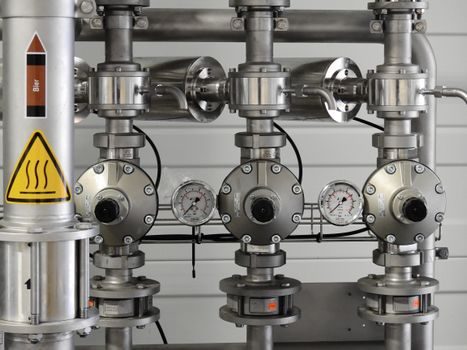
6000-series aluminum split collars are the economy lightweight option, used where mass matters (instrumentation stages, moving gantries) and corrosion is mild [S10]. Carbon steel (often with black oxide or zinc finish) is the default for industrial machinery, balancing cost and strength. 304 stainless is the workhorse for food, pharma, and outdoor equipment; 316 stainless is the spec when chloride exposure is sustained.
For low-friction or noise-damping duty — such as shaft-collar dampers used on packaging lines and indexing tables — urethane-faced replacements from makers like Iwata Manufacturing sit between the collar and the contact surface and absorb shock [S9]. POM (acetal) and brass collars exist for specialized electrical-insulation or anti-spark applications, but they are a minority pick.
Selection Criteria and the Realistic Options Compared
For most buyers the choice reduces to four collars and four numbers, and the table below is the working shortlist. Note that slit collars in 304 stainless at 6-50 mm bore are the most broadly stocked 2026 part with same-week delivery [S6][S8].
Collar Type | Typical Holding Torque (vs set-screw baseline) | Shaft Marring | Field Install | Stocked Bore Range: Solid set-screw: 1× (baseline), High, Yes, 6-50 mm. One-piece clamp: 3-5×, None, No (slide-on), 6-50 mm. Two-piece clamp: 3-5×, None, Yes (anywhere on shaft), 8-80 mm. Slit (split) clamp: 2-3×, Low, Yes, 6-50 mm. The flange-collar couplings used on motor/pump bellhousings cover a far wider torque band: 1.2-52.4 Nm (Lovejoy) and 6.86-725 Nm (OMT) [S1][S3].
Who Should NOT Pick the Cheapest Option
If the shaft is reverse-loaded, runs above 1,000 rpm, or carries any meaningful axial thrust (think: conveyor drive shafts, lead-screw supports, pump stub shafts), a solid set-screw collar will slip or fret the shaft within hours. A two-piece clamp collar or a properly torqued one-piece clamp is the only safe pick. Likewise, on any shaft above HRC 50 hardness (case-hardened or through-hardened), the set-screw point will work-harden the shaft and never bite — engineers in that duty should default to clamp collars with a shaft-relief undercut. [S2]
Engineers specifying collars as shaft-end impact dampers on indexing tables or label applicators should look at the urethane-faced damper replacements rather than a bare metal collar, since the elastomer absorbs the energy spike that would otherwise oval the shaft [S9]. The MISUMI economy aluminum split-collar is the right call when the collar is purely a positional stop under 1 Nm of holding load and the assembly is non-rotational [S10].
Installation Torque, Standards, and Common Failure Modes
Clamp-screw torque is the single most under-specified value in a collar callout. As a working rule, M4 socket-cap screws on 8-12 mm bores take 3-5 N·m, M5 takes 6-10 N·m, and M6 takes 10-16 N·m — under-torque yields slip, over-torque snaps the screw or distorts the bore. The Lovejoy collar line is rated for a 5,593 rpm maximum and 52.4 Nm of torque in the flange-mount configuration, defining a realistic ceiling for the smaller collar-coupling class [S1]. ZERO-MAX's Double Flex 6P-C composite disc coupling, which uses shaft-collar geometry on its hubs, is rated to 14,000 rpm and 1,164 Nm — a 22× torque uplift and 2.5× speed uplift over the basic Lovejoy collar, achieved by switching from a single-piece collar hub to a double-cardanic disc pack [S2].
Mounting the Collar in a Larger Power-Transmission Stack
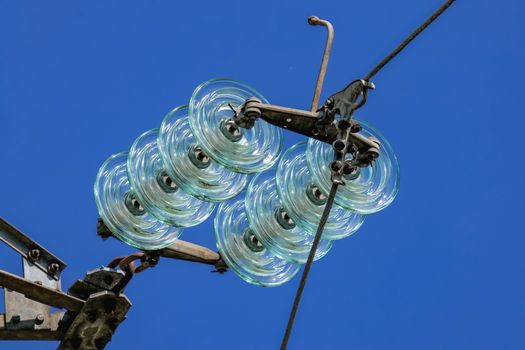
A shaft collar is rarely the only component on a shaft; it typically works next to a shaft coupling on one side and a shaft key on the driven element. When the collar also acts as a thrust receiver, the shaft collar page documents the load-path logic and the standard width-to-bore ratios for axial duty. For shafts driving through keyed hubs where axial position must be locked while allowing limited axial float on a second component, collars are paired with a second shaft collar to create a fixed-float bearing arrangement — a common pattern in small-motor gearboxes and conveyor idlers. [S1]
Buyers sourcing through industrial catalog channels can expect same-day shipment on slit collars in 304 stainless at common bore sizes, and 8-day shipment on most two-piece clamp configurations [S6][S8]. For OEM-volume orders above 500 pieces, MISUMI's spec-change option and the 6000-series aluminum economy line offer the shortest lead-time at the lowest per-piece cost, while Lovejoy, OMT, and ZERO-MAX remain the go-to for higher-torque flange-collar couplings in the 100-1,164 Nm range [S1][S2][S3][S10]. Engineers cross-specifying collar stacks with keyed shafts should review the shaft key selection map before finalizing the bore and tolerance callout, since the key-seat depth drives the effective shaft diameter the collar must clamp onto.