
A shell core shooter and a hot box core shooter both cure resin-coated sand with heat, but the two processes diverge sharply on curing temperature, core mass per shot, and final wall geometry, which is why the cores they deliver are not interchangeable on the foundry floor [S1][S3].
Foundries weighing the two should treat the machines as complementary rather than substitutable: hot box builds dense, fully filled cores up to 50 kg per shot, while a shell core machine bonds a thin hardened skin against the heated box and pours the loose, uncured sand back out [S4][S3].
Heat source and box temperature: 200 to 350 °C window with two distinct setpoints
Hot box core shooters cure resin-coated sand at approximately 200 to 250 °C in a fully closed core box, with the entire cavity mass polymerised by conductive heat from the tool wall [S1][S5]. Shell core shooters run the tool at 250 to 350 °C, then rely on a dwell time of 40 to 120 seconds to build only a bonded skin of 5 to 15 mm thickness against the contour before the box is inverted and the loose sand returns to the hopper [S3].
The 50 °C overlap between the two ranges is where most of the confusion starts: the resin chemistry is similar, but the energy input and the curing time are not, and the resulting core weight per shot can differ by an order of magnitude on the same tooling footprint [S3][S4].
Core architecture: solid block vs hollow shell
A hot box core is a fully filled, dimensionally accurate solid body that handles high internal pressure during iron pour and gives tight tolerance on engine block water-jack cores and similar heavy-section castings [S1][S5]. A shell core by definition is a thin-walled hollow body whose strength comes from the cured skin alone, which is why shell is the dominant choice for small intricate cores with thin profiles under 10 mm wall thickness [S2][S4].
Galaxy Machine India notes that its top-blow vertical and horizontal parted shell machines are designed specifically to leave the cured skin in one half of the tool, with auto-ejection into a core carrier trolley, while its roll-over shell variant inverts the box at up to 25 kg per station to dump excess sand into a collection tank for reuse [S4]. None of those ejection geometries apply to a hot box tool, where the entire sand mass must remain in the cavity until cure is complete.
Sand system, resin, and cycle economics
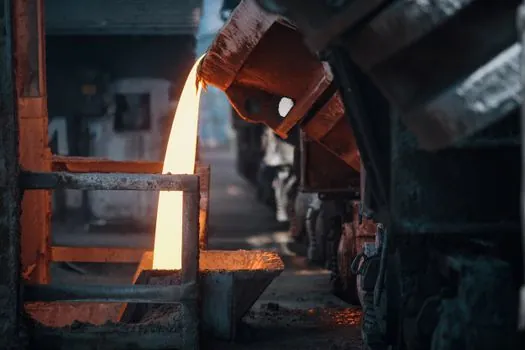
Both processes use resin-coated sand, but the binder level and cure kinetics differ. Hot box workhorse resins (phenol-formaldehyde / urea-formaldehyde blends) are formulated for full-mass cure, and the hot box machine cycle is shorter per shot because the entire cavity reaches gel point in parallel; this is the reason hot box is favoured for high-volume runs of medium and large solid cores [S5]. Shell processes use a lower-resin-content Croning-type sand to keep the uncured reclaim stream clean and re-usable, and the longer dwell of 40 to 120 s is built into the cycle rather than fought against it [S3].
Heating can be electric or gas-fired on either machine class, and PLC-controlled sequencing with safety interlocks and fault diagnostics is now standard on automatic builds from suppliers such as Galaxy, with both pneumatic and hydraulic shooting options offered on the same frame [S4]. The capital cost of a single dual-purpose machine is rarely cheaper than buying the correct one, and the tooling cost of converting an existing hot box tool to shell geometry, or vice versa, is comparable to a new tool.
Capacity, footprint, and what each machine actually ships
For sizing the line, hot box and shell machines overlap in the 5 to 25 kg per shot band, but the upper end is hot box territory: Galaxy's automatic shell models are quoted at up to 50 kg per shot for top-blow vertical and horizontal parted configurations, and up to 25 kg per station for the roll-over hollow-core variant [S4]. Hot box machines from the same general class routinely cover the 10 to 50 kg range and scale further with multi-cavity boxes, since hot box cures the full mass rather than just a skin [S1][S4].
Shooting pressure is also a tell. Core shooting machines for the cold box process and for hot box work accelerate the sand charge with a high-speed air pulse, whereas core blowing and pouring machines used in shell work need only 0.2 to 0.4 MPa of additional pressure to settle the resin-coated sand against the hot contour [S3]. That four- to six-fold pressure difference is why a hot box core machine cannot be dialled down to imitate shell kinetics without changing the shooting head and the resin system.
Selection criteria: when each process wins
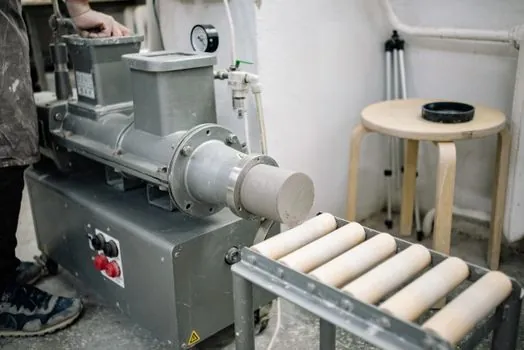
For a foundry engineer the decision reduces to four questions: is the core solid or hollow, what wall thickness is required, what cycle time is acceptable, and what is the maximum shot weight. Solid cores above 15 mm wall thickness, tight dimensional tolerance, and high annual volume favour hot box; hollow cores, thin walls under 10 mm, or any geometry where the operator benefits from excess-sand reclaim favour shell [S1][S2][S4].
The cold box core machine path is the third option and sits outside the heat-cured family: it uses a no-bake resin system gassed with amine or CO2, so it can fill the same core box geometries but with no heated tool, no dwell time, and a different binder handling discipline. For engineers who need a closer comparison of in-line foundry equipment, the parallel decision logic used in 1 cu ft vs 6 cu ft blast pot sizing shows the same pattern: matching tool capacity to the actual per-shot demand, not the headline specification. For plants also weighing die-casting peripherals, the energy-recovery logic in bladder vs piston accumulators on die casting shot ends covers a related trade-off between stored-energy hardware choices.
Limitations and failure modes that lock the choice in
Shell cores fail in service if the cured skin is too thin to resist metallostatic pressure, which forces the foundry to over-dwell the box and lose cycle time; hot box cores fail if the box heat-up is uneven, which produces soft centres in thick sections and rejects the part. The two failure modes are not symmetric, and they are not curable by switching resin suppliers or tweaking dwell time alone [S3][S5].
Tool material is also a constraint: hot box tools are routinely cast iron or steel to survive the sustained 200 to 250 °C duty and the clamping forces of a shooting head, while shell tools can use the same metals or, for short prototype runs, filled epoxy or aluminium, since only the skin layer sees mechanical load [S3]. The reverse substitution, putting a hot box geometry on a shell-rated lightweight tool, will deform the cavity within a few hundred cycles.
Standards, sourcing, and what to verify before buying

No single ISO or ASTM standard dictates the choice between shell and hot box; the governing documents are typically the OEM's process datasheet (resin type, shot weight, cure time, box temperature window) and the foundry's internal casting-method specification. The German Foundry Lexicon groups both processes under the broader core shooting and core blowing machine family, with explicit differentiation by box temperature and sand moisture state, which is the cleanest publicly available taxonomy [S3].
Trackable signals to watch over the next planning cycle: resin suppliers publishing lower-formaldehyde hot box systems that close the gap with shell on emissions, OEMs such as Galaxy extending the 50 kg per shot ceiling on automatic shell machines, and warm box machines absorbing some of the medium-wall niche between hot box and shell with sub-200 °C cure windows [S4][S5]. Any of those moving would shift the break-even wall thickness for picking one machine over the other.